
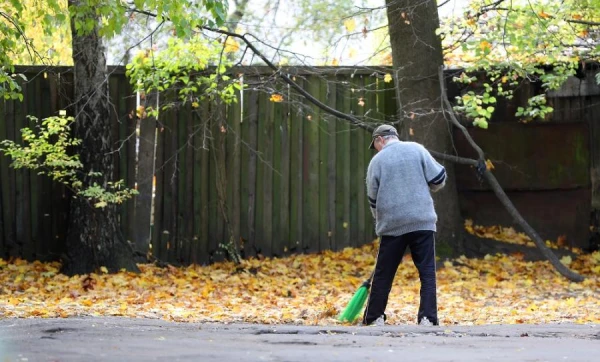
How Much Riga’s Janitors Earn
The role of the janitor in Riga is undergoing a significant transformation as Rīgas namu pārvaldnieks (RNP) moves to modernize its service model. Maris Ozoliņš, chairman of the board at RNP, recently emphasized that the long-held stereotype of janitorial work being low-paid and unpromising no longer aligns with reality. For highly efficient workers who take on larger areas, gross monthly salaries can now reach between 1700 and 1800 euros, allowing these professionals to compete with average wages in many of the capital’s commercial sectors.
Modernizing Workforce Management
This shift in compensation structure comes as the enterprise grapples with an aging workforce and the inherent difficulties of recruiting for physically demanding labor. Managing quality control across scattered locations has proven challenging, prompting the move toward centralized, mobile service teams. These teams offer a distinct advantage by utilizing specialized, high-cost equipment that would be impractical to provide to individual janitors.
The Future of Courtyard Maintenance
Despite the operational gains provided by the new mobile format, RNP does not intend to fully phase out the traditional janitor role. The organization acknowledges the social value of having a familiar, local presence at apartment buildings. The final decision on service models may be left to the residents themselves. Should apartment owners prefer to retain a traditional, dedicated janitor, RNP has indicated a willingness to accommodate those requests, provided the residents are prepared to cover the associated costs.
Moving forward, the balance between specialized mobile teams and traditional custodial roles could shift depending on resident feedback and the continued evolution of labor availability. If the team-based model proves consistently more cost-effective, it is likely that the proportion of areas serviced by mobile crews will continue to expand throughout the city.
Frequently Asked Questions
Why are janitor salaries increasing at RNP?
Incomes in the field are now tied directly to productivity and the volume of work performed. Employees who are willing to take on larger areas can earn significantly higher gross salaries than those working under minimal load.
What is the primary reason for the shift to team-based service?
The enterprise faces challenges with an aging workforce and the difficulty of maintaining quality control over individual workers at scattered locations. Mobile teams can utilize expensive equipment that increases cleaning speed and lowers costs for residents.
Will traditional janitors be eliminated?
No, RNP does not plan to completely eliminate the position. The management recognizes the value residents place on having a familiar person in their courtyard and the company is willing to keep traditional janitors if residents choose that option and are willing to pay for it.
How would you prefer to see your local neighborhood maintenance managed: by a familiar face or a specialized, high-tech team?