
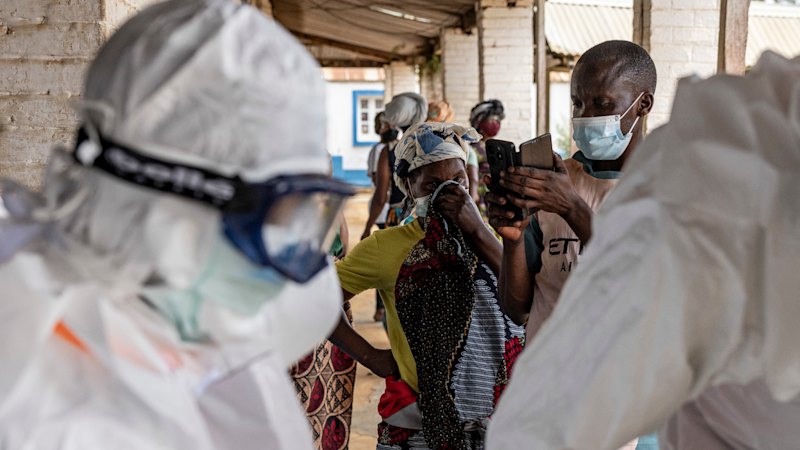
How the state’s health system responded to the first suspected case
Victoria is currently enhancing its public health defenses against two significant infectious disease threats. The state is preparing to launch a targeted diphtheria booster vaccination program while health officials conduct a debrief following the region’s first suspected Ebola case.
Testing the Ebola Response Plan
The state’s Ebola response plan was recently put to its first real-world test. A man who had recently returned from an area near the Democratic Republic of Congo (DRC) and Uganda arrived at the Monash Medical Centre emergency department exhibiting symptoms of the disease.
The patient was transported by ambulance to the Royal Melbourne Hospital, which serves as Victoria’s designated adult viral haemorrhagic fever health service. He was placed in a negative pressure room within the intensive care unit for isolation.
This incident occurred shortly after the Health Department met with the Royal Children’s and Royal Melbourne Hospitals to review preparedness in light of a major outbreak in Uganda and the DRC.
Following rigorous testing, the patient was found not to be infected and was discharged on Wednesday. Associate Professor Chris MacIsaac, director of ICU at the Royal Melbourne, stated, “The program we put in place passed its first real-life test after years of planning and practice.”
High-Containment Testing and Clinical Alerts
Dr. Katherine Bond, acting director of the Victorian Infectious Diseases Reference Laboratory, oversaw the testing process. The facility operates as a “suit lab,” where scientists wear special suits to maintain a strict separation between themselves and the samples.
“It’s especially designed to keep people outside the laboratory safe from the infection,” Bond explained, noting that the setup also protects the scientists involved. Two separate blood tests returned negative results for the patient.
In response to the global situation, Victorian Chief Health Officer Dr. Caroline McElnay has issued an alert for clinicians. Medical professionals are advised to consider Ebola in patients who present with fevers above 38 degrees and have a history of travel to outbreak areas or contact with infected individuals.
While Dr. McElnay acknowledged that the risk in Australia remains low, she emphasized that the disease is “high-consequence” with a “high mortality rate.” The Health Department is currently ensuring hospitals are fully equipped with necessary personal protective equipment.
Addressing the Diphtheria Outbreak
Beyond the Ebola scare, health authorities are managing a significant diphtheria threat. Australia is currently facing its worst diphtheria outbreak in decades, with over 230 cases and one death recorded this year.
The majority of these cases have occurred among Aboriginal and Torres Strait Islander people in remote areas of Western Australia and the Northern Territory, with additional cases appearing in Queensland and South Australia.
To mitigate this, the Health Department will launch a diphtheria booster vaccine program in early June. This program is targeted at Aboriginal and Torres Strait Islander people needing boosters, as well as Victorians who work or travel in high-risk interstate areas.
Understanding Diphtheria Risks
Diphtheria can manifest in two primary forms. Respiratory diphtheria is spread through droplets from coughing or sneezing and can cause severe swelling of the throat and neck, potentially obstructing the airway and damaging the brain, heart, kidneys, and nerves.
Cutaneous diphtheria affects the skin, creating non-healing sores and ulcers that can spread through touch. While children are typically vaccinated as part of a bundled shot with tetanus and whooping cough, adults are recommended to receive boosters every five to 10 years.
Health Minister Harriet Shing noted that the health system is applying lessons from the recent pandemic to these current threats. She stated that Victoria is utilizing some of the “world’s best minds” to lead these public health responses.
Future Outlook
Health authorities will likely continue assessing the response to the suspected Ebola case to determine if improvements are needed. There is a possibility that diphtheria cases could crop up among Victorians who have travelled to interstate outbreak areas, making the upcoming booster program a key preventative step.

Frequently Asked Questions
What happened during the suspected Ebola case in Melbourne?
A man returning from near the DRC and Uganda presented symptoms at Monash Medical Centre and was moved to a negative pressure room at the Royal Melbourne Hospital. He subsequently tested negative for Ebola and was discharged.
Who is eligible for the upcoming diphtheria booster program?
The program, launching in early June, is intended for Aboriginal and Torres Strait Islander people who require a booster, as well as Victorians who work or travel in high-risk areas interstate.
What are the global statistics for Ebola according to the WHO?
The World Health Organisation reported 906 suspected cases of Ebola in the DRC, resulting in 223 deaths, while Uganda has seven confirmed cases.
Do you believe current public health systems are sufficiently prepared for the arrival of rare, high-consequence diseases?