
Huawei Connects 170 Million People in Remote Areas Across 80 Countries
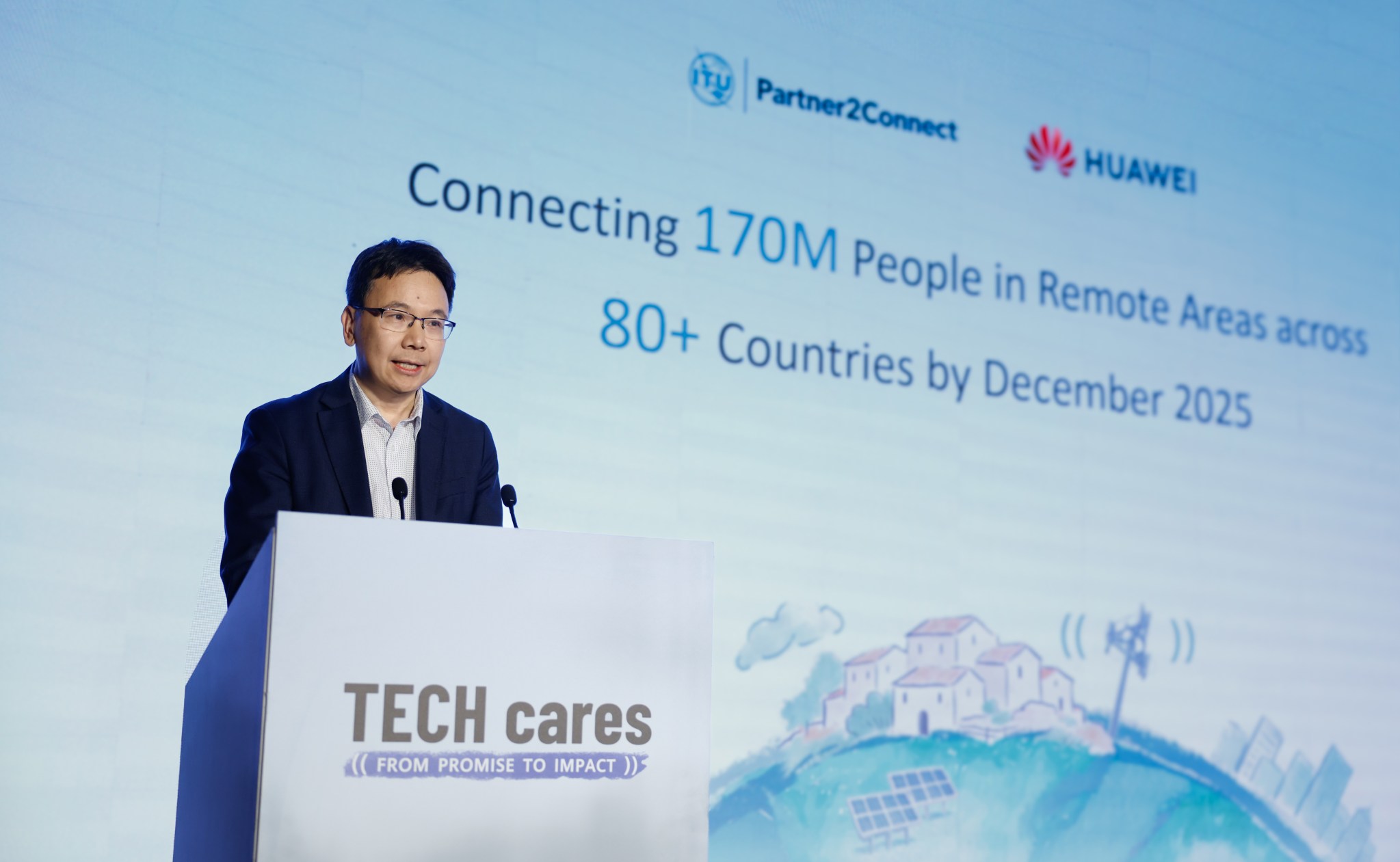
Huawei has connected 170 million people in remote regions across 80 countries, surpassing its initial International Telecommunication Union (ITU) Partner2Connect goal of 120 million by 2025. Announced by Yang Chaobin at the TECH Cares forum, this milestone signals a shift toward building AI-ready infrastructure in underserved areas to prevent a widening global digital divide.
Why is AI making the digital divide more dangerous?
Connectivity used to be about having a signal. Now, it’s about having the bandwidth to support Artificial Intelligence. Yang Chaobin, PDG of Huawei ICT BG, warned that while AI advances rapidly, the gap between the “connected” and “unconnected” risks growing deeper. He argues that high-speed digital networks and robust computing power are no longer luxuries; they are the baseline for an inclusive AI era.
Without this foundation, remote communities don’t just miss out on social media—they lose access to AI-driven healthcare, precision agriculture, and personalized education. According to Chaobin, the goal is to ensure that the AI revolution doesn’t leave isolated communities behind in a new form of technological poverty.
How do “RuralCow” and low-cost networks scale connectivity?
Connecting a village of 1,500 people is vastly different from building a city network. The cost per user is often too high for traditional operators. To solve this, Huawei evolved its “Rural Series” solutions since 2017 to prioritize affordability and deployment speed.
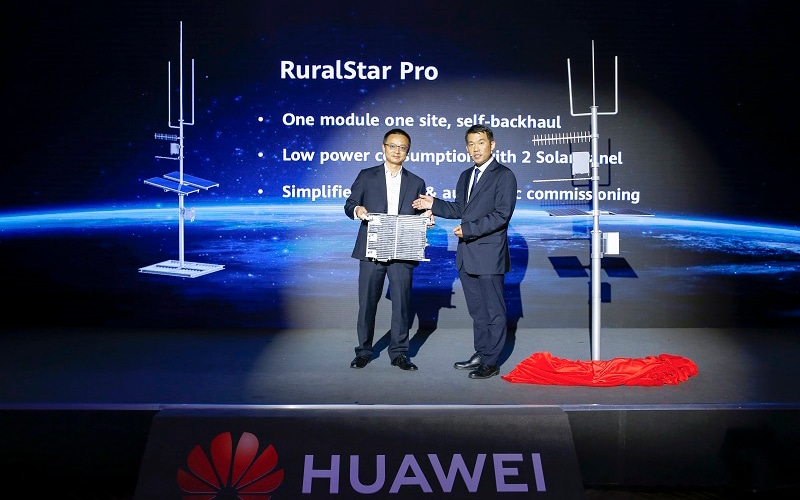
A prime example is “RuralCow,” launched in November 2025. Working with MTN Nigeria, this solution targets small villages to provide immediate coverage. Marina Madale of MTN Group emphasizes that connectivity is fundamental infrastructure for Africa’s growth, not a privilege. By reducing the cost of hardware and simplifying installation, these networks make rural expansion financially viable for operators.
This shift toward “micro-connectivity” allows local economies to digitize. When a village gets online, it’s not just about phones; it’s about digital public services and market access for farmers.
What happens when connectivity meets digital literacy?
A signal is useless if the user doesn’t know how to use the device. Jeff Wang, Huawei’s president of public affairs and communication, argues that inclusion rests on two pillars: inclusive connectivity and digital skill empowerment. This is where the “human” side of the tech takes over.
The “Skills on Wheels” program is the blueprint here. Since 2019, it has trained over 130,000 people across 21 countries in mobile digital technologies. By bringing the classroom to the community, the program targets those often left out: women, the elderly, and students in STEM pipelines.
Will multi-party collaborations replace solo corporate efforts?
The consensus from the TECH Cares forum in Barcelona is clear: no single company can solve the digital divide. Cosmas Zavazava of the ITU notes that connecting underserved areas requires “innovative business models” and sustained investment in local capacities.
The trend is moving toward a tripartite model:
- Governments: Providing policy frameworks and land access.
- Vendors (like Huawei): Providing the low-cost, high-efficiency hardware.
- Operators (like MTN): Managing the last-mile delivery and consumer billing.
This collaborative approach lowers the risk for the operator and the cost for the end-user, creating a sustainable ecosystem rather than a one-off charity project. You can read more about these global digital inclusion trends on our site.
Frequently Asked Questions
How many people has Huawei connected in remote areas?
Huawei has provided digital connectivity to 170 million people across more than 80 countries.
What is the “RuralCow” solution?
It is a network solution designed to extend coverage to small villages of approximately 1,500 inhabitants, specifically implemented in partnership with MTN Nigeria.
What is the “Skills on Wheels” program?
A mobile training initiative that has taught digital skills to over 130,000 people in 21 countries since 2019.
Why is AI relevant to rural connectivity?
AI requires high-speed broadband and computing power. Without these, rural areas will be excluded from the benefits of AI-driven healthcare and education.
Join the Conversation
Do you think AI will bridge the digital divide or make it worse? Share your thoughts in the comments below or subscribe to our newsletter for the latest insights on global tech infrastructure.