
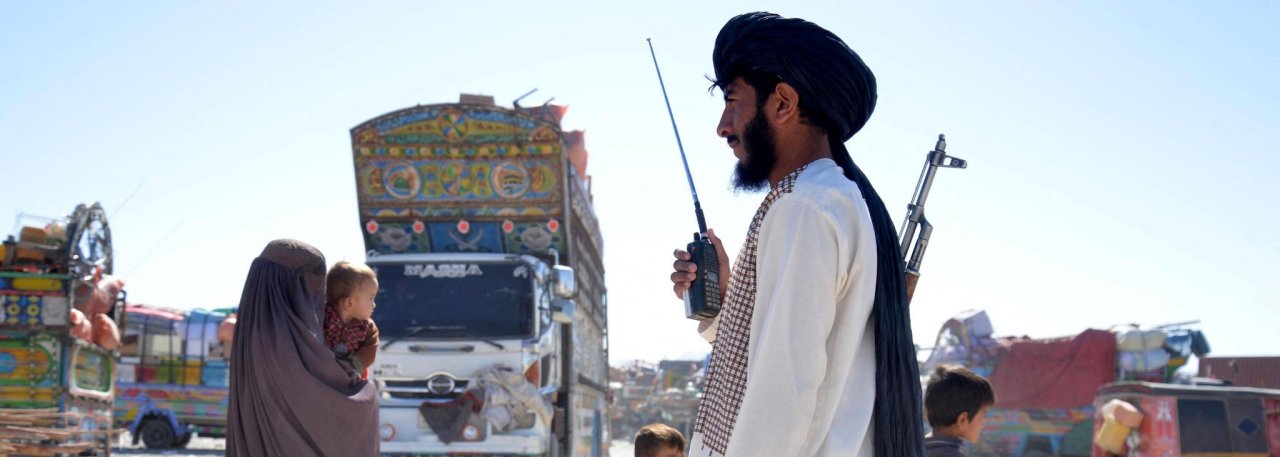
Human Rights Groups Urge EU to Reject Potential Taliban Visit to Brussels
The Normalization Trap: The High Cost of Diplomatic Pragmatism
When global powers weigh the benefits of diplomatic dialogue against the cost of human rights violations, the result is often a precarious balancing act. In the case of Afghanistan, the tension between “pragmatic engagement” and moral accountability has reached a breaking point.
The trend we are seeing is a push toward the normalization of regimes that lack democratic legitimacy. When international bodies consider hosting official delegations from groups that systematically dismantle fundamental freedoms, they risk sending a signal that human rights are negotiable chips in a larger geopolitical game.
This isn’t just about a single meeting in a European capital; it’s about the precedent it sets. If the international community rewards a regime that enforces gender-based persecution with diplomatic recognition, it effectively lowers the global bar for governance and human rights everywhere.
The Rise of ‘Gender Apartheid’ as a Legal Framework
For years, the world described the erasure of women and girls from public life in Afghanistan as “severe restrictions.” However, the discourse is shifting. Legal experts and human rights defenders are now pushing for the recognition of gender apartheid as a crime against humanity.
From Discrimination to Systemic Erasure
The current trend suggests a move toward a more rigorous legal classification. We are no longer talking about simple inequality; we are talking about the systematic exclusion of an entire gender from education, employment and basic movement.
By framing these actions as crimes against humanity, the international community can move beyond diplomatic protests and toward actual prosecution via the International Criminal Court (ICC). This shift transforms the issue from a “cultural dispute” into a clear-cut violation of international law.
Real-world data shows that the ban on secondary and higher education for girls is not an isolated policy but part of a broader institutional dismantling. This pattern is exactly what international jurists look for when establishing “widespread or systematic attacks” against a civilian population.
The Migration Dilemma: Security vs. Non-Refoulement
One of the most contentious trends in current EU-Afghanistan relations is the pressure to implement forced returns of asylum seekers. This brings the principle of non-refoulement—the international law forbidding the return of asylum seekers to a country where they would be in danger—into sharp focus.
There is a growing trend of states attempting to “negotiate” safe return agreements with regimes that have no track record of protecting human rights. This is a dangerous gamble.
For women and girls, returning to Afghanistan today isn’t just a risk; it’s a systemic threat. When migration policies are used as leverage to secure diplomatic deals, the most vulnerable populations become the currency of the transaction.
Accountability Beyond Borders: The Future of Universal Jurisdiction
As traditional diplomatic channels fail, we are seeing a rise in strategic litigation. Human rights organizations are increasingly using the courts of third-party countries to hold perpetrators accountable.
This trend is a game-changer. When a high-ranking official cannot travel to Europe without risking arrest due to an ICC warrant or a national court’s investigation, the “normalization” of their regime becomes physically and politically impossible.
One can expect to see more cases filed under universal jurisdiction in the coming years. This creates a “legal minefield” for violators of human rights, ensuring that distance and time do not equal impunity.
Key Trends to Watch:
- The intersection of climate change and instability: How environmental collapse in Central Asia may force more migration, further complicating the non-refoulement debate.
- Digital Surveillance: The use of AI and biometric data by oppressive regimes to track dissidents and women attempting to access underground education.
- Civil Society Resilience: The shift of Afghan intellectual and political leadership to “governments in exile” or decentralized networks.
Frequently Asked Questions
What is the principle of non-refoulement?
It is a fundamental principle of international law that forbids a country from returning asylum seekers to a state where they would be at risk of persecution, torture, or other serious harm.
Can the ICC prosecute leaders of a non-member state?
Yes, if the crimes were committed on the territory of a state that is a party to the Rome Statute, or if the UN Security Council refers the situation to the court.
Why is “normalization” considered dangerous in this context?
Normalization implies that a regime has become acceptable. When this happens before human rights are restored, it removes the incentive for the regime to change its behavior and betrays the victims of its crimes.
Join the Conversation
Do you believe diplomatic engagement is a necessary evil to achieve change, or does it simply legitimize oppression? We want to hear your perspective on the balance between diplomacy and human rights.
Leave a comment below or subscribe to our newsletter for deep dives into global justice and human rights.