

Humanoid robotics company Neura Robotics backed by Amazon, Nvidia
Neura Robotics has secured up to $1.4 billion in Series C funding from investors including Amazon, Nvidia, and Qualcomm to develop humanoid robotics. According to a source familiar with the matter, the German company’s valuation reached approximately $7 billion as AI shifts from screens to physical systems.
Why are US tech giants investing in European humanoid robotics?
The entry of American firms like Nvidia and Amazon into Neura Robotics’ funding round signals a shift in the AI power balance. David Reger, founder and CEO of Neura Robotics, stated that while many believed globally relevant AI infrastructure could only emerge from Silicon Valley, the next generation of leaders can emerge anywhere with sufficient vision and engineering talent.
These investments move AI beyond software. Reger noted in a statement that the future of AI will not only live on screens but will “move, interact, learn and work beside us in the real world.” By backing a German firm, US giants gain a foothold in the European industrial ecosystem, which includes other Series C participants like Bosch and Schaeffler.
How much capital is flowing into the robotics sector?
Capital investment in robotics is reaching unprecedented levels. Robotics companies have raised $55.8 billion so far in 2026, according to data from Dealroom. This figure is nearly double the previous record set the year prior.
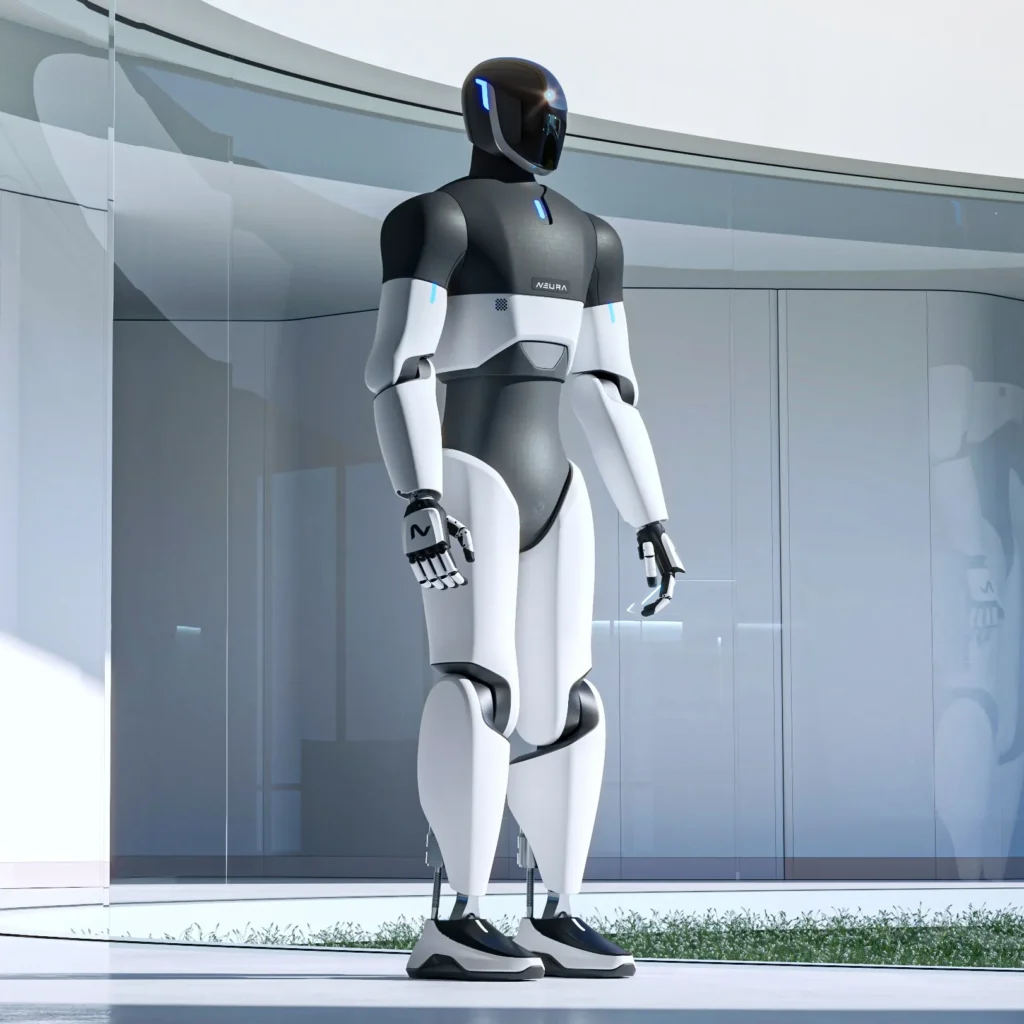
While the majority of this capital has flowed into companies based in the U.S. and China, Europe is becoming a competitive hub. Beyond Neura Robotics, other emerging players include the U.K.-based company Humanoid and Germany’s Agile Robots, which is backed by SoftBank.
Comparative Funding Landscapes
The scale of Neura’s $1.4 billion round places it among the global leaders in the robotics race. This contrasts with earlier stages of AI development, which focused primarily on Large Language Models (LLMs). The current trend shifts toward “embodied AI,” where intelligence is integrated into physical hardware capable of real-world interaction.
What happens when AI moves from screens to physical robots?
The transition to humanoid robotics allows AI to perform tasks in environments designed for humans. This reduces the need to redesign factories or warehouses to accommodate traditional, stationary industrial robots.
The involvement of the European Investment Bank alongside private tech giants suggests a strategic effort to maintain industrial sovereignty in Europe. By integrating AI into physical systems, companies can automate complex manual labor that previously required human dexterity and adaptability.
Who are the main players in the humanoid robotics race?
The race is currently a three-way contest between the US, China, and Europe. Neura Robotics is positioning itself as the European anchor, leveraging partnerships with industrial giants like Bosch.
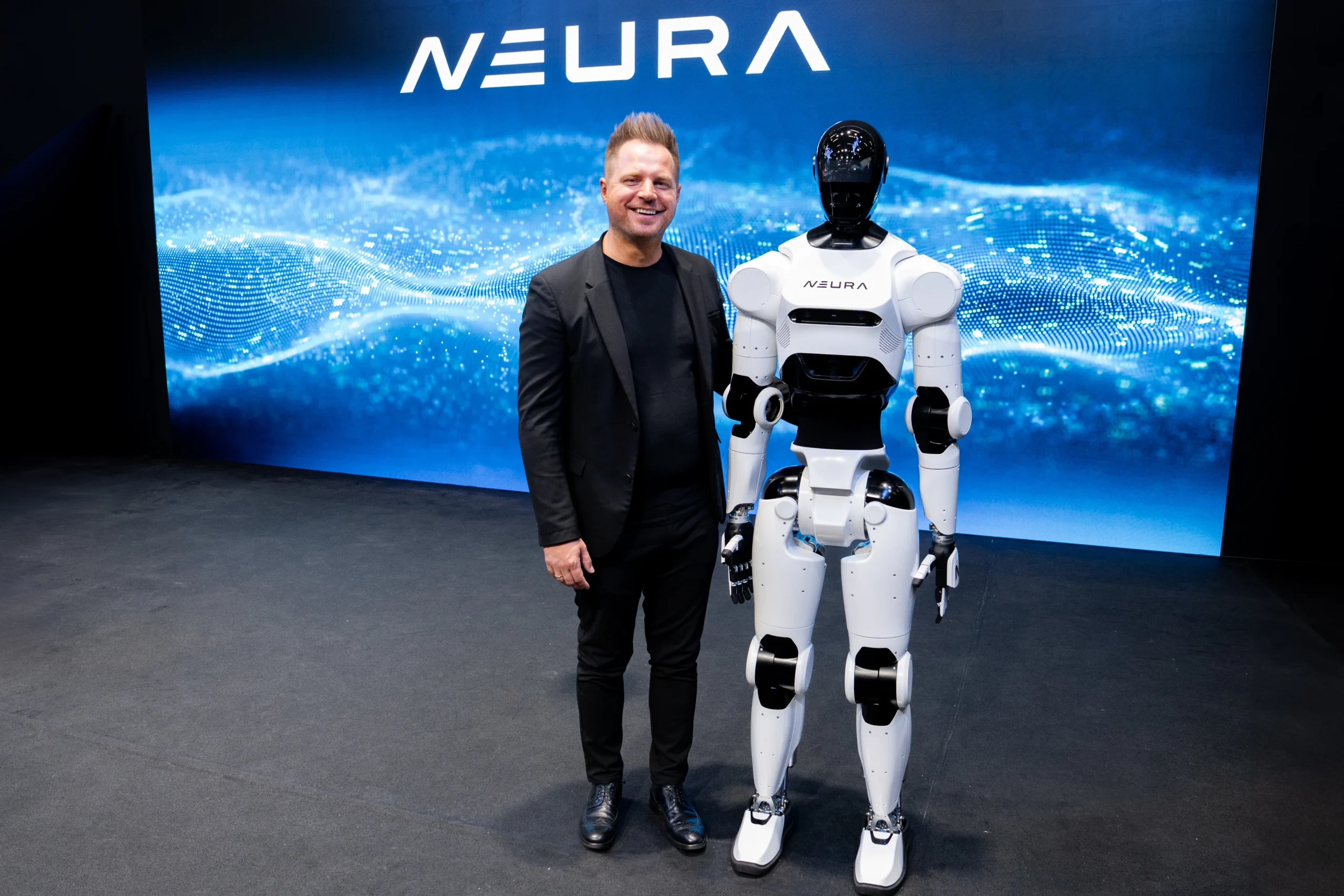
In the US, companies are integrating AI from firms like Nvidia to handle the massive compute requirements of real-time physical movement. In China, the focus remains on rapid scaling and manufacturing efficiency. Reger claims this financing puts Neura “firmly among the global leaders” alongside these superpowers.
Frequently Asked Questions
How much is Neura Robotics valued at?
A source familiar with the matter reports the company’s valuation is around $7 billion, though the company declined to comment on the figure.
Who are the primary investors in Neura Robotics’ Series C?
Investors include Amazon, Nvidia, Qualcomm, Tether, Bosch, Schaeffler, and the European Investment Bank.
What is the total investment in robotics for 2026?
According to Dealroom, robotics companies have raised $55.8 billion so far in 2026.
Want to stay ahead of the AI and robotics curve?
Share your thoughts in the comments below: Do you think European robotics can outpace Silicon Valley? Subscribe to our newsletter for more industrial tech insights.