
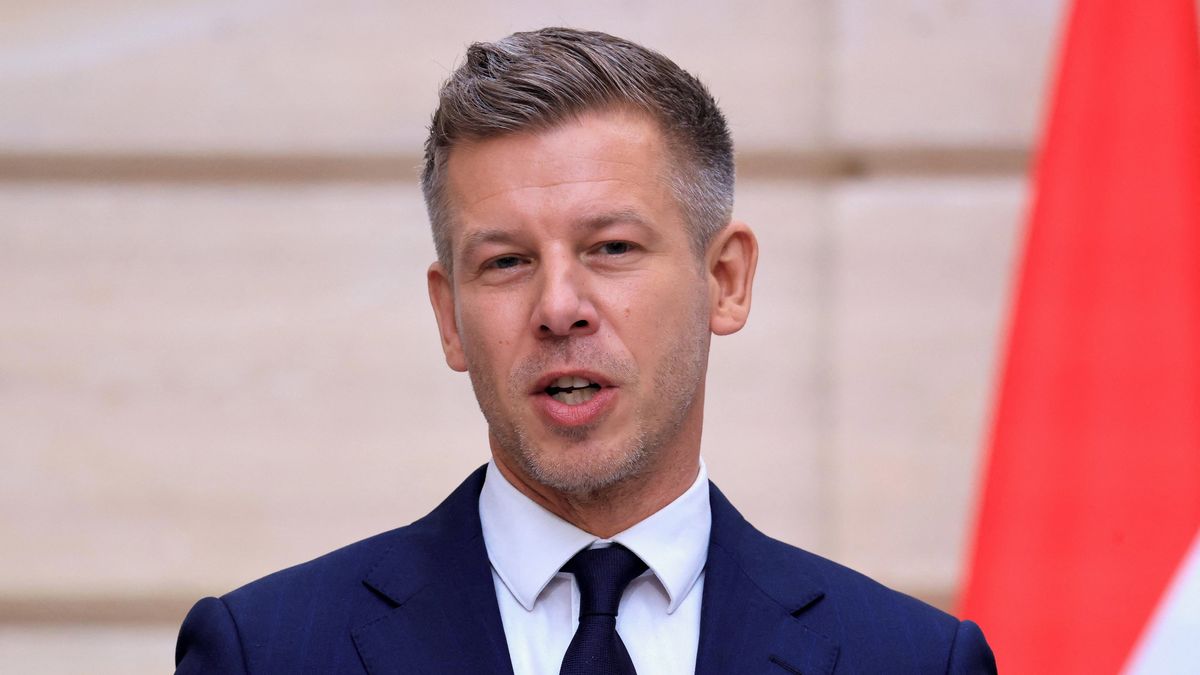
Hungary-Ukraine Deal: Minority Rights to Advance EU Accession
The New Blueprint for Minority Rights: A Geopolitical Shift in Eastern Europe
For years, the relationship between Budapest and Kyiv was defined by a stalemate. The friction centered on the Zakarpattia region, where the Hungarian minority fought for the right to maintain their linguistic and cultural identity. However, the recent comprehensive agreement announced by Hungarian Prime Minister Péter Magyar signals more than just a bilateral truce; it represents a fundamental shift in how minority rights are leveraged within the framework of European Union (EU) accession.
When a nation seeks to join the EU, “Copenhagen Criteria” demand not only economic stability and democratic governance but also the protection of minorities. The resolution of the Hungarian-Ukrainian dispute suggests a trend where specific, codified minority protections become the “key” to unlocking the bureaucratic doors of Brussels.
Beyond the Language Dispute: A Model for Regional Stability
The agreement covers language, education, and political participation. In the past, the focus was narrowly on whether students could take exams in Hungarian. The new trend, however, is toward integrated legal frameworks. By incorporating these rights into Ukraine’s broader EU action plan, the rights of minorities are no longer seen as “concessions” to a neighbor, but as “requirements” for European integration.
This approach mirrors previous EU expansions, where candidate countries had to resolve ethnic tensions to ensure long-term stability. For instance, the Balkan states faced similar pressures to harmonize minority laws before their paths to membership became clear.
The “Magyar Effect”: A Pivot in Budapest’s Diplomacy
The transition from the national-conservative era of Viktor Orbán to the leadership of Péter Magyar marks a pivot from confrontational nationalism to strategic pragmatism. While the previous administration often used minority rights as a tool for diplomatic obstruction, the current trajectory suggests a desire to be a “facilitator” rather than a “blocker.”
Interestingly, this pivot does not mean a total surrender of national interests. Magyar’s insistence that Hungary will not provide weapons or troops, and his call for a binding referendum on Ukraine’s eventual entry, shows a calculated balance. He is offering a diplomatic olive branch to Kyiv and Brussels while maintaining a protective shield over domestic sentiment.
Pragmatism vs. Nationalism in the New East
We are seeing a trend where “identity politics” are being rebranded as “legal compliance.” By framing the expansion of Hungarian rights as part of an EU action plan, both Kyiv and Budapest can claim victory. Kyiv can tell its citizens it is simply following EU rules, and Budapest can tell its constituents it has secured historic protections for its kin.
The Long Road to Brussels: Ukraine’s EU Accession Trends
The mention of the “33 chapters” of accession provides a realistic timeline for Ukraine’s future. The trend is moving away from “fast-track” entry—which many member states fear would destabilize the EU’s budget and voting structures—toward a measured, milestone-based integration.
The potential opening of the first chapter, contingent on the minority rights agreement, sets a precedent: Ukraine must resolve its external frictions to move forward. This “conditionality” will likely extend to other neighbors, including Poland, where similar historical and agricultural disputes have simmered.
The 10-to-15 Year Horizon
By suggesting a decade-plus timeframe and a final referendum, Hungary is effectively managing expectations. The future trend for EU expansion is likely to be a “multi-speed Europe,” where candidate countries gain access to the Single Market and certain benefits long before they gain full voting rights in the European Council.
FAQ: Understanding the Hungary-Ukraine Breakthrough
Why is the Hungarian minority in Ukraine so important?
It is a matter of national identity for Hungary and a test of democratic pluralism for Ukraine. Resolving these rights is essential for Ukraine to meet the EU’s human rights and minority protection standards.
Will this lead to Ukraine joining the EU immediately?
No. While it may open the first “chapter” of negotiations, full membership requires closing 33 different chapters, a process that could take 10 to 15 years.
Is Hungary supporting Ukraine’s war effort now?
Despite the diplomatic thaw, Hungary maintains a strict policy of not sending weapons or soldiers to Ukraine, focusing instead on diplomatic and humanitarian channels.
What is the role of the “binding referendum”?
It is a political safeguard. It ensures that the final decision on Ukraine’s membership rests with the Hungarian electorate, reflecting the domestic political sensitivity of the issue.
What do you think about this diplomatic shift?
Do you believe that tying minority rights to EU accession is a fair model, or does it give member states too much leverage over candidates?
Share your thoughts in the comments below or subscribe to our newsletter for deep-dive geopolitical analysis.