
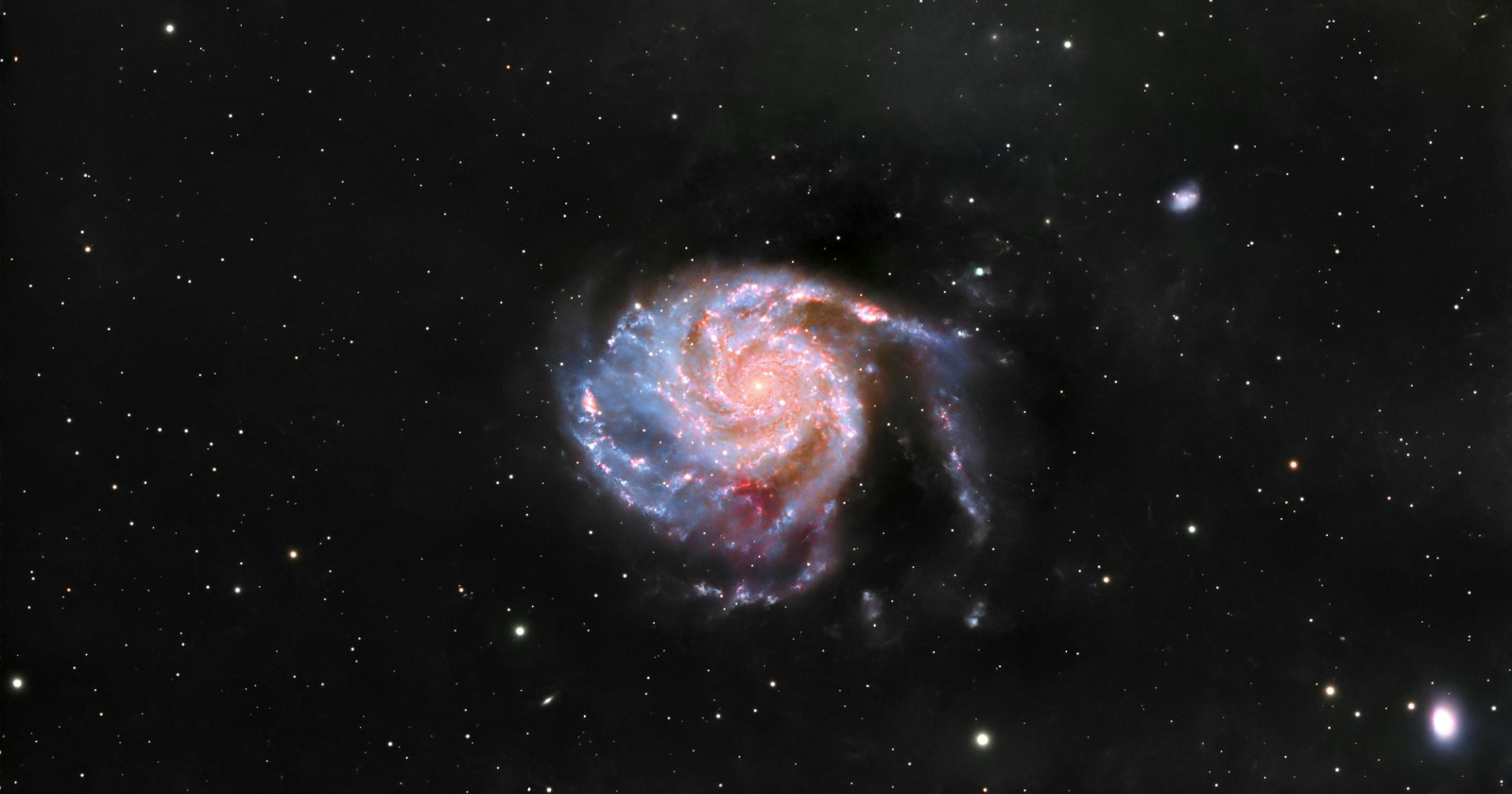
In 1995, astronomers aimed the Hubble Space Telescope at a tiny patch of sky that looked almost empty – a dark spot near the Big Dipper no wider than a pinhead held at arm’s length. After 10 days of exposures, the darkness resolved into roughly 3,000 galaxies, hiding in a place where the human eye saw nothing at all.
The Legacy of the Hubble Deep Field
In 1995, the Hubble Space Telescope captured an image that redefined humanity’s understanding of the cosmos. By staring at a seemingly empty patch of sky for 10 days, astronomers uncovered thousands of galaxies, revealing the universe’s hidden density. According to NASA, the Hubble Deep Field (HDF) was assembled from 342 exposures, each contributing to a mosaic that showed galaxies billions of light-years away. The project, led by Robert Williams, transformed a “blank” sky into a window into cosmic history.
How the Deep Field Redefined Cosmic Vision
The HDF’s greatest achievement was not just its technical precision but its philosophical impact. By selecting a region free from Milky Way interference, astronomers ensured a “peephole” into the universe’s depths. “It wasn’t about finding something specific,” says Dr. Emily Rice, an astrophysicist at the American Museum of Natural History. “It was about asking: What’s hidden in the dark?” The image confirmed that even the emptiest patches of sky contain galaxies, challenging preconceptions about cosmic distribution.
Did you know? The HDF’s field was roughly the size of a dime held 75 feet away. Yet it contained over 3,000 galaxies, each a city of stars. This discovery underscored the universe’s vastness, a theme that continues to drive modern astronomy.
Future Deep Field Missions: Pushing the Boundaries
Following the HDF, missions like the Hubble Ultra Deep Field (2004) and the Hubble eXtreme Deep Field (2012) extended the technique. These projects used longer exposure times and advanced filters to capture even fainter objects. Now, the James Webb Space Telescope (JWST) is taking this approach further, observing in infrared to detect light from the universe’s earliest galaxies.

Webb’s Role in the Next Deep Field Era
JWST’s infrared capabilities allow it to peer deeper into the cosmos than Hubble ever could. In 2022, the telescope’s images of galaxy cluster SMACS 0723 revealed over 5,000 galaxies, some dating back 13 billion years. “Webb is like Hubble on steroids,” says Dr. Jane Rigby, a JWST project scientist. “It’s not just about seeing more; it’s about seeing older.”
Pro tip: Deep field surveys are critical for studying galaxy evolution. By comparing ancient and modern galaxies, astronomers can track how structures like spiral arms and galactic collisions have changed over time.
The Science Behind the Image: Technology and Strategy
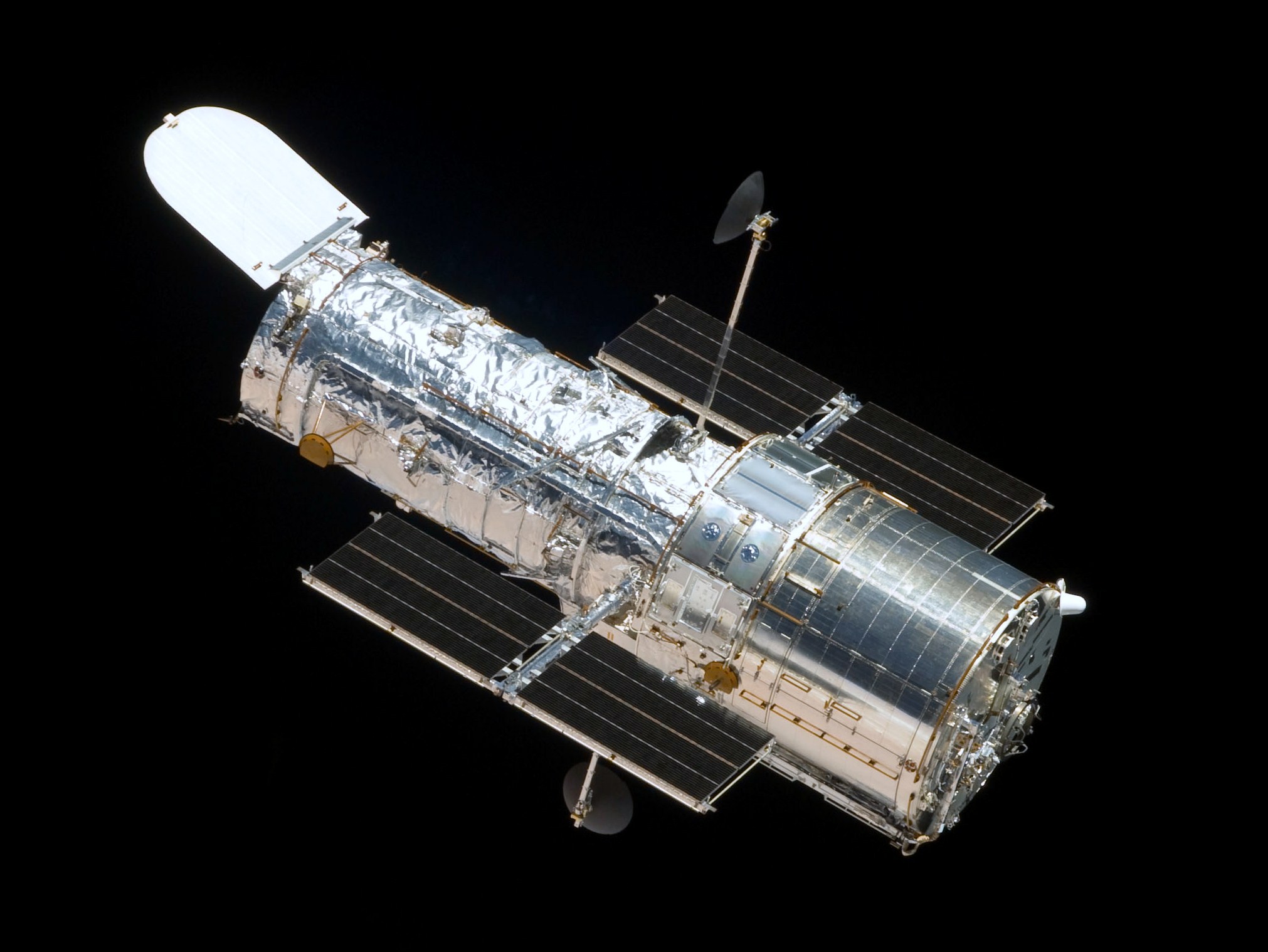
The HDF’s success hinged on Hubble’s unique orbit and instrumentation. The telescope’s position above Earth’s atmosphere allowed it to avoid atmospheric distortion, while its Wide Field and Planetary Camera 2 captured high-resolution data. Astronomers also used “Director’s Discretionary Time” to prioritize long exposures, a decision that paid off with unprecedented detail.
Why the Empty Sky Wasn’t Empty
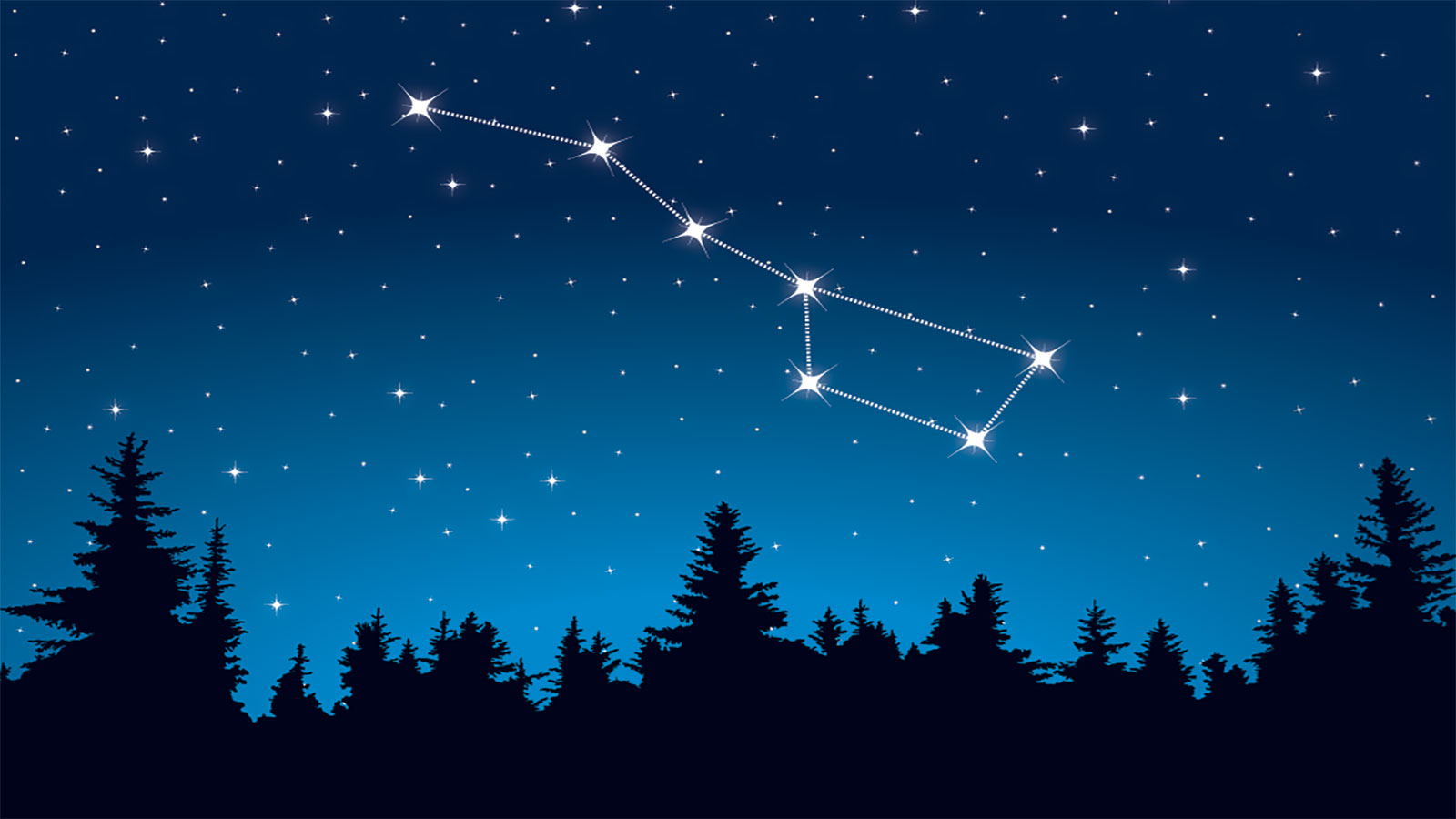
Choosing a “blank” sky wasn’t arbitrary. The HDF’s location near the Big Dipper avoided bright stars and dust clouds, ensuring a clear view. “It’s like taking a photo in a dark room with a flashlight,” explains NASA’s Hubble team. “You need to eliminate distractions to see what’s truly there.”
According to a 2023 study in Astronomy & Astrophysics, deep field surveys have revealed that galaxies in the early universe were more irregular and collision-prone than those nearby. This suggests that galaxy formation was a chaotic process, shaped by mergers and gravitational interactions.
What’s Next for Deep Field Astronomy?
As technology advances, deep field projects are becoming more ambitious. The upcoming Nancy Grace Roman Space Telescope will survey vast areas of the sky, while ground-based observatories like the Vera C. Rubin Observatory will complement space-based efforts. These initiatives aim to map the universe’s structure with unprecedented accuracy.
Big Data and the Future of Cosmic Mapping
Modern deep field projects generate massive datasets, requiring advanced algorithms to analyze. Machine learning tools now help classify galaxies and identify rare objects, such as primordial galaxies from the universe’s first billion years. “We’re moving from discovery to detailed analysis,” says Dr. Sarah Gibbens, a data scientist at the European Space Agency.
Did you know? The HDF’s data is still used today. In 2021, researchers reanalyzed the image using AI to detect faint galaxies previously overlooked.
Frequently Asked Questions
What did the Hubble Deep Field reveal?
The HDF showed that even the darkest patches of sky contain thousands of galaxies, proving the universe is far more densely populated than it appears.
How was the image created?
Over 10 days, Hubble took 342 exposures, which were combined to create a single image. Each exposure lasted several hours, allowing the telescope to gather faint light from distant galaxies.
Why is the HDF still relevant today?
The HDF set a precedent for deep field surveys, influencing missions like JWST and shaping our understanding of galaxy evolution. Its data remains a cornerstone for modern astrophysics.
Call to Action
The Hubble Deep Field wasn’t just a photograph—it was a revolution. As new telescopes push the limits of exploration, the lessons from the HDF continue to inspire. Want to dive deeper? Explore NASA’s Hubble Legacy Archive or follow the James Webb Space Telescope’s latest findings. Share your thoughts below or subscribe for more insights into the universe’s greatest mysteries.