
In vivo assessment of anti-helminthic and anti-inflammatory effects of Fucoidan on Schistosoma mansoni immature stages
Researchers have identified that fucoidan, a sulfated polysaccharide found in brown seaweed (Fucus vesiculosus), exhibits significant therapeutic potential against Schistosoma mansoni infections when administered early. While the drug praziquantel (PZQ) remains the primary treatment for schistosomiasis, its limited effectiveness against juvenile parasites has prompted investigations into adjunctive therapies. According to the study, fucoidan functions through immunomodulatory and anti-inflammatory pathways rather than direct parasiticidal activity.
Did You Know? Fucoidan may partially restore gut health during infection by promoting the growth of Lactobacillus, a beneficial bacterium often depleted by S. mansoni, which is associated with lower worm and egg burdens.
How Fucoidan Affects Parasite Burden
Fucoidan treatment produces time-dependent effects on both worm and egg counts. Data indicates that while PZQ is superior at eliminating adult worms—achieving complete clearance compared to a 58.9% reduction rate for fucoidan in one reported trial—the seaweed-derived compound consistently reduces the total adult worm burden. The efficacy of fucoidan is most pronounced when administered shortly after infection, as it appears to modulate the host’s oxidative stress and inflammatory responses.
Impact on Liver Pathology and Inflammation
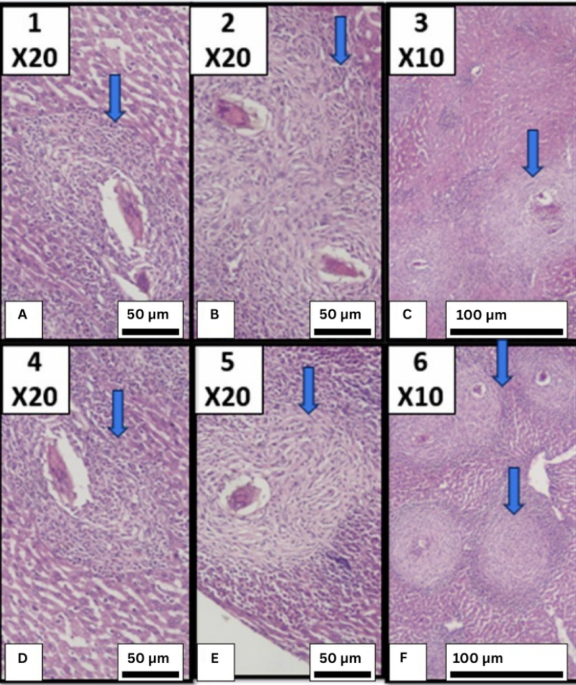
The study highlights that early intervention with fucoidan significantly alters the progression of liver damage associated with the disease. Mice treated early (at 7, 21, or 35 days post-infection) showed a shift toward cellular granulomas, whereas untreated controls and later-treated groups developed more severe, fibrocellular lesions. By reducing the expression of pro-inflammatory markers such as TNF-α, IL-1β, and iNOS, early fucoidan administration may interrupt the inflammatory cascades that lead to chronic hepatic fibrosis.
Expert Insight: The timing-dependent nature of these results suggests that fucoidan should not be viewed as a replacement for standard medication. Instead, its value lies in its potential to serve as an early-stage adjunct that preserves liver architecture and mitigates the fibrotic remodeling that drives long-term morbidity in human patients.
What May Happen Next
Future research is likely to focus on optimizing the combination of praziquantel and fucoidan to maximize therapeutic outcomes. Because the current findings are limited to specific experimental models, subsequent studies may address dose-response relationships and sex-related differences in treatment response. Analysts expect that if these results are replicated in broader models, clinical investigations into the use of fucoidan for acute schistosomiasis could follow.
Frequently Asked Questions
Does fucoidan kill adult worms as effectively as praziquantel?
No. The study confirms that praziquantel remains superior for adulticidal activity, achieving complete elimination of adult worms, whereas fucoidan provides a moderate reduction in worm burden through indirect mechanisms.
Why is the timing of fucoidan administration important?
The therapeutic impact is stage-dependent. Early administration helps prevent the progression of hepatic granulomas from a cellular state to a more fibrotic, damaging state, whereas later administration shows reduced efficacy in preventing tissue injury.
How does fucoidan influence the host’s immune response?
Fucoidan acts as an immunomodulator, suppressing the expression of pro-inflammatory cytokines like TNF-α and IL-1β. This helps balance the host’s response, allowing for parasite control while limiting excessive inflammation and tissue damage.
How might the integration of seaweed-derived compounds into standard care change the long-term prognosis for those living in high-transmission areas?