
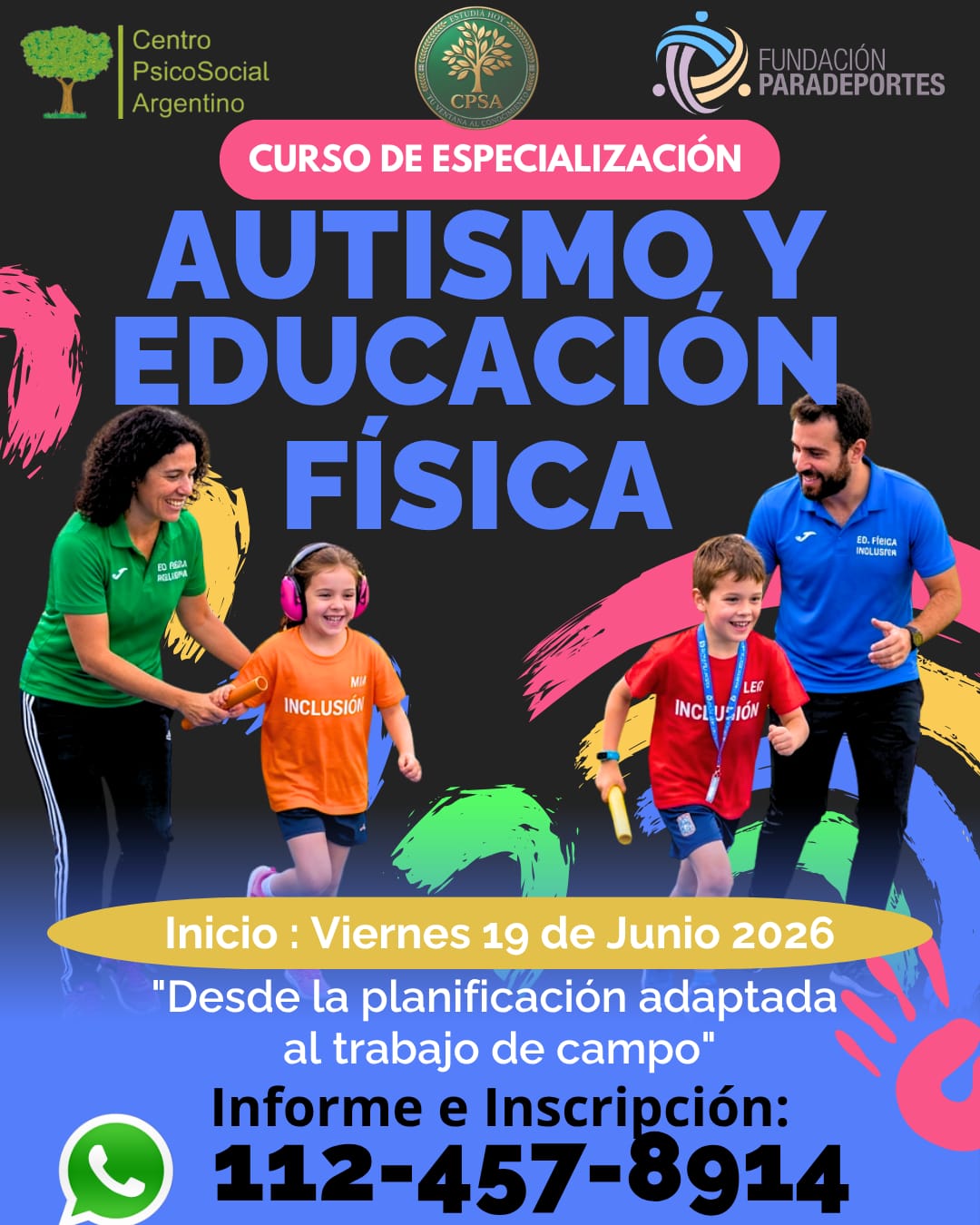
Inclusive Physical Education: Strategies for Students with Autism
The Centro PsicoSocial Argentino, in partnership with Fundación Paradeportes, Fundación Construyendo Alternativas, and Estudia Hoy CPSA, is launching a virtual professional course titled “Estrategias para una inclusión real.” Starting June 19, Professors Amilcar Ayala and Eduardo Martínez will train physical education and health professionals to integrate students with Autism Spectrum Disorder (TEA) into sporting and educational environments.
The program targets physical education teachers, occupational therapists, therapeutic companions, psychomotor therapists, and social psychologists. According to the course description, the curriculum shifts focus from student limitations to their potential, utilizing a social model of disability to improve field-work planning.
Why is this inclusive sports training being implemented?
The program aims to move beyond categorical diagnoses to provide practical strategies for the “patio” or gym. According to the syllabus, the training prioritizes practical learning and pedagogical reflection to build a collaborative network among professionals.

The course focuses on neurodiversity and sensory characteristics. It specifically addresses the analysis of motor execution in children with TEA and the role of executive functions in these disorders.
What does the curriculum cover for educators?
The training consists of five synchronous one-hour classes and five asynchronous one-hour modules. The first session begins Friday, June 19, at 19:00hs, with subsequent classes on June 26 and July 3, 10, and 17.
The syllabus includes the following modules:
- Class 1: Introduction to Autism, motor execution analysis, and neurodiversity.
- Class 2: Spatial organization and routines, including Riviere’s 12 altered dimensions and the use of visual agendas and pictograms.
- Class 3: Communication and socialization, focusing on motor games, the “mediator peer” figure, and effective communication via tone and gesture.
- Class 4: Inclusive planning and progress evaluation, including flexible curricular adaptation and coordination with families and therapists.
- Class 5: Transitioning from school inclusion to social and sporting inclusion through real-world successful cases.
How can professionals enroll in the course?
The course requires a single payment of $45,000. According to the registration instructions, applicants must transfer funds to CPSA.CURSOS.MP (Account holder: Diana Pascutto).
To complete enrollment, participants must send a payment receipt, their full name, and DNI number to the institutional WhatsApp line at 112-457-8914. Evaluation for certification includes participation in activities and a final eight-question multiple-choice questionnaire.
Because the program emphasizes a “transformative” approach to physical education, future iterations of the course may expand to include more real-world case studies or potentially increase the number of collaborating professional networks.
Frequently Asked Questions
Who is eligible to take the course?
The program is designed for physical education teachers, occupational therapists, therapeutic companions, psychomotor therapists, social psychologists, and other professionals involved in educational inclusion.
What is the format of the classes?
The modality is virtual, combining five synchronous one-hour sessions with asynchronous activities lasting one hour per module.
What tools for autism support are taught?
The course covers the use of visual agendas, pictograms, social stories, and specific motor games to facilitate interaction and turn-taking.
How could the implementation of visual agendas in sports change the experience for students with autism?