
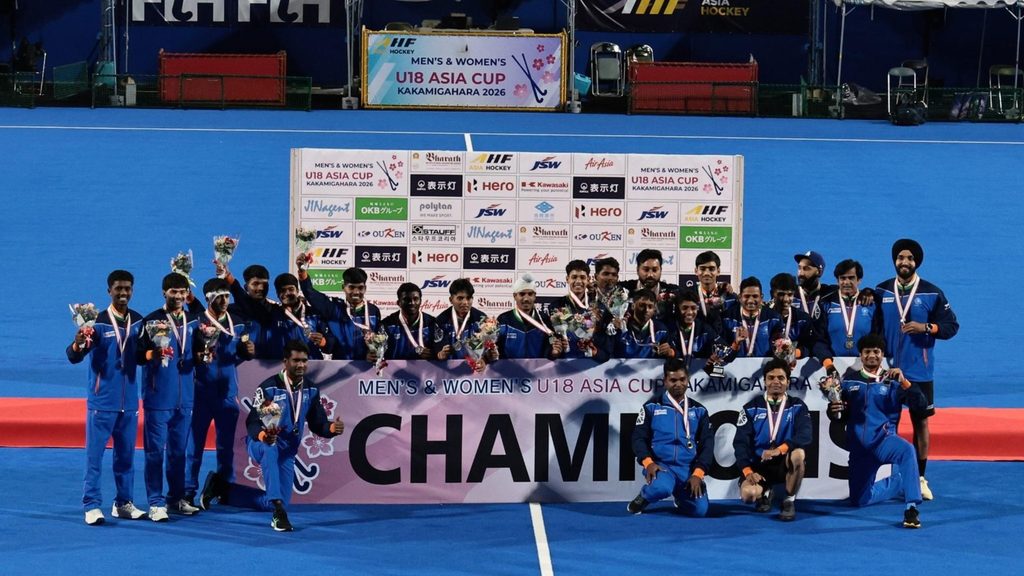
India Crowned Men’s U18 Asia Cup 2026 Champions
India secured the Men’s U18 Asia Cup 2026 title with a decisive 4-1 win over Japan in Kakamigahara, signaling a significant shift in the balance of continental youth hockey. This victory, coupled with Pakistan’s 3-0 bronze-medal finish against Malaysia, highlights the intensifying competition within the Asian Hockey Federation’s development pathway as these nations prepare their next generation for senior international duty.
How does the U18 Asia Cup shape future senior rosters?
The U18 Asia Cup serves as the primary incubator for national team talent, where tactical discipline often outweighs raw athleticism. According to the Asian Hockey Federation, the 2026 tournament showcased a high conversion rate on penalty corners, a trend that mirrors the modern senior game where set-piece efficiency determines match outcomes. Players who excel at this level, such as the standout performers in India’s attacking lineup, typically transition to the senior setup within 24 to 36 months, according to development timelines tracked by the International Hockey Federation (FIH).
Why is the rivalry between India, Pakistan, and Japan intensifying?
The 2026 podium—India, Japan, and Pakistan—demonstrates a clear geographic shift in hockey dominance. While India continues to dominate through high-possession attacking play, Japan’s progression to the Gold Medal Match confirms their status as a tactical powerhouse. Data from the Asian Hockey Federation shows that Japan’s investment in youth infrastructure over the last decade has narrowed the gap significantly against traditional giants. Pakistan’s bronze-medal performance against Malaysia further proves that discipline and defensive structure are becoming the standard for any team hoping to challenge for the top three.

What are the next steps for these emerging talents?
Success at the U18 level is only the first marker in a long-term development cycle. The next step for these players is the Junior World Cup circuit, which provides the necessary exposure to European and South American playing styles. According to the FIH, the transition from continental youth tournaments to global competition requires players to adapt to faster surface speeds and more aggressive pressing systems. Players who stood out in Kakamigahara will likely be scouted for elite club contracts or specialized national academies within the next year.
The Kakamigahara venue has hosted multiple international tournaments, making it a “home court” advantage for Japan. Despite this, India’s 4-1 victory remains one of the most lopsided finals in recent U18 history, underscoring the technical gulf between the top two sides in this specific age group.
Frequently Asked Questions
Who won the Men’s U18 Asia Cup 2026?
India won the tournament, defeating host nation Japan 4-1 in the Gold Medal Match held in Kakamigahara.
Which country took the bronze medal?
Pakistan claimed the bronze medal after a 3-0 victory over Malaysia on the final day of the tournament.
How often is the U18 Asia Cup held?
The tournament is a key fixture in the Asian Hockey Federation calendar, providing a platform for emerging talent to compete before moving into the senior international ranks.
Where can I watch highlights of the 2026 final?
Official match summaries and highlights are available through the Asian Hockey Federation website.
What do you think is the biggest challenge for young hockey players moving into the senior ranks? Let us know in the comments below, or subscribe to our newsletter for the latest updates on international youth hockey development.