

Iran war day 117: Nuclear inspections dispute as US Senate curbs war powers | Military News
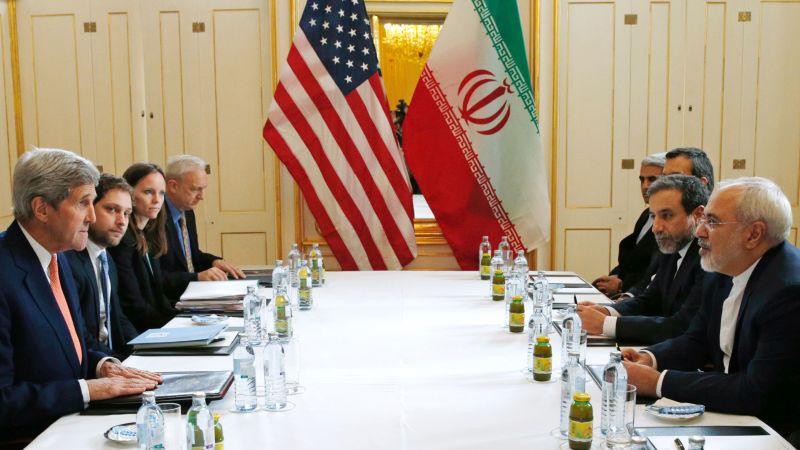
Negotiators are facing a narrow 60-day window to finalize a nuclear and security agreement between the United States and Iran, though conflicting accounts from both nations regarding oversight and regional military doctrine remain significant hurdles. While the U.S. seeks to secure international shipping in the Strait of Hormuz and restore nuclear monitoring, Iranian officials have denied plans for new International Atomic Energy Agency (IAEA) inspections, casting doubt on the feasibility of a comprehensive deal in the immediate future.
Why is a 60-day deal considered unlikely?
Independent analysts suggest the 60-day timeline cited by U.S. President Donald Trump is operationally unrealistic. Charles Kupchan, a senior fellow at the Council on Foreign Relations, stated to Al Jazeera that there is “no way” both sides can complete a final agreement within that period. Kupchan noted that negotiations may realistically extend into the next calendar year, suggesting that both Washington and Tehran might simply “run out the clock” by maintaining the status quo in the Strait of Hormuz rather than reaching a definitive, signed treaty before the end of the Trump presidency.
What is the current status of nuclear inspections?
There is a direct contradiction between U.S. claims and Iranian policy regarding the International Atomic Energy Agency (IAEA). While President Trump recently claimed that Tehran had accepted the “highest level” of monitoring, Iranian Foreign Ministry spokesperson Esmaeil Baghaei explicitly denied these reports. According to Tohid Asadi, reporting for Al Jazeera, Baghaei stated that there are currently no plans for IAEA visits or inspections. Iran maintains that its nuclear activities remain governed by existing parliamentary legislation and Supreme National Security Council decisions, following the suspension of cooperation in June 2025.
How are regional military doctrines shifting?
Iran has signaled a move toward an “offensive doctrine,” complicating the regional security environment. General Ahmad Reza Pourdastan, head of Iran’s Army Strategic Studies and Research Center, told the semi-official Fars news agency that Tehran’s military strategy now encompasses preemptive operations. This shift away from a purely defensive posture serves as a warning that Iran retains significant, unused military capabilities. Simultaneously, U.S. Secretary of State Marco Rubio is conducting a tour of the United Arab Emirates, Kuwait, and Bahrain to reassure Gulf allies that U.S. security commitments remain intact despite the ongoing, often contentious, negotiations.
Will energy markets stabilize soon?
Qatar is preparing to restore normal liquefied natural gas (LNG) production, providing a potential buffer for global energy supplies. Prime Minister Sheikh Mohammed bin Abdulrahman bin Jassim Al Thani told the Financial Times that most production could resume within weeks, following the disruption caused by an Iranian drone attack on the Ras Laffan facility in March. However, the Prime Minister noted that QatarEnergy will only lift its force majeure declaration once safety and operational concerns are fully resolved.
Frequently Asked Questions
- Are IAEA inspectors currently in Iran? No. According to the Iranian Foreign Ministry, there are no current plans for IAEA inspections or visits.
- Why is the Strait of Hormuz significant? It is a vital waterway for international shipping. U.S. Secretary of State Marco Rubio has stated that any final deal will prohibit Iran from charging tolls in the area.
- What is the current status of the Lebanon ceasefire? The United Nations reports that the ceasefire is “largely holding,” though UNIFIL peacekeepers continue to observe isolated incidents of machine-gun fire and drone activity.
- Has the U.S. Congress approved the Iran deal? No. In fact, the Senate recently passed a resolution requiring congressional approval for further military action against Iran, a measure that President Trump is expected to veto.
Stay informed on the latest developments in global diplomacy and energy security. Subscribe to our newsletter for deep-dive analysis delivered directly to your inbox.