
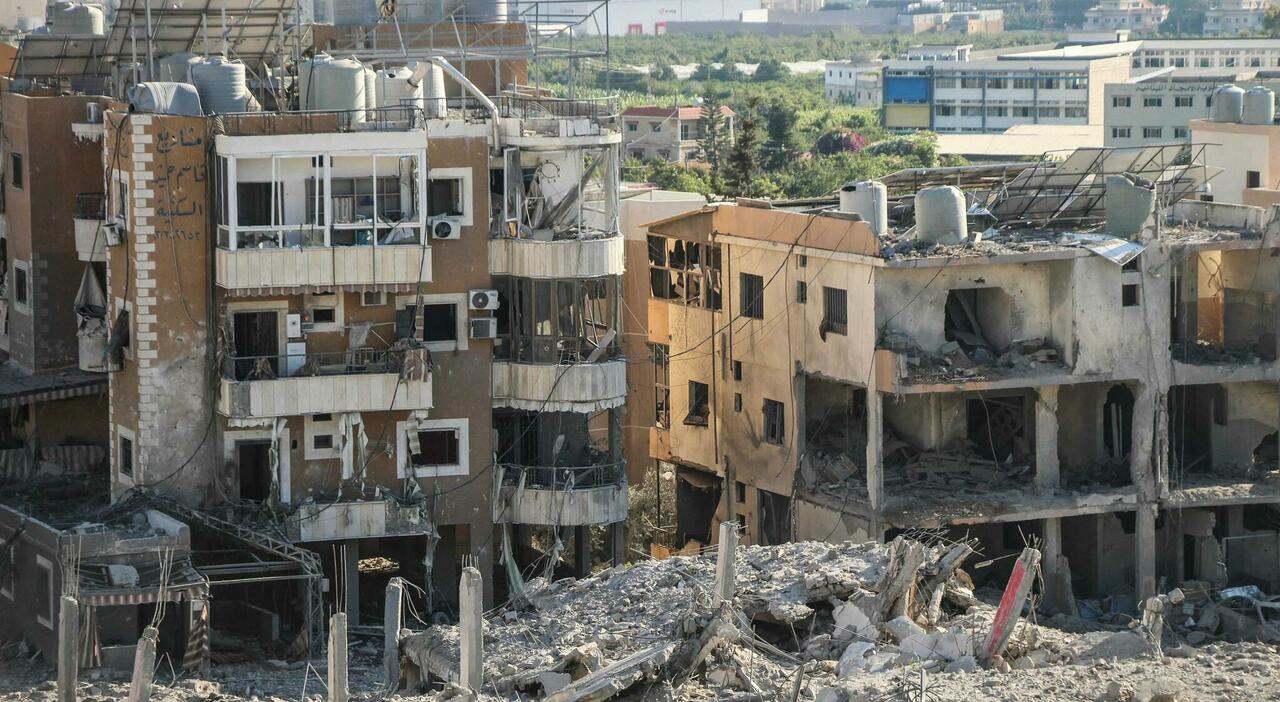
Israel-Lebanon Ceasefire and US-Iran Conflict: Latest Updates
The New Middle East Order: Fragile Truces and High-Stakes Diplomacy
The geopolitical landscape of the Middle East is currently undergoing a seismic shift. We are witnessing a volatile cocktail of direct diplomacy, asymmetric warfare, and a fundamental redefining of national sovereignty. As the world watches the precarious balance between the United States, Iran, Israel, and Lebanon, several long-term trends are emerging that will likely dictate regional stability for the next decade.
The ‘Decoupling’ Strategy: Separating Regional Conflicts
One of the most significant trends is the attempt to “decouple” interconnected conflicts. For years, the “Axis of Resistance”—linking Iran, Hezbollah, and various militias—has operated as a single strategic unit. However, we are now seeing a shift toward treating these conflicts as isolated issues.
By separating the Lebanon-Israel ceasefire from the broader US-Iran nuclear negotiations, diplomats are attempting to create “small wins.” This approach allows for tactical successes, such as a cessation of hostilities in the south of Lebanon, without requiring a comprehensive grand bargain that would be nearly impossible to achieve given the deep-seated mistrust between Washington and Tehran.
The Risk of Tactical Fragmentation
While decoupling can stop immediate bloodshed, it risks ignoring the root cause: the Iranian influence across the Levant. If a ceasefire in Lebanon is achieved without addressing the overarching relationship between Tehran and its proxies, the peace remains superficial. History shows that fragmented agreements often lead to “frozen conflicts” that can reignite with a single spark.
The Disarmament Dilemma and State Sovereignty
The tension between Israel’s demand for the complete disarmament of Hezbollah and Lebanon’s insistence on “territorial integrity” represents a classic geopolitical deadlock. This isn’t just about weapons; it’s about who holds the monopoly on force within a state.
For Lebanon, the challenge is transforming from a state with a “parallel military” into a sovereign entity where the national army is the sole protector. For Israel, any presence of Hezbollah infrastructure near the Litani River is viewed as an existential threat. The trend here is the move toward exclusive security zones, where the Lebanese army acts as a buffer, effectively attempting to “nationalize” security to satisfy international observers.
Asymmetric Warfare: The Era of the ‘Drone Signal’
Recent strikes on infrastructure in Kuwait and Bahrain, followed by US “self-defense” raids in Iran, highlight a new trend in military communication. We have entered the era of signaling through asymmetry.
Rather than engaging in full-scale conventional war, actors are using drones and precision missiles to hit strategic targets—like communication towers or airport terminals—to signal capability and resolve. These are not intended to be decisive battles, but rather “violent conversations” designed to force the opponent back to the negotiating table.
This trend suggests that future conflicts will be characterized by “grey zone” warfare: actions that sit just below the threshold of an all-out war but maintain a constant state of high tension. Read more about the evolution of drone warfare here.
The Domestic Friction: Executive Power vs. Legislative Will
The friction within the US government—exemplified by the House of Representatives attempting to order a troop withdrawal while the Executive branch pushes for a negotiated end to the Iran conflict—reveals a growing divide in American foreign policy.
The trend is a shift toward “Personalized Diplomacy.” When foreign policy is driven by the instincts of a single leader rather than a long-term institutional consensus, the results are often faster but more volatile. This creates a “credibility gap” where adversaries may agree to terms with a president, but remain skeptical about whether those terms will survive a change in administration or a legislative veto.
The Global Narrative Shift
We are also seeing a widening rhetorical gap between the US-Israel alliance and European leadership. The framing of the conflict as a struggle for “civilization” versus “barbarism” suggests that the diplomatic language is shifting from legalistic frameworks (International Law) to ideological ones. This makes compromise harder, as ideological battles are rarely won through negotiation.
Frequently Asked Questions (FAQ)
Will Hezbollah truly disarm?
Complete disarmament is unlikely in the short term. The trend suggests a “strategic relocation” or a reduction in visible infrastructure to satisfy ceasefire terms, while maintaining a latent capability.
What is the likelihood of a permanent US-Iran nuclear deal?
High, provided the deal focuses on immediate sanctions relief and verifiable nuclear freezes rather than a total ideological overhaul of the Iranian regime.
Why are drones the weapon of choice in the region?
Drones provide “plausible deniability” and high impact with low risk to personnel, making them the ideal tool for the “signaling” strategy mentioned above.
Join the Conversation
Do you believe “decoupling” regional conflicts is a viable path to peace, or is it merely a temporary band-aid? Share your thoughts in the comments below or subscribe to our newsletter for deep-dive geopolitical analysis.