
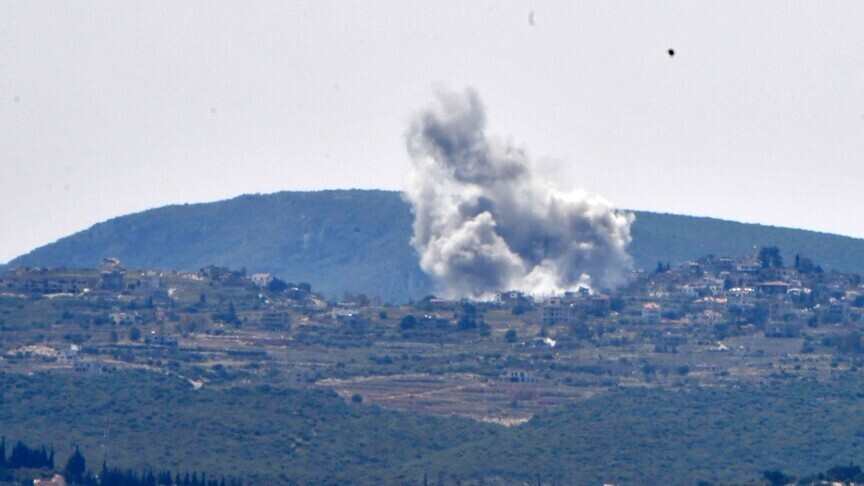
Israeli Airstrikes Kill 17 in Lebanon Amid Ceasefire Violations
Israeli military strikes across southern Lebanon and the Bekaa region killed 17 Lebanese citizens on Monday. These attacks occur amidst ongoing daily breaches of a ceasefire agreement that was established on April 17 and extended until early July.
Casualties and Targeted Regions
The violence began Monday morning with drone strikes targeting roads between the Nabatieh and South governorates, resulting in three deaths. These strikes specifically hit a car and a motorcycle on the Kafrremman–Al-Jarmaq road, and another vehicle on the Al-Jarmaq–Al-Khardali route.

Later, warplanes targeted the town of Kafrremman in the Nabatieh district, where four people were killed and three others injured. The city of Nabatieh was subjected to a “fire belt,” while strikes also hit popular housing in the Tyre district.
In the town of Arab Salim, a man and his wife were killed when their home was struck, with rescue teams working to recover their bodies from the rubble. A young man died from injuries sustained in a previous strike on the same town.
Further military activity included strikes on Yater and Hadatha in the Bint Jbeil district, as well as Jibal al-Butum in the Tyre district. Artillery shelling also targeted Srifa in Tyre and Burj Qalawiyeh in Bint Jbeil.
Expansion into the Bekaa Valley
The Israeli military announced the start of attacks on the Bekaa region in eastern Lebanon and other areas, stating the goal was to target Hezbollah infrastructure. In the town of Mashghara in West Bekaa, five people were killed and others injured.
Two additional deaths were reported in the town of Kouthariya al-Sayyad in the Saida district of southern Lebanon. This escalation follows a speech by Prime Minister Benjamin Netanyahu, who vowed to deliver “dense and harsh strikes” against Hezbollah.
Evacuation Warnings and Territorial Status
The Israeli army issued urgent evacuation orders for residents of 10 villages across three Lebanese governorates. Residents of Nabatieh al-Tahta, Ain Qana, Harouf, Zabadine, Kafrremman, Al-Duwayr, Adashit al-Shaqif, Sajid, Al-Louayza, and Maydun were told to move at least 1,000 metres to open areas.
Israeli forces have currently pushed approximately 10 kilometers inside the southern border. This follows decades of occupation in certain southern Lebanese areas, as well as ongoing occupations in Palestine and Syria.
Possible Future Developments
Given the current trajectory, further breaches of the ceasefire may occur before its scheduled end in early July. The military could potentially expand its target list in the Bekaa region, which may lead to increased displacement of the local population.
Frequently Asked Questions
How many people were killed in the strikes on Monday?
A total of 17 Lebanese citizens were killed during the strikes across various regions.
What is the status of the ceasefire agreement?
The ceasefire was announced on April 17 and is extended until early July, though it is currently facing daily breaches.
Which areas were ordered to evacuate?
Ten villages were warned to evacuate, including Nabatieh al-Tahta, Ain Qana, Harouf, Zabadine, Kafrremman, Al-Duwayr, Adashit al-Shaqif, Sajid, Al-Louayza, and Maydun.
How do you think the upcoming July deadline for the ceasefire will affect the stability of the region?