
Italy’s Customs and Monopolies Agency: Transforming Compliance via Digital Innovation
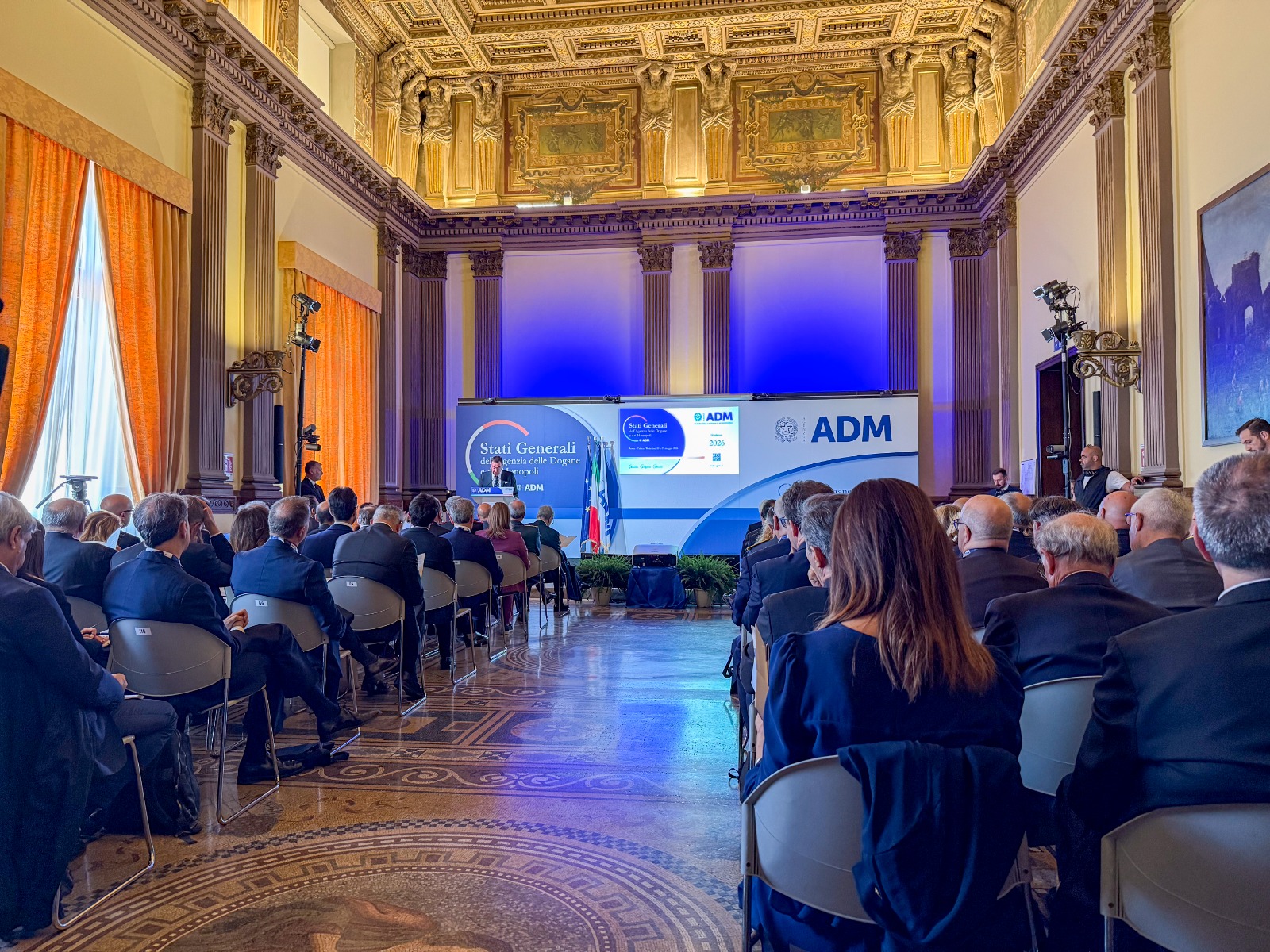
The third edition of the “Stati Generali” of the Agenzia delle Dogane e dei Monopoli (ADM), convened by Director Roberto Alesse, has highlighted a fundamental shift in the relationship between fiscal administration, businesses and markets.
In 2025, the agency collected over 82 billion euros for the Treasury, marking an increase of two billion euros compared to the previous year. This total is comprised of 21.7 billion euros from Customs, 33.7 billion euros from Excise, and 11.5 billion euros from the gaming sector.
A Recalibrated Control System
Beyond the financial totals, ADM has deeply recalibrated its oversight mechanisms. In 2025, the agency seized over 4,000 tons of goods valued at approximately 336 million euros, while issuing sanctions totaling nearly 139 million euros.
Specific enforcement actions included more than 39 million euros in tobacco seizures and the blocking of 1,038 illegal gaming sites. This represents a 44% increase in site closures compared to 2024, driven by the National Anti-Fraud Network and targeted risk selection.
The Transition to Preventive Models
The agency is currently shifting its center of gravity from repressive intervention toward a preventive model. Director of Customs Claudio Oliviero emphasized the priority of utilizing artificial intelligence and preventive analysis to streamline operations.
The introduction of “Trust & Check” certification aims to ensure that increased controls do not hinder commercial traffic. This is particularly critical as e-commerce expands, with customs declarations exceeding 105 million—an 18% increase—and an additional 16 million declarations processed by ADM systems.
Modernizing Excise and Compliance
The excise sector is undergoing a similar transformation under the framework of delegation law 111/2023 and legislative decree 43/2025. The goal is to align the system with actual consumption by replacing annual declarations with semi-annual ones.
This reform resulted from collaboration between the Agency, the Department of Finance, and trade associations. The objective is to reduce administrative burdens and create a more sustainable balance between oversight and economic activity.
The SOAC Paradigm
Central to this new approach is the SOAC (Soggetto Obbligato Accreditato), a new accredited obligated subject model based on the Authorized Economic Operator framework. This shift moves beyond mere regulation toward a paradigm of reliability and transparency.
By providing incentives for virtuous entities, the agency intends to transform regulatory compliance into a strategic advantage for businesses.
Future Outlook
Looking ahead, the agency’s reliance on AI and preventive analysis could further reduce delays in commercial traffic despite rising volumes of e-commerce.
The implementation of the SOAC model may lead to a broader adoption of transparency-based incentives among economic operators. The shift to semi-annual excise declarations is likely to alter how businesses manage their administrative reporting cycles.
Frequently Asked Questions
How much revenue did ADM collect for the Treasury in 2025? The agency collected over 82 billion euros, which included 21.7 billion from Customs, 33.7 billion from Excise, and 11.5 billion from the gaming sector. What is the SOAC and what is its purpose? The SOAC (Soggetto Obbligato Accreditato) is a new accreditation model based on the Authorized Economic Operator. It aims to move compliance from an administrative obligation to a lever for competitiveness through reliability and transparency. How has e-commerce impacted customs declarations? Customs declarations have exceeded 105 million, marking an 18% increase, with ADM systems processing approximately 16 million additional declarations compared to the previous year. Do you believe that shifting from repressive to preventive fiscal controls could significantly increase business competitiveness?