

JWST Discovers Interstellar Comet 3I/ATLAS Older Than the Solar System
NASA’s James Webb Space Telescope found that interstellar comet 3I/ATLAS formed 10 to 12 billion years ago, according to a study published June 22 in Nature. The comet’s deuterium levels—30 times higher than those in local comets—suggest it originated in a frigid environment during the galaxy’s peak star-formation period.
Why is 3I/ATLAS different from comets in our solar system?
The chemical makeup of 3I/ATLAS differs sharply from objects born near our Sun. According to the study led by NASA Goddard astrochemist Martin Cordiner, the comet contains a significantly higher ratio of deuterium, a heavy form of hydrogen, compared to solar system comets.
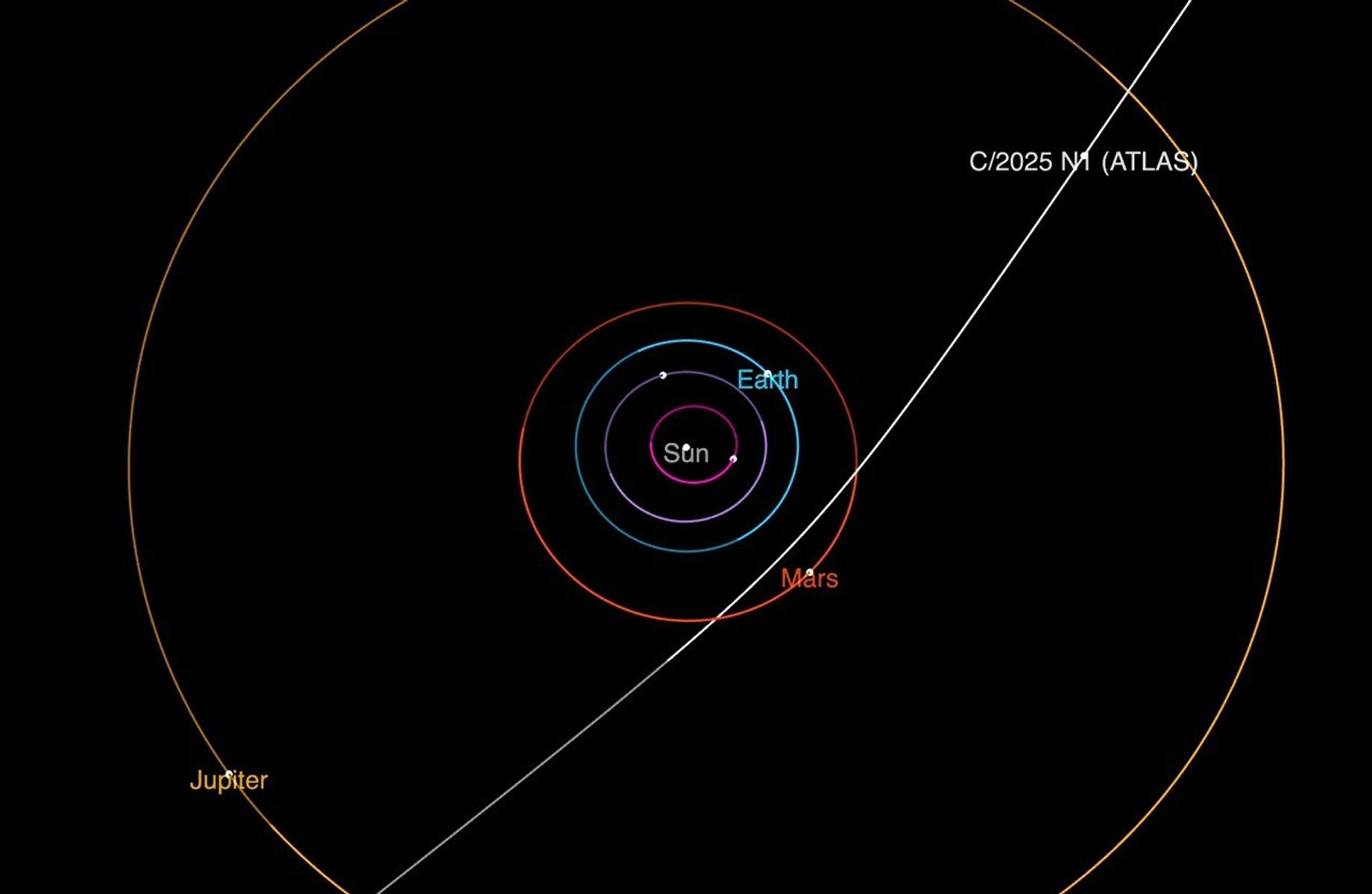
This chemical signature indicates the comet formed in an extremely cold, dense cloud. While most water ice in our neighborhood is H2O, the heavy water ice in 3I/ATLAS remained stable because the object never underwent prolonged heating. This suggests it spent eons in the deepest freeze of a distant stellar system.
Findings from the European Southern Observatory’s Very Large Telescope further support these results. Cyrielle Opitom of the University of Edinburgh led a separate analysis that identified specific variations in carbon and nitrogen within the comet’s cyanide compounds, confirming its alien origin.
How did the James Webb Space Telescope determine its age?
Researchers used the Near-Infrared Spectrograph (NIRSpec) to analyze the gas envelope that formed as 3I/ATLAS approached the Sun in December 2025. By reading infrared light, the instrument identified a low concentration of carbon-13 relative to the lighter carbon-12.

This ratio is a cosmic clock. According to the Nature report, stellar systems generally become richer in carbon-13 as generations of stars are born and die. Because 3I/ATLAS lacks this enrichment, it likely formed during “cosmic noon”—the era when star formation in the universe reached its absolute peak.
For comparison, our own solar system is relatively young, having formed approximately 4.5 billion years ago. 3I/ATLAS predates the Sun by roughly 5 to 7 billion years, making it a chemical fossil from the early history of the galaxy.
What does this discovery mean for the search for alien life?
Analyzing the “prebiotic chemistry” of interstellar objects helps scientists determine if the building blocks of life are common throughout the universe. Stefanie Milam of NASA Goddard stated that these rare isotopes are essential for understanding whether the conditions that created life on Earth are unique or widespread.
Prebiotic chemistry involves the chemical processes that produce the organic molecules necessary for life. By studying 3I/ATLAS, researchers can see if other star systems produced the same raw materials as our own, even billions of years before our Sun existed.
Milam noted that currently, Earth is the only known place in the cosmos where these chemicals resulted in life. Studying visitors like 3I/ATLAS provides a direct sample of a distant galaxy’s chemistry without needing to travel thousands of light-years.
Frequently Asked Questions
It is the third confirmed interstellar comet, meaning it originated from outside our solar system and is passing through our neighborhood.

According to NASA Goddard researchers, it is estimated to be between 10 and 12 billion years old.
The James Webb Space Telescope’s NIRSpec (Near-Infrared Spectrograph) was used to analyze its chemical composition.
What do you think about the possibility of life in systems that existed 10 billion years ago? Share your thoughts in the comments below or subscribe to our newsletter for more deep-space updates.