
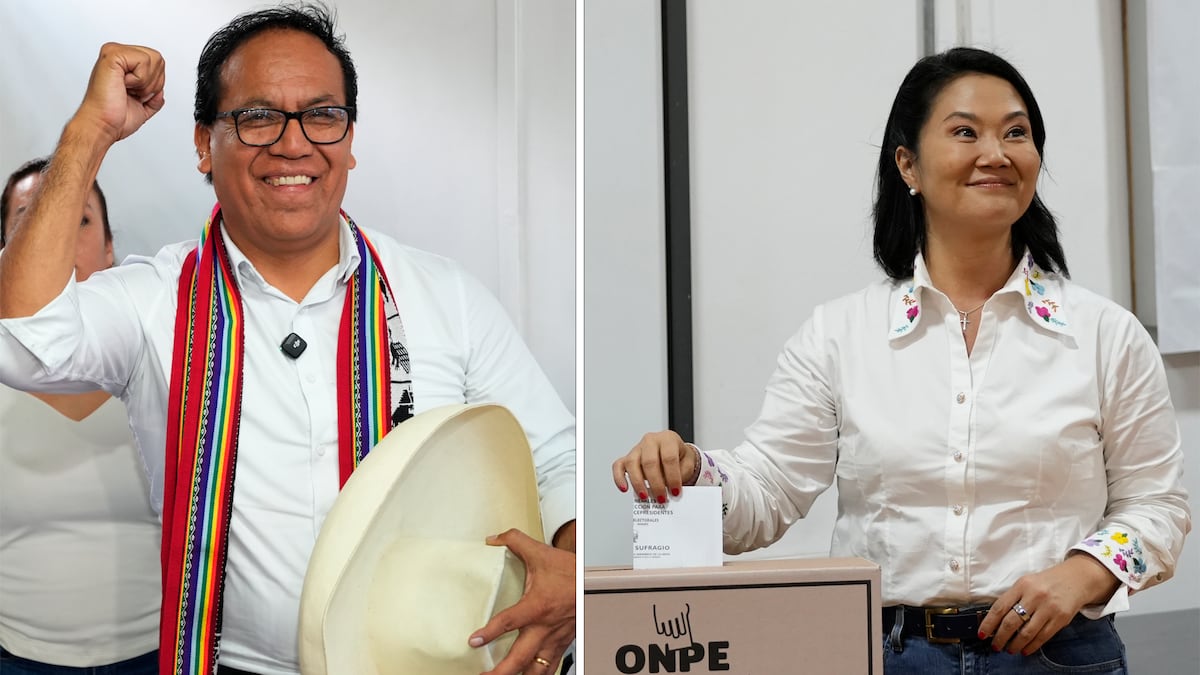
Keiko Fujimori Maintains 4.4 Point Lead Over Sánchez in 76% of Peru’s Second-Round Vote Count
Keiko Fujimori, the right-wing candidate in Peru’s presidential election, maintains a 4.4 percentage point lead over leftist rival Roberto Sánchez as 76% of votes are counted, according to official data. Fujimori, daughter of former president Alberto Fujimori, holds 52.21% of valid votes with 7.886 million ballots, while Sánchez, representing the imprisoned former president Pedro Castillo, has 47.78% with 7.038 million votes. Projections from Ipsos and Datum Internacional suggest the gap could narrow significantly as rural votes—typically counted later—finalize.
Regional voting patterns highlight a divide: urban centers like Lima, where Fujimori leads, have been prioritized in early counts, while Sánchez’s support in rural areas lags behind. This dynamic has shaped past elections, with Fujimori narrowly missing the presidency in 2016 and 2021 by slim margins. Analysts note the final outcome hinges on the accuracy of late-counted rural ballots and the reliability of exit polls.
Why It Matters
The race reflects deep political polarization in Peru, where Fujimori’s fujimorista movement and Castillo’s leftist coalition represent opposing visions for the nation’s future. A Fujimori victory could signal a return to her father’s economic policies, while Sánchez’s win might prioritize social reforms. The outcome also tests Peru’s electoral infrastructure, as incomplete counts and shifting projections underscore the complexity of tallying a nation with diverse regional voting habits.

What May Happen Next
As rural votes are counted, the margin between Fujimori and Sánchez could shrink to single digits, according to projections. Both candidates’ teams may challenge results in close districts, though no formal disputes have been reported. The final count, expected by early next week, will determine whether Fujimori secures her first presidential term or repeats her history of near-misses.
Frequently Asked Questions
What percentage of votes have been counted? 76% of votes have been tallied, with Fujimori leading 52.21% to Sánchez’s 47.78%.
Which regions have been counted first? Urban centers like Lima and other cities were prioritized in early counts, while rural areas, where Sánchez has stronger support, are processed later.
What projections exist for the final outcome? Ipsos and Datum Internacional both suggest the gap could narrow to single digits, with Sánchez potentially overtaking Fujimori if rural votes shift significantly.
How might the final vote count influence Peru’s political landscape?