

Largest Known Prehistoric Scorpion Identified From UK Fossils
Researchers from the University of Manchester and the Natural History Museum of London have identified Praearcturus gigas as the largest known prehistoric scorpion. According to a study published in the journal Palaeontology, the creature reached one meter in length and lived approximately 415 million years ago, likely hunting in aquatic environments.
How was a 150-year-old fossil suddenly identified as a giant scorpion?
The identification resulted from new comparative anatomical data and advanced imaging. When paleontologist Henry Woodward first described the remains in 1871, he classified the specimen as a giant crustacean similar to a sea cockroach. The fossils remained in a “taxonomic limbo” for over a century because the specimens were fragmentary and lacked the characteristic scorpion tail.
The breakthrough occurred after researchers analyzed Eramoscorpius, a well-preserved Canadian scorpion fossil. Lead author Richard Howard noted that Eramoscorpius possesses a triangular sternum with a central groove. Because Praearcturus shares this specific anatomical structure and lived during a similar era, Howard stated it demonstrates “without a shadow of a doubt” that the creature was a scorpion.
To confirm these findings, the team utilized CT scans, camera lucida drawings, and comparisons with other fossils from the British Early Devonian period.
Why did this scorpion grow so large without high oxygen levels?
The size of Praearcturus gigas challenges traditional assumptions about arthropod gigantism. Most giant prehistoric insects relied on the high atmospheric oxygen levels of later periods to sustain their bulk. However, 415 million years ago, oxygen levels were not yet abundant, and terrestrial forests had not yet developed.
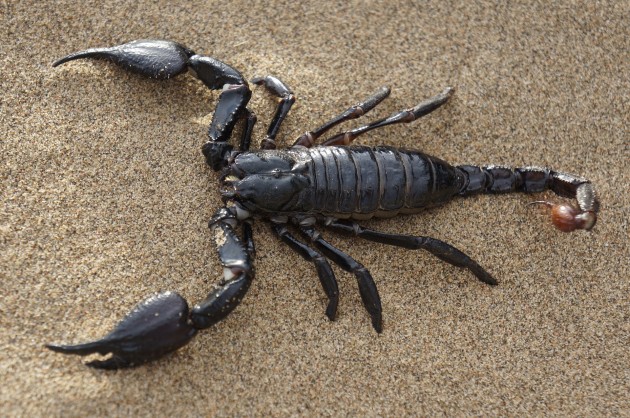
Richard Howard suggests the animal’s size was a result of an empty ecological niche. According to Howard, the species likely grew to such proportions because there weren’t any other large predators to stop it. This lack of competition allowed it to occupy a dominant position in its ecosystem.
Did the giant scorpion live on land or in the water?
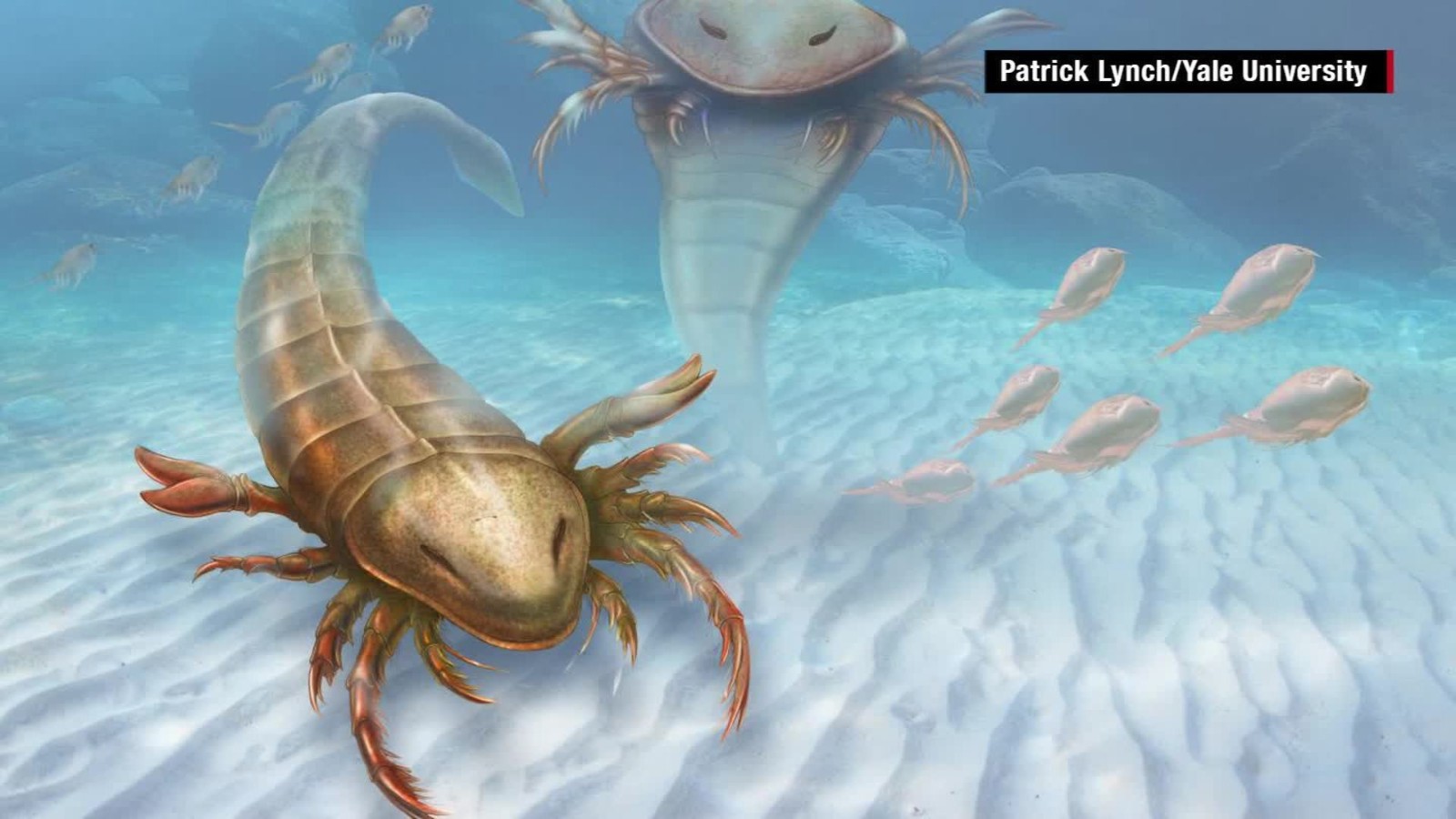
Evidence suggests Praearcturus gigas was a semi-aquatic hunter. Fossils discovered in Wales reveal the presence of epimers—fin-like structures on the abdomen similar to those found in modern crabs and lobsters.
Howard explained that without complex terrestrial ecosystems to support them, these animals likely spent a significant portion of their lives hunting in the water. Additionally, the research team identified striated surfaces on the limbs, which suggests the animal used stridulation to produce sounds, a trait observed in other extinct scorpion species.
What does this discovery reveal about arthropod evolution?
The discovery points to a possible evolutionary reversal. DNA evidence typically links scorpions to spiders and other arachnids that possess book lungs, implying an air-breathing ancestor. If Praearcturus gigas was primarily aquatic, it suggests a lineage that left the water and then returned to it.
Further evidence from fossil fragments found in Portishead, North Somerset, suggests the genus may have survived for another 40 million years before extinction. Researchers maintain that more fossils are required to fully map these evolutionary links.
Comparison: Praearcturus vs. Typical Giant Arthropods
| Feature | Praearcturus gigas | Carboniferous Insects |
|---|---|---|
| Primary Growth Driver | Lack of competition | High atmospheric oxygen |
| Habitat | Semi-aquatic | Terrestrial/Forest |
| Key Evidence | Triangular sternum / Epimers | Tracheal systems |
Frequently Asked Questions
How big was the Praearcturus gigas?
It reached approximately one meter in length with pincers longer than 16 centimeters.
Where were the fossils found?
The remains were found in the United Kingdom, including sites in Wales and North Somerset.
Why was it mistaken for a crustacean?
Because the fossils were fragmentary and lacked a tail, early paleontologists like Henry Woodward compared them to sea cockroaches.
Want to stay updated on prehistoric discoveries and evolutionary science?
Or join the conversation in the comments below: Do you think more “lost” giants are hiding in museum archives?