
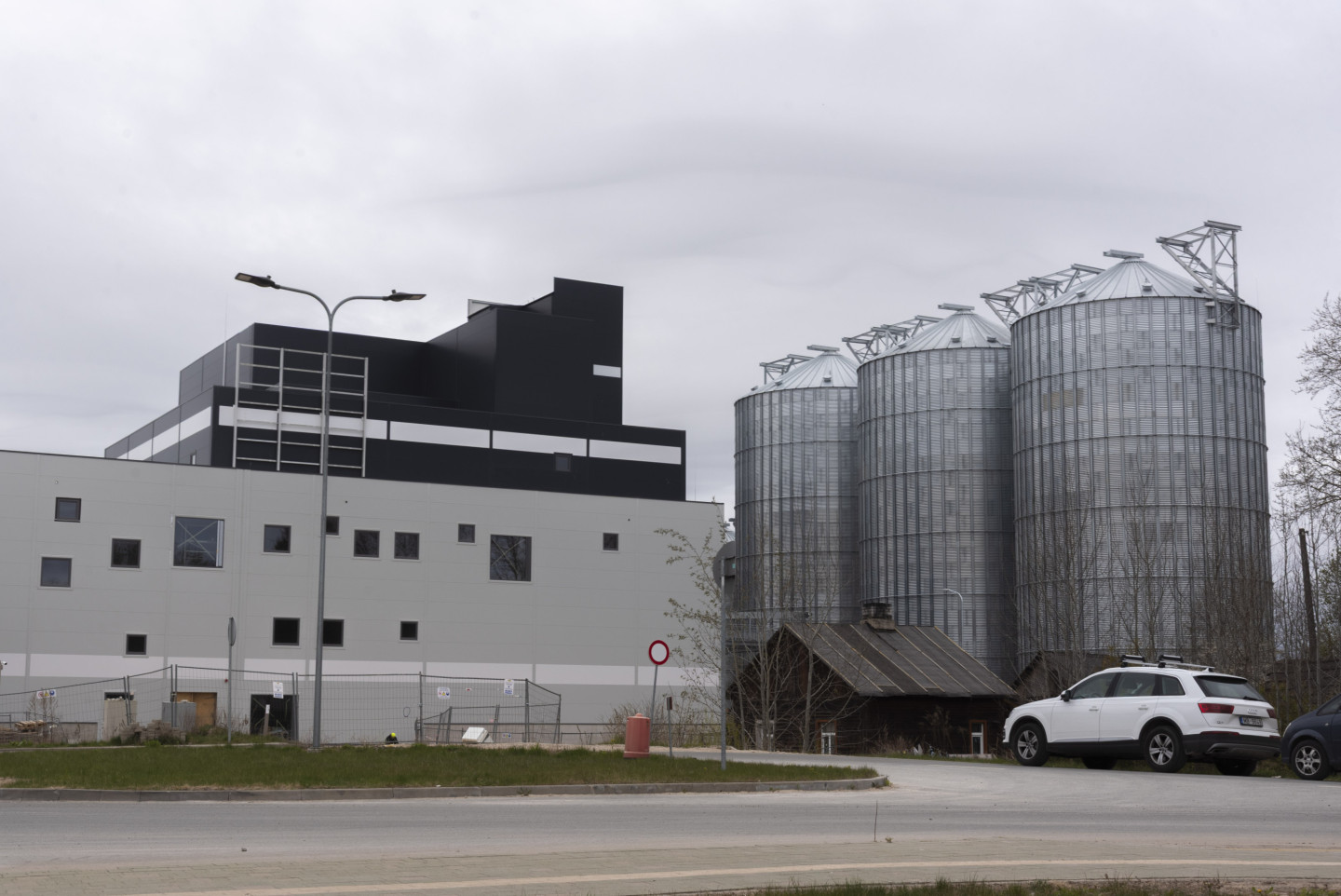
Latvia’s €150M Pea Protein Plant in Jelgava: World’s Most Advanced Facility Set to Boost Local Farming & Jobs
A groundbreaking protein processing plant in Jelgava, Latvia, is poised to redefine the country’s agricultural and industrial landscape. The facility, set to become the world’s most advanced of its kind, will process yellow peas into high-value protein products, creating over 100 new jobs and securing a stable market for local farmers. Construction is nearing completion, with the plant expected to operate at full capacity next year.
Why This Plant Matters
The ASNS Ingredient plant, located at Prohorova iela 13, represents a strategic pivot for Latvia’s agricultural sector. With an investment of up to €150 million, it will transform raw peas—currently a surplus commodity—into protein isolates, fiber fractions, and starch, all of which are in high demand globally. The facility’s location near the Dzelzceļa Bridge in Jelgava was chosen deliberately: the city is a hub for agricultural innovation, home to the Latvia University of Life Sciences and Technologies, and offers easy access to key transport routes.
The plant’s development aligns with a broader shift in Latvia’s farming economy. For decades, rapeseed (rapši) has been a staple crop, but its role in soil health has been misunderstood. Edgar Ruža, a board member of ASNS Ingredient and a rapeseed advocate since 1991, dismisses the myth that rapeseed depletes soil. Instead, he argues it enriches it by pulling nutrients from deep underground and contributing organic matter. However, the plant’s primary focus—yellow peas—addresses a different challenge: Latvia’s farmers now produce more peas than they can profitably sell, creating a need for value-added processing.

The plant’s production process is designed for zero waste. Peas will be split into protein-rich fractions (up to 84% pure protein), starch (99% pure), and fiber, all of which are repurposed into high-value applications. Starch could find uses in biopolymers, medicine, and food, while fiber is increasingly sought after in baking and meat industries. The protein isolate, the most lucrative output, will serve as a plant-based alternative to animal proteins, catering to health-conscious consumers, vegans, and regions where meat is prohibitively expensive.
What Comes Next?
The plant’s success hinges on two critical factors: securing downstream buyers for its protein isolates and ensuring a reliable supply chain. The cooperatives behind the project already produce enough peas—Latvia’s total output is double what the plant requires—to meet demand, but the industry’s growth could further solidify this advantage. Analysts expect the facility to attract additional food processors to Jelgava, creating a cluster of agri-industrial activity that could diversify Latvia’s economy beyond grain exports.
A possible next step involves leveraging the plant’s byproducts to reduce dependency on chemical fertilizers. Peas and other legumes naturally fix nitrogen in the soil, reducing the need for synthetic inputs—a cost-saving measure that could appeal to farmers seeking sustainability. However, the market for peas remains volatile, particularly for exports to Egypt (pulses) and India (yellow peas), where demand fluctuates with climate and local production.
The plant’s operators are also focused on workforce development. With 100 jobs to fill, recruitment is underway, but automation will limit the need for large-scale labour imports. Instead, the emphasis is on training local workers and collaborating with the Latvia University of Life Sciences and Technologies to develop expertise in pea processing and starch applications. This partnership could yield long-term benefits, including research into new protein-based products and process optimizations.
Frequently Asked Questions
Why is rapeseed often criticized for depleting soil, despite its benefits? The criticism stems from a misunderstanding. Rapeseed’s deep root system actually enriches soil by pulling nutrients from lower layers and contributing organic matter. Critics may object to its visual dominance in fields or the success of farmers growing it, but agronomists confirm it improves soil health for subsequent crops like wheat.
How does the plant address the issue of surplus peas in Latvia? The plant will process approximately 70,000 tons of peas annually—a volume already produced by Latvian cooperatives. With total national output exceeding double that amount, the facility provides a much-needed outlet for farmers, preventing waste and stabilizing prices. The cooperatives involved (Latraps, Barkavas Arodi, and Durbes Grauds) ensure a consistent supply.
What are the main uses for the protein and starch produced? The protein isolate will primarily serve as a plant-based alternative to animal proteins, targeting health-focused consumers, vegans, and regions where meat is expensive. Starch, while produced in larger volumes, will be used in biopolymers, pharmaceuticals, and food applications. Fiber fractions are gaining traction in baking and meat industries as a sustainable ingredient.
Will the plant import workers from abroad? No. The facility’s design is highly automated, requiring around 100 workers—a manageable number for Jelgava’s labour market. The focus is on local hiring and training, with efforts to engage nearby companies during construction to foster long-term ties to the region.
How does the Latvian government support this project? The project received €15 million in subsidies from the Rural Support Service to mitigate market risks, with additional funding from the European Union. The Latvian Investment and Development Agency facilitated a loan from state-owned Altum and private banks, while the Ministry of Agriculture and the Ministry of Economics provided strategic support. However, bureaucratic delays remain a challenge, as officials often prioritize procedural compliance over broader economic goals.
Could this plant face legal scrutiny over state support? The operators have taken precautions to ensure transparency, noting that their German partner also oversees compliance. While Latvia has faced investigations into regional development projects, the plant’s location was chosen based on pre-existing infrastructure, reducing the risk of allegations related to favoritism.
What role does the Latvia University of Life Sciences and Technologies play? The university collaborates on research, student projects, and workforce training, ensuring a pipeline of specialists for pea and starch processing. Joint initiatives may lead to innovations in protein applications and process efficiency, reinforcing the plant’s long-term viability.
Is there a risk of overproduction or market saturation? The project’s backers are confident in demand, citing global trends toward plant-based proteins and stable contracts with downstream processors. However, the volatility of export markets—particularly for peas to India and pulses to Egypt—remains a variable factor.
How will the plant handle waste? The facility is designed for zero waste. All byproducts—protein, starch, and fiber—will be repurposed into high-value applications, with no materials sent to landfills or incineration.
What other crops could Latvia process in similar facilities? While peas are the focus, other legumes like faba beans (tauriņzieži) and lentils (pupas) also fix nitrogen in the soil and could be viable candidates. However, their marketability depends on stable export demand, which fluctuates with global production cycles.
How does this project benefit Jelgava? Beyond job creation, the plant will revitalize a previously underutilized area near the Dzelzceļa Bridge. The city’s existing food-processing infrastructure and proximity to agricultural hubs make it an ideal location. Local authorities are supportive, working to attract additional businesses that could use the plant’s protein isolates as inputs.
What is the timeline for full operation? Construction is expected to conclude by July or August of this year, with the plant reaching full capacity next year. Recruitment for 100 roles is already underway, with half of the positions likely to be filled before operations begin.
As global demand for sustainable proteins grows, could Latvia’s pea-processing model inspire similar projects in other regions with agricultural surpluses?