
Legal Consequences for Doctor Using AI to Insult Patient
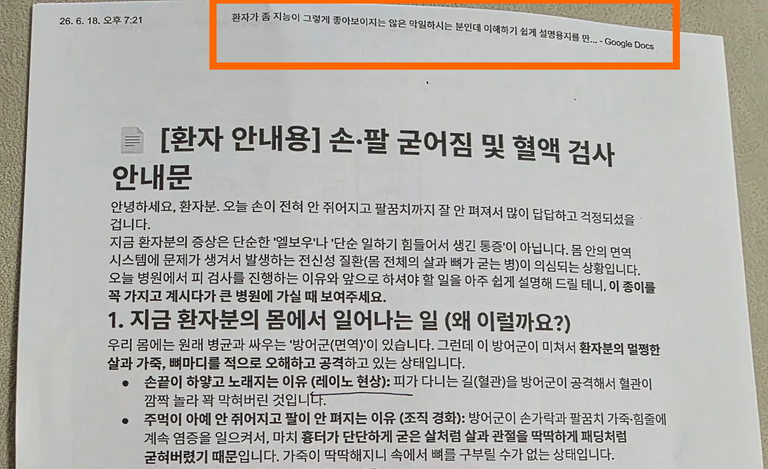
A doctor at a pain clinic is facing potential legal and administrative action after a patient received a medical guide containing an AI prompt that disparaged the patient’s intelligence and occupation. Legal experts suggest the incident could lead to civil damages, criminal charges for insult, and a possible license suspension, according to reports.
The incident came to light via Threads, where a user reported that their mother received a clinic guide. The top of the document contained a prompt intended for an AI program, stating the patient “doesn’t seem very intelligent” and is a “manual laborer,” requesting the AI to create an easy-to-understand explanation.
The prompt was printed exactly as entered and delivered directly to the patient. This “material evidence” has sparked public outrage and raised questions regarding the patient’s personality rights and the doctor’s professional conduct.
What legal damages can the patient claim?
The patient may seek damages for breach of contract and illegal acts from both the doctor and the hospital director. Legal experts state the doctor’s expressions constitute “insult” rather than “defamation.”
According to Supreme Court precedents, defamation requires the statement of specific facts. Insult occurs when abstract judgments or contemptuous emotions are expressed to lower a person’s social evaluation. Phrases like “doesn’t seem very intelligent” and “manual laborer” are cited as typical contemptuous personal attacks on a patient’s intellect and profession.
Because the disparaging remarks were printed and delivered as physical evidence, legal analysts believe there is a high probability that the court will recognize a significant amount of alimony.
Could the doctor face criminal charges?
The patient could file a police complaint for insult under criminal law. If convicted, the doctor may face up to one year in prison or a fine of up to 2 million won.

However, criminal charges depend on proving “publicity” and “intent.” Supreme Court precedent suggests that if a document is delivered 1:1 from the perpetrator to the victim, publicity is not recognized, even if the victim later posts it online.
A key legal dispute may center on whether the doctor handed the paper over personally or if it passed through third parties, such as nurses or administrative staff. Additionally, if the doctor lacked the intent to insult the patient and simply failed to review the printout, criminal intent might not be established.
What administrative penalties are possible?
Beyond financial or criminal penalties, the doctor may face administrative sanctions regarding their medical license. The Medical Law allows the Minister of Health and Welfare to suspend a license for up to one year if a medical professional severely damages their professional dignity.

The source notes that doctors have an obligation to maintain high trust with patients. Despising and disparaging a patient during the treatment process is viewed as a clear ethical violation and a loss of dignity.
Possible next steps for the patient and their family include filing official administrative complaints with the Ministry of Health and Welfare or local health centers. They may also seek disciplinary action through the Korean Medical Association’s Ethics Committee or apply for mediation via the Korea Medical Dispute Mediation and Arbitration Agency.
Frequently Asked Questions
What is the difference between defamation and insult in this case?
According to Supreme Court precedent, defamation involves stating specific facts, while insult involves expressing abstract judgments or contemptuous emotions that lower a person’s social standing.

What are the potential criminal penalties for the doctor?
If the crime of insult is established, the doctor could be sentenced to up to one year in prison or a fine of up to 2 million won.
How can a patient seek administrative action against the doctor?
The patient can file complaints with the Ministry of Health and Welfare or local health centers to request license suspension, or seek disciplinary action through the Korean Medical Association’s Ethics Committee.
How should medical institutions balance the use of AI efficiency with the necessity of patient privacy and dignity?