

Liberal government considering Kingston, Ont., stop for Alto high-speed rail project
Transport Minister Steven MacKinnon announced Monday that the federal government is considering moving the Alto high-speed rail corridor south to include a stop in Kingston, Ontario. The potential route change follows feedback from a 100-day public consultation and support from local mayors and Ontario Premier Doug Ford.
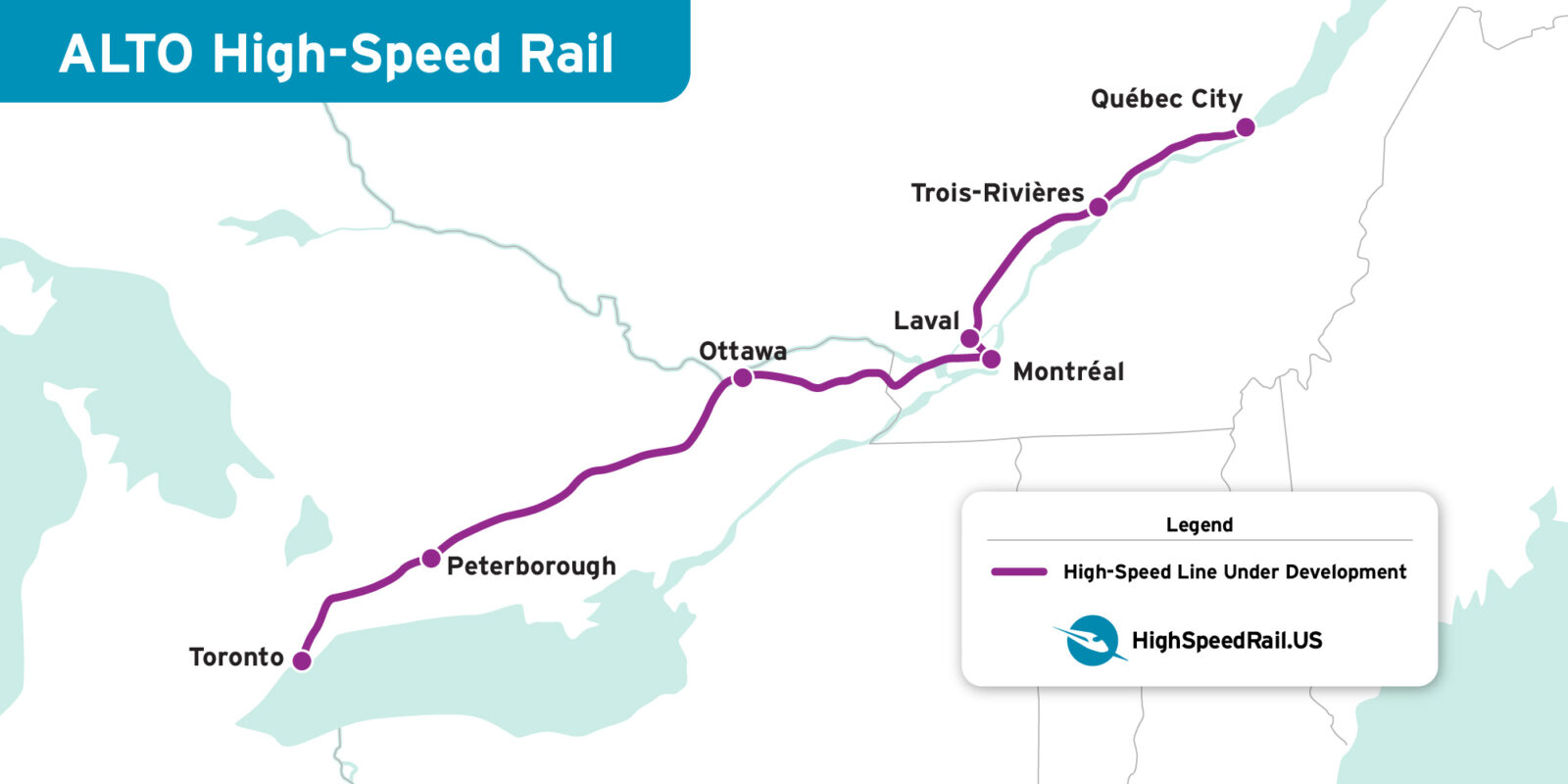
The proposed line from Quebec City to Toronto, which Prime Minister Mark Carney intends to start building in four years, was originally announced with stops in Trois-Rivières, Laval, Montreal, Ottawa and Peterborough. MacKinnon told reporters in Kingston that his office will take a “very, very, long, strong and positive look” at including the city in Canada’s first high-speed rail network.
Why is the government considering a Kingston stop for Alto rail?
The decision to evaluate a new route stems from public feedback and consultations with Indigenous people conducted from October 2025 through June 2026. Mayors from Kingston and the Township of South Frontenac met in March to advocate for a third route scenario that would run along the Highway 401 corridor and stop in Kingston.
MacKinnon noted that Kingston currently serves as the fourth-busiest Via Rail station in the country. He stated that services in and out of the city could act as a “feeder” for the high-speed network and would likely be used by Queen’s University students.
While a southern route is longer, MacKinnon said the added time would not be enough to dissuade travelers from choosing the train over airplanes or cars. However, he clarified that a stop remains subject to project requirements and technical feasibility.
What are the costs and specifications of the project?
The 1,000-kilometre rail line will utilize all-electric trains capable of reaching speeds of 300 km/h. According to government estimates, the project is expected to cost between $60 billion and $90 billion.
MacKinnon described the project as being “for the common good,” designed to allow people to live, work, and play more freely across the corridor while attracting more visitors to the region.
How will land be acquired for the rail corridor?
The government has faced opposition from landowners who may see their property expropriated for the 60-metre-wide corridor. MacKinnon admitted that while the preference is to buy from willing sellers, some land will have to be expropriated.
The Budget 2025 Implementation Act included changes to the Expropriation Act and other laws to make it faster and easier for the federal government to acquire land for the railway. Protesters recently blocked the exit to the Isabel Bader Centre in Kingston to express opposition to the project before police dispersed the crowd.
Expropriation lawyer Shane Rayman told CBC News that provincial and federal laws are intended to ensure landowners are made financially whole for losses suffered during such acquisitions.
What is the political opposition to the high-speed rail plan?
Conservative Leader Pierre Poilievre has called for the total cancellation of the project. Speaking in Vancouver, Poilievre argued that the government should instead focus on lowering the cost of living by removing the GST from used cars bought through dealerships.
Poilievre claimed that if the project is ever built, it would take 15 years and cost every family $8,000 in higher taxes. He dismissed the idea that the rail line would reduce car traffic, stating it would only take passengers away from airplanes.
What may happen next?
The government may finalize the corridor’s path after completing its review of the Highway 401 route. If the Kingston stop is approved, the federal government could begin the process of acquiring land through a mix of voluntary sales and expropriations.

Further legal challenges from landowners may arise as the specific 60-metre-wide corridor is mapped. Additionally, the project’s timeline could be impacted by ongoing political disputes over funding and tax implications.
Frequently Asked Questions
Which cities were originally planned as stops for the Alto rail line?
The original planned stops included Trois-Rivières, Laval, Montreal, Ottawa, and Peterborough.
What is the estimated speed and cost of the Alto project?
The all-electric trains are expected to reach 300 km/h, with a total project cost estimated between $60 billion and $90 billion.
How does the Budget 2025 Implementation Act affect the project?
It contains changes to the Expropriation Act and other laws that make it quicker and easier for the federal government to acquire land for the railway.
Do you believe adding more stops to the high-speed rail line improves its value or undermines its speed?