

lilla tabasso crafts hyperrealistic flowers and roots in murano glass
Lilla Tabasso, a Milan-based artist and former biology student, uses Murano glass to explore natural decay in her installation at Fondazione Dries Van Noten’s “The Only True Protest Is Beauty” exhibition in Venice. According to exhibition details, Tabasso’s work addresses environmental uncertainty and the human disconnection from nature by immortalizing the final stages of a flower’s life cycle.
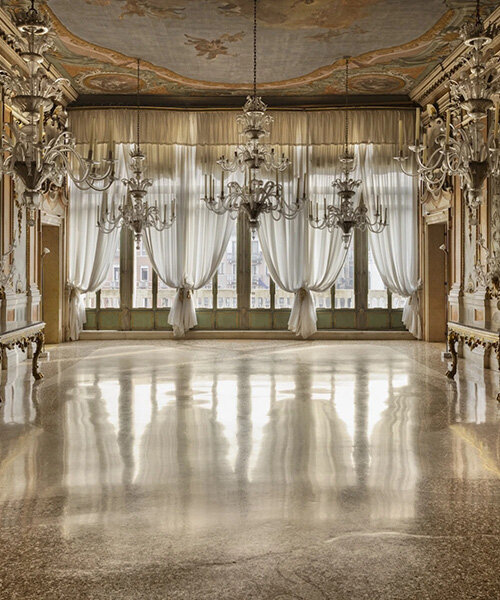
The installation at Palazzo Pisani Moretta features botanical landscapes sculpted from glass. These works include wildflowers, tangled roots, and stems that appear to bend under their own weight. While they resemble a living garden, every component is crafted from Murano glass.
How does Lilla Tabasso’s work address nature’s decay?
Tabasso focuses on flowers at the end of their life cycle rather than botanical perfection. The artist captures specific moments of decline, such as a tulip bowing toward the ground or a petal bruised by time. According to the exhibition description, these sculptures invite viewers to linger on transformations that are usually overlooked.
By using the centuries-old Murano technique of lampworking, Tabasso preserves blooms that would normally wither within days. This creates a documented tension between permanence and decay. The work functions as a reminder of life’s temporality, aligning with the tradition of vanitas imagery.
What is the connection between biology and Murano glass?
Tabasso’s previous studies in biology inform the scientific observation present in her art. This background allows for an extraordinary level of detail in every leaf and blossom. The sculptures serve as emotional portraits of natural processes, moving beyond simple documentation to resemble botanical specimens.
The artist manipulates colored glass rods directly at the torch to build subtle tonal variations. This process allows her to replicate the appearance of a leaf beginning to dry and fold into itself. The result is an uncanny realism that challenges the viewer’s perception of what is alive.
How might these sculptures influence the perception of vulnerability?
The exhibition features more than 200 works celebrating craftsmanship. Tabasso’s contribution specifically addresses contemporary concerns regarding the living world. By highlighting the root hidden beneath the surface and the leaf as it dries, the work asks viewers to pay attention to the fragile aspects of existence.

Future interpretations of this work could lead to a deeper understanding of human relationship with nature. It is possible that utilizing inherited techniques to address modern environmental disconnection may encourage others to observe natural cycles more closely. Such an approach may help individuals reconcile the strength and vulnerability found in biological processes.
Frequently Asked Questions
Where is Lilla Tabasso’s work currently on view?
The works are part of the “The Only True Protest Is Beauty” exhibition at Palazzo Pisani Moretta in Venice, hosted by Fondazione Dries Van Noten.
What specific glassmaking technique does the artist use?
Tabasso uses lampworking, a centuries-old Murano technique involving the manipulation of colored glass rods at a torch.
What is the primary theme of the botanical sculptures?
The sculptures focus on the end of the life cycle, exploring themes of impermanence, decay, and the tension between strength and vulnerability.
How does observing the cycle of decay change your perspective on the natural world?