

Lincoln Memorial Reflecting Pool Faces Persistent Algae Issues After $14 Million Renovation
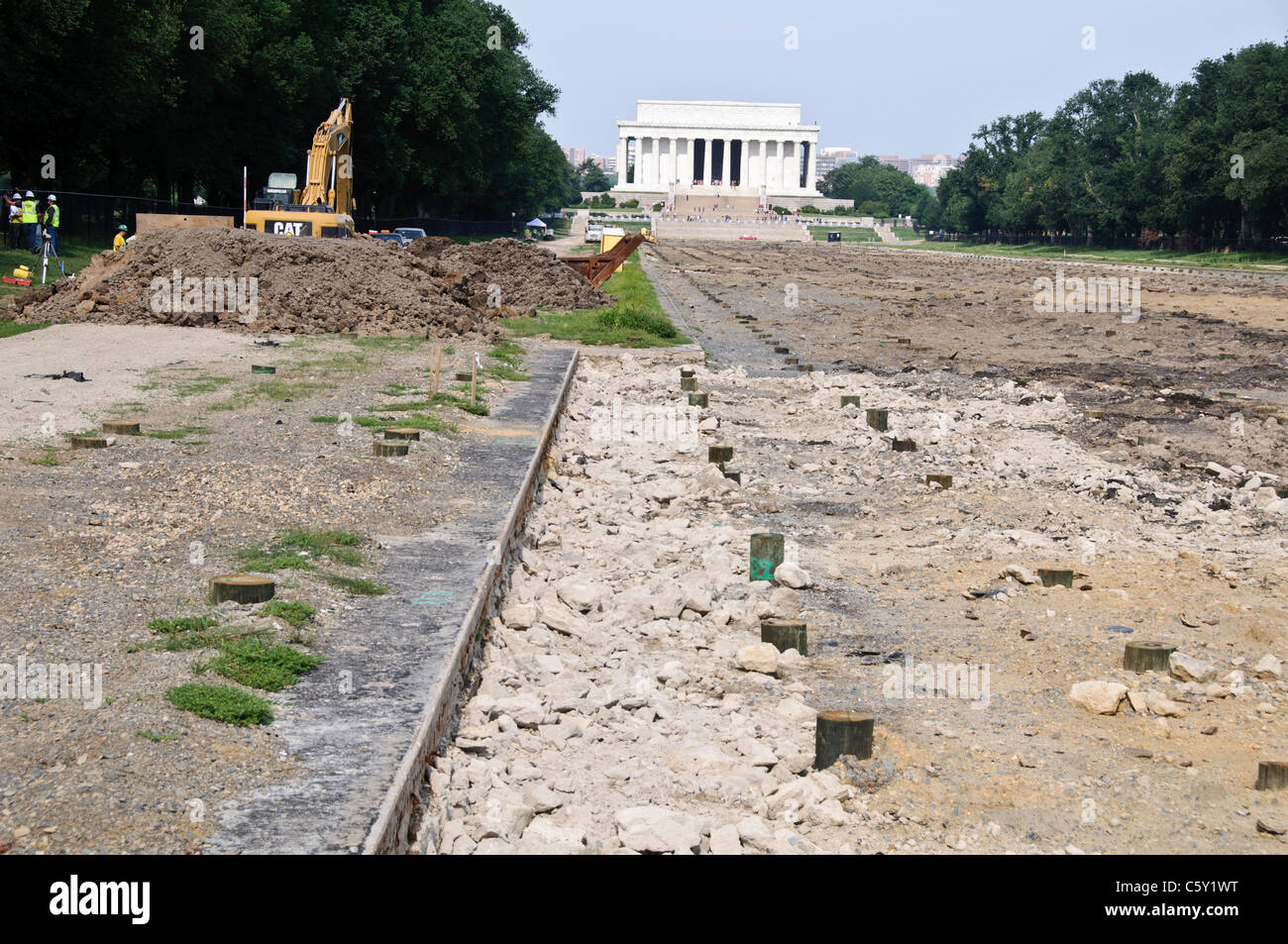
The Lincoln Memorial Reflecting Pool in Washington, D.C., is experiencing a persistent algae bloom just over a week after the completion of a federally funded renovation project costing more than $14 million. Despite the installation of a new “nanobubble ozone” filtration system, the 6.5 million-gallon pool has turned a murky green, prompting ongoing cleanup efforts by government crews using vacuums and hydrogen peroxide.
Did You Know? The Lincoln Memorial Reflecting Pool has a long history of maintenance challenges; a 2012 restoration project under the Obama administration cost $34 million and faced similar algae issues, alongside the discovery of approximately 80 dead ducks in the water within a two-day period.
Status of the Cleanup Efforts
The Department of the Interior maintains that the new filtration technology is functioning as intended. According to a department spokesperson, the nanobubble system is actively killing algae, which is then being removed by vacuuming crews. The agency also confirmed that hydrogen peroxide is being applied as a “gentler” treatment to assist in clearing the water without harming the surrounding environment.
However, the effectiveness of these measures remains a point of contention. While government officials attribute the current visible algae to “residual” growth left in supply pipes during the eight-week construction period, independent water sampling has indicated elevated phosphate levels, which serve as nutrients for algae. As of Tuesday, while phosphate levels had reportedly decreased, they remained high enough to potentially support continued growth.
Expert Insight
Expert Insight: Barrett Brooks, an algae specialist at the National Museum of Natural History’s Department of Botany, notes that while ozone-based treatments are theoretically effective, they require constant, rigorous maintenance. Because the pool’s depth and Washington’s warm climate create ideal conditions for rapid growth, Brooks warns that the current bloom is particularly intense and that the system cannot be treated as a “set-and-forget” solution for the entire season.
Public and Political Context
The project, which included aesthetic changes such as painting the pool a brighter blue to reflect the American flag, has drawn mixed reactions from visitors. Some tourists, such as Dinika Seth, noted that the pool appeared cleaner than in previous years, while others like Danielle Khan remarked that the water looked unchanged despite the significant expenditure. Official project costs rose from an initial estimate of $1.8 million to over $14 million due to an accelerated timeline intended to meet the country’s 250th anniversary celebrations.
What May Happen Next
The long-term outlook for the Reflecting Pool remains uncertain. Tim Auerhahn, president of the consulting firm Aquatic Council, stated that if the underlying conditions fueling the algae growth are not fully addressed, the site could face a recurring maintenance challenge throughout the summer and into the fall. Because the pool currently loses approximately 16 million gallons of water annually due to leaks, the stability of the water chemistry may continue to fluctuate, potentially requiring ongoing manual intervention by the Department of the Interior.
Frequently Asked Questions
Why is the pool green despite the recent $14 million renovation?
Department of the Interior officials state the green color is caused by “residual algae” from supply pipes that were inactive during the eight-week construction phase.
What technology is being used to clean the water?
The government has installed a “nanobubble ozone” filtration system and is using hydrogen peroxide as a secondary, milder treatment to manage the algae.
How do current costs compare to previous restoration efforts?
The current renovation cost more than $14 million, while a previous 2012 restoration project under the Obama administration cost $34 million.
How do you think the appearance of the Reflecting Pool impacts the overall experience of visiting the Lincoln Memorial?