

LIVE from Gartner: Presenting Cybersecurity Budgets CFOs Can Get Behind
For years, the CISO’s annual budget process has felt like a gamble. You spend three months forecasting a threat landscape that changes in three weeks, only to find yourself locked into a rigid financial plan that doesn’t account for the latest zero-day exploit or a sudden corporate acquisition.
As Elizabeth Davis, a Sr Director Analyst at Gartner, recently highlighted, the disconnect is jarring: executives don’t fund “controls”—they fund “outcomes.” Yet, a staggering gap remains, with only about 40% of security leaders intentionally aligning their budget discussions with business objectives.
We are entering a new era of adaptive cybersecurity financing. The future isn’t about predicting the future; it’s about building a financial framework that can pivot as fast as the attackers do.
The Death of the Static Annual Budget
The traditional “set it and forget it” annual budget is becoming a liability. In a VUCA (Volatile, Uncertain, Complex, and Ambiguous) world, the most successful organizations are moving toward rolling forecasts and agile budgeting.

Instead of a single, monolithic request, future-ready security teams are adopting a “modular” approach to funding. This involves establishing a baseline for “keep-the-lights-on” operations while maintaining a flexible reserve for emerging threats or strategic pivots.
Imagine a scenario where a company suddenly shifts toward an AI-first product strategy. A static budget would require a grueling mid-year request process. An agile budget, however, allows the CISO to trigger a pre-approved “accelerated investment scenario” tied specifically to AI risk management.
Speaking “CFO”: The Rise of Cyber Risk Quantification (CRQ)
The biggest hurdle in cybersecurity budgeting has always been the language barrier. CISOs speak in “critical vulnerabilities” and “threat vectors,” while CFOs speak in “EBITDA,” “cash flow,” and “loss expectancy.”
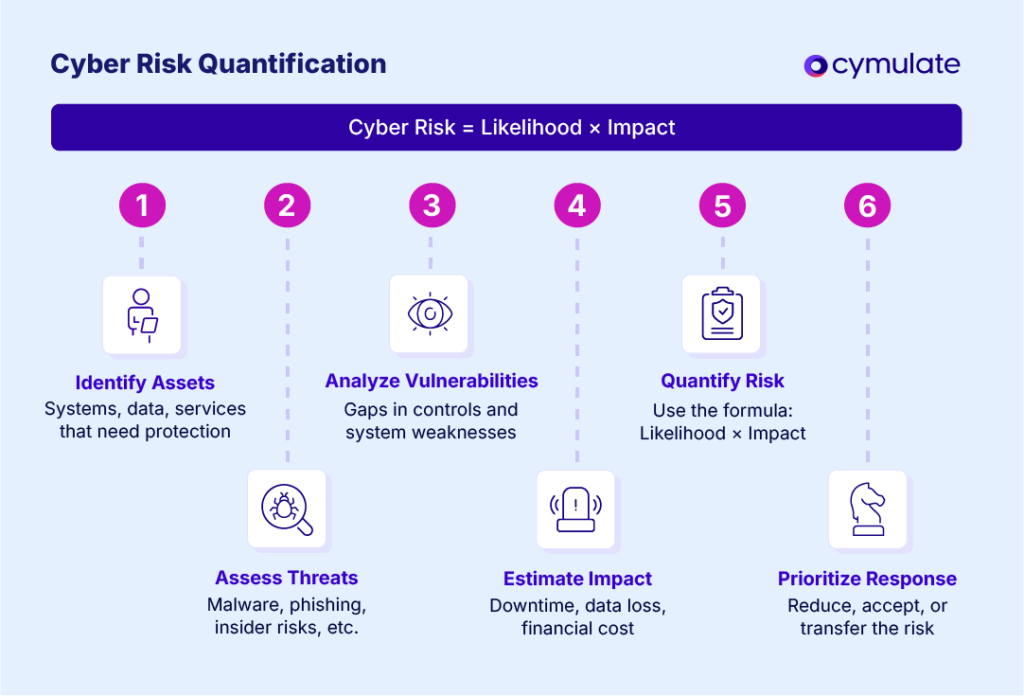
The future of budgeting lies in Cyber Risk Quantification (CRQ). By using models like FAIR (Factor Analysis of Information Risk), security leaders are moving away from qualitative “Red-Yellow-Green” heat maps toward actual dollar amounts.
Instead of saying, “We need $500k for a new IAM tool to reduce the risk of unauthorized access,” the conversation becomes: “We have a $2M annual expected loss from credential theft; this $500k investment reduces that expected loss to $800k, providing a clear ROI.”
This shift transforms the security department from a “cost center” into a “risk management function,” making it much harder for executives to cut budgets without explicitly accepting a quantified financial risk.
From “defence” to “Revenue Enablement”
The most sophisticated security leaders are rebranding their budgets to focus on business enablement. When security is framed as a barrier, it is a cost to be minimized. When it is framed as a catalyst for growth, it becomes an investment.
Consider the difference in framing for cyber resilience initiatives:
- Technical Frame: “We need funding for redundant backups and disaster recovery orchestration.”
- Business Frame: “We are investing in a guarantee that our customer-facing checkout portal will never be down for more than 15 minutes, protecting $X million in hourly revenue.”
By tying spending to measurable business outcomes, security leaders align themselves with the company’s strategic goals. This ensures that when the business grows, the security budget grows with it automatically.
AI-Driven Cost Optimization: Fighting Tool Sprawl
For years, the response to every new threat was to buy a new tool. This led to “tool sprawl,” where organizations owned 50+ security products with overlapping capabilities, leading to wasted spend and “alert fatigue.”
We are now seeing a trend toward platform consolidation, accelerated by AI. Future budgets will prioritize “Cybersecurity Mesh Architecture” (CSMA), where integrated platforms replace fragmented point solutions.
AI is also being used to perform “spend audits,” identifying underutilized licenses and redundant features across the security stack. This allows CISOs to “find” money within their existing budget to fund new, high-priority initiatives without asking for additional capital.
Frequently Asked Questions
How do I justify a security budget increase when there have been no major incidents?
Avoid the “fear” narrative. Instead, showcase the absence of incidents as a result of specific investments. Use metrics like “Reduction in Mean Time to Detect (MTTD)” or “Successful blocking of X thousand high-risk attempts” to prove the value of the current spend.

What is the best way to handle mid-year budget cuts?
Refer back to your scenario planning. If you have already presented a “reduced-funding option,” you can simply show the board which specific risks are now being accepted. This moves the conversation from “Can you do more with less?” to “Which risk are you comfortable accepting?”
Should security budgets be centralized or distributed across business units?
The trend is moving toward a hybrid model. While core infrastructure is centralized, specific application security costs are increasingly integrated into the budgets of the business units that own those products (the DevSecOps model), ensuring that those who create the risk also fund the mitigation.
Ready to Transform Your Security Strategy?
Budgeting is no longer just about the numbers—it’s about the narrative. How are you aligning your security spend with your business outcomes this year?
Join the conversation in the comments below or subscribe to our newsletter for more executive insights on cybersecurity leadership.