
Living Yeasts Found in Ötzi the Iceman Could Threaten His Preservation
Ötzi the Iceman has long been viewed as a frozen messenger from the Copper Age, but new research suggests his remains are not completely frozen in time. A study published June 3 in Microbiome reveals that the remains are a site of ongoing biological activity.
Researchers have identified cold-adapted yeasts that may have colonized Ötzi during his time in the glacier. They also found genetic traces of the gut microbes present when he died five millennia ago.
The Discovery of Living Microbes
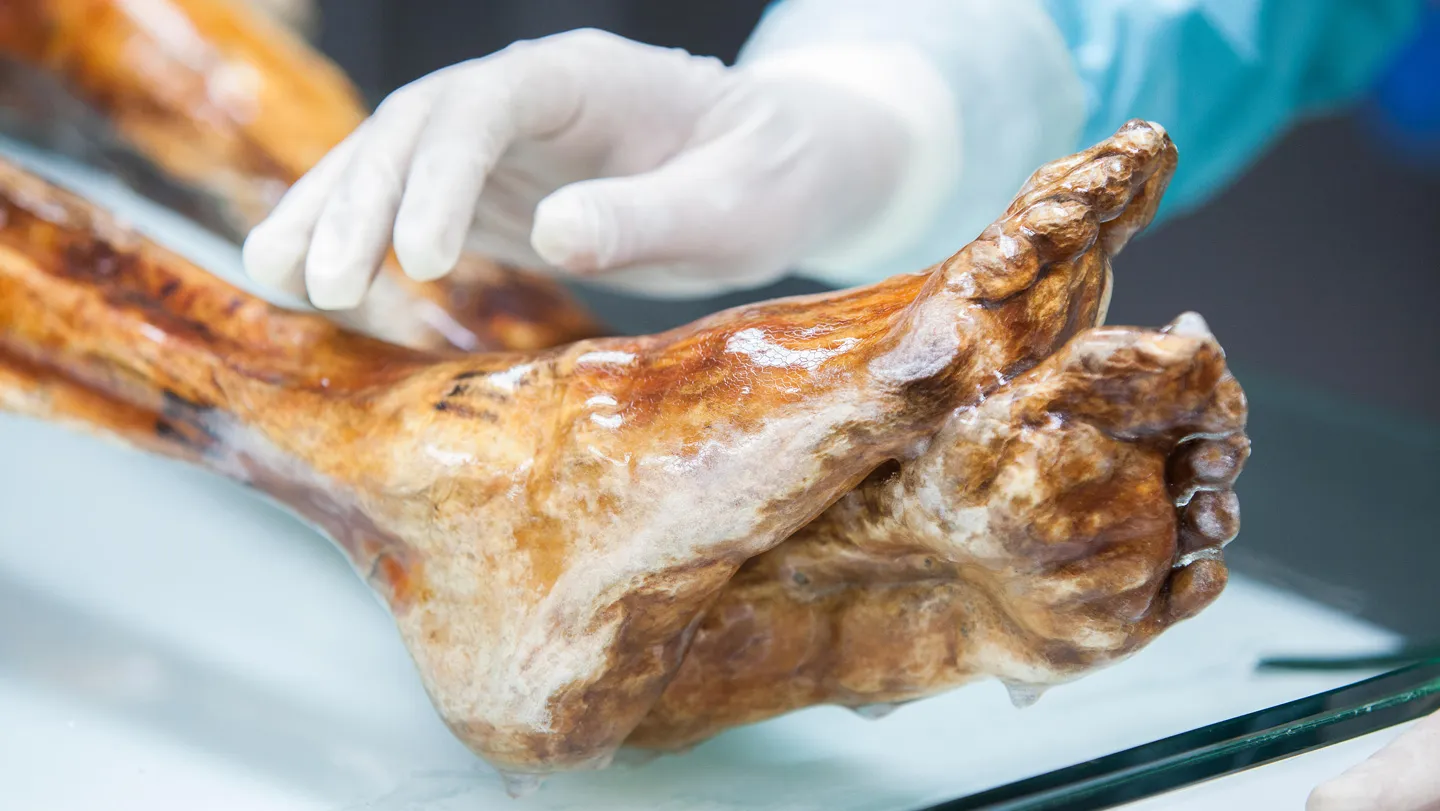
Conservationists in Italy maintain Ötzi’s remains in a specialized facility at –6° Celsius. This temperature is designed to simulate the glacier environment and prevent the body from degrading.
Despite these freezing conditions, anthropologist Albert Zink found four ancient species of yeast that remain viable. Zink, formerly with the Eurac research centre and now at Ludwig Maximilian University of Munich, noted that ancient DNA proves these species persisted and accompanied Ötzi for thousands of years.
This discovery aligns with theories that the remains thawed and refroze multiple times, particularly during the first 1,500 years following his death.
A Dynamic Biological Interface
To conduct the study, the team thawed the remains to 4° Celsius for five hours to collect runoff. They also utilized swabs from the body, samples of skin and tissues, and analysed the surrounding museum air, humidification water, and glacier soil.
While internal bacteria failed to grow in cultures, the four yeast species did. The researchers describe these viable cultures as “relicts” or living time capsules of Ötzi’s period in the ice.
The study concludes that Ötzi is not a static relic but a “dynamic biological interface.” This means the modern microbiome of the remains could actively affect how he is preserved.
Implications for Preservation
Patrick Hunt, an alpine archaeologist at Stanford University, describes the remains as the most important archaeological science finding from the 20th century to the present. Previous studies have already revealed that Ötzi had tattoos and was destined to go bald.
However, Hunt warns that there could be a danger of decomposition if these yeasts are not kept frozen. Understanding these cold-loving, potentially damaging microbes is essential for the survival of the remains.
Future Preservation Scenarios
Because the remains are subject to microbial contamination, future interventions may be necessary to ensure long-term stability. Analysts suggest that the study’s findings could be vital to determining which specific preservation steps are needed.
The ongoing monitoring of the microbiome may allow conservationists to better manage the environment to prevent the viable yeasts from causing degradation.
Frequently Asked Questions
What was discovered in the recent study of Ötzi the Iceman? Researchers identified four viable species of cold-adapted yeast and genetic traces of gut microbes from five millennia ago. How are Ötzi’s remains currently preserved? The remains are kept in a specialized facility in Italy at –6° Celsius to simulate the glacial conditions of his entombment. Why is the discovery of viable yeast significant? It indicates that the remains are a dynamic biological interface rather than a static object, meaning these microbes could potentially cause decomposition if not kept frozen. Do you think the discovery of living microbes changes how we should perceive ancient human remains?