
London Ontario Approves 10-Year Downtown Revitalization Master Plan
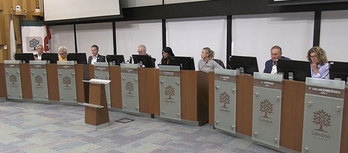
The London City Council’s Strategic Priorities and Policy Committee (SPPC) has approved a 10-year, $48 million “Downtown Reimagined” master plan to revitalize the city’s core. Developed by the Canada Urban Institute (CUI), the plan focuses on waterfront development and music infrastructure, though some council members warn that homelessness and drug crises must be solved first.
What is the ‘Downtown Reimagined’ master plan?
The “Downtown Reimagined” plan is a comprehensive roadmap designed to reverse the decline of London’s urban center. According to the SPPC, the project involves 18 specific goals and 58 action plans to be executed over the next decade. The city spent $415,000 last April to commission the Canada Urban Institute (CUI) to develop this strategy.

The framework centers on four “Big Moves” to shift the city’s urban paradigm:
- The River District: Creating a waterfront economic and cultural zone along the river.
- Public Space Overhaul: Full remodeling of major downtown squares and pedestrian environments.
- City of Music Infrastructure: Developing assets to cement London’s reputation as a premier music hub.
- Agile Governance: Establishing a flexible public-private partnership system for faster urban management.
Mike Wallace, director of the London Development Institute (LDI), told the committee that the municipal government must exercise leadership and funding to transform the downtown into a “great cultural heart” for the region.
Why are city officials divided over the redevelopment?
While the plan passed the committee, it faced sharp criticism from officials who argue that physical construction cannot fix social collapse. Cllr. Paul Van Mierbergen told the committee that the plan ignores the “harsh reality” of the streets. He cited public defecation, uncontrolled homeless encampments, illegal drug use, and rising violent crime as barriers that must be solved before any growth can occur.

Van Mierbergen suggested that investing in aesthetics without addressing safety and welfare is akin to building a “sandcastle.”
Procedural disputes also emerged during the session. Cllr. Sam Trosow proposed delaying the final decision until next month to allow residents and stakeholders more time to review the extensive documentation. His motion was defeated in a vote.
Additionally, the Old East Village Business Improvement Area (BIA) expressed concern that the plan concentrates too much investment in a narrow downtown strip. They’ve called for a more inclusive approach that extends to the surrounding commercial fringes to ensure balanced urban growth.
How will the project be funded and timed?
The SPPC’s approval is a “declarative” step, meaning they agree with the framework but haven’t finalized the checkbook. According to Cllr. David Pereira, this is an approval of the themes and structure, not a final budgetary commitment.
The funding timeline is split into two phases:
- Quick-Start Actions: Low-cost initiatives will begin immediately using existing departmental budgets.
- Major Infrastructure: The bulk of the $48 million depends on approval within the 2028-2031 multi-year budget.
The full City Council is scheduled to vote on the final approval of the project on July 23.
Comparison: Infrastructure vs. Social Intervention
| Plan Focus (CUI) | Criticism (Van Mierbergen/BIA) |
|---|---|
| River District & Waterfront Economy | Unaddressed homelessness and encampments |
| “City of Music” Infrastructure | Public safety and violent crime rates |
| Centralized Downtown Core | Neglect of surrounding neighborhoods (Old East Village) |
FAQ: London’s Downtown Reimagined Plan
How much will the plan cost?
The projected cost is approximately $48 million over a 10-year period.
When will the final decision be made?
The full City Council will vote on the project on July 23.
What are the ‘Big Moves’?
The four pillars are the River District, public square remodeling, music infrastructure, and agile governance.
Who is opposing the plan?
Opponents include some city councilors concerned about homelessness and drug use, and the Old East Village BIA, which wants a broader investment area.
What do you think? Can a city “build” its way out of a homelessness crisis, or should social services be fully funded before the first brick is laid? Let us know in the comments or subscribe to our newsletter for updates on London’s urban development.