
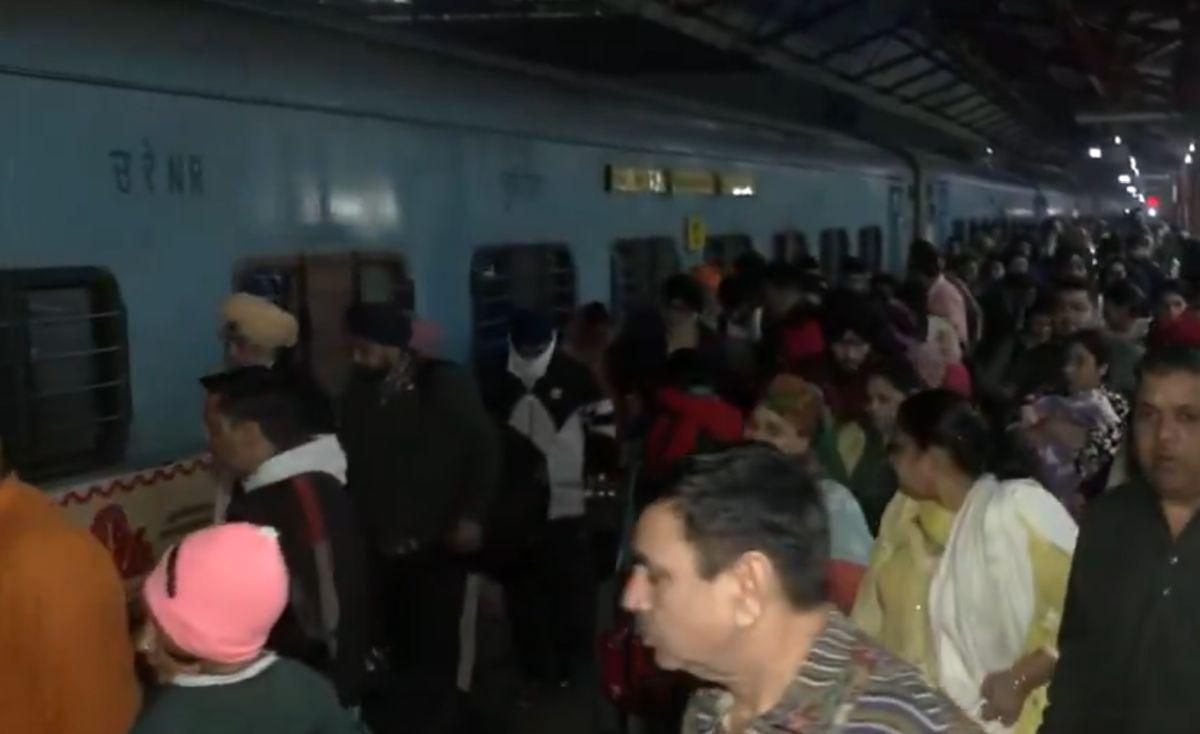
Man Beaten to Death by Fellow Passengers at Delhi’s Shahdara Railway Station
Pankaj Dhama, a 32-year-old man from Baghpat, died after being allegedly beaten by fellow passengers during a rush to board the Yoga Express at Shahdara railway station in east Delhi on Saturday, according to Delhi Police. Authorities have registered a case under the Bharatiya Nyaya Sanhita (BNS) as they examine CCTV footage to identify the attackers.
Why do railway platform scuffles lead to fatal outcomes?
Crowd density on platforms creates high-stress environments where minor disputes escalate rapidly. In the case of Pankaj Dhama, police report that a quarrel broke out among passengers on platform 3 during a rush to board the train. This “surge” behavior often leads to collective aggression, which Delhi Police described as an assault involving punches and kicks.
According to PTI, Dhama was rushed to Guru Teg Bahadur Hospital, where doctors declared him dead. This incident underscores a recurring problem in Indian transit hubs: the gap between passenger volume and the physical capacity of boarding zones. When passengers compete for limited space, the likelihood of violent altercations increases.
What legal shifts follow the implementation of the BNS?
The registration of this case under Sections 105 and 3(5) of the BNS marks a transition in how public violence is prosecuted. Section 105 deals with culpable homicide not amounting to murder, while Section 3(5) addresses acts done with a common intention. By applying these specific sections, a senior police officer indicated that the investigation is treating the assault as a collective act rather than an isolated fight.
This shift matters because the BNS aims for faster trial timelines. Legal experts suggest that the focus on “common intention” allows investigators to hold multiple participants accountable, even if it cannot be proven who delivered the final, fatal blow. This differs from older precedents where pinpointing a single perpetrator was often a bottleneck in prosecution.
How will AI and tech change crowd management at stations?
The current investigation relies on reviewing CCTV footage after the crime has occurred. Future trends in railway safety are moving toward “predictive crowd analytics.” Systems currently being tested in global hubs like London and Tokyo use AI to detect “turbulence” in crowd movement before a fight or crush happens.
By integrating real-time heat maps, station masters can deploy security personnel to specific platforms—like Shahdara’s platform 3—the moment passenger density exceeds a safe threshold. This shifts the role of CCTV from a forensic tool used by police after a death to a preventive tool used to stop a scuffle from starting.
For more on how technology is altering public safety, see our guide on smart city security trends.
Will infrastructure changes reduce platform violence?
Physical barriers and “timed boarding” are the next likely steps for high-traffic stations. Currently, the “rush” described by police occurs because passengers congregate in an unstructured mass. Implementing designated queuing lanes—similar to those found in airports—would eliminate the physical friction that sparked the fight leading to Dhama’s death.
Data from the Ministry of Railways indicates a steady increase in passenger footfall, making these structural changes a necessity rather than an upgrade. Without designated boarding zones, the “common intention” of getting on a train continues to clash with the physical reality of overcrowded platforms.
Frequently Asked Questions
What is BNS Section 105?
Section 105 of the Bharatiya Nyaya Sanhita (BNS) pertains to culpable homicide not amounting to murder. It is used when an act is committed with the knowledge that it could cause death, but without the specific intent to murder.
How can passengers report violence on railway platforms?
Passengers should immediately contact the Railway Protection Force (RPF) or dial the integrated security helpline 139 to report emergencies or fights in real-time.
Why is CCTV footage critical in these cases?
In mob-related assaults, eyewitnesses often provide conflicting accounts. CCTV provides an objective timeline and allows police to identify specific individuals who participated in the assault, as seen in the current Shahdara investigation.
What do you think about the current state of railway crowd control? Should the government implement stricter boarding queues? Let us know in the comments below or subscribe to our newsletter for more deep dives into public safety.