

Managing Lymphedema After Cancer Surgery: Advanced Supermicrosurgery Solutions
In the landscape of modern medicine, cancer survival rates have reached historic highs. However, a significant paradox remains: the quality of life following successful cancer treatment is often compromised by lingering, debilitating side effects. Among the most challenging of these is lymphedema, a condition where the lymphatic system fails to circulate fluid properly, leading to severe swelling and chronic physical and psychological distress.
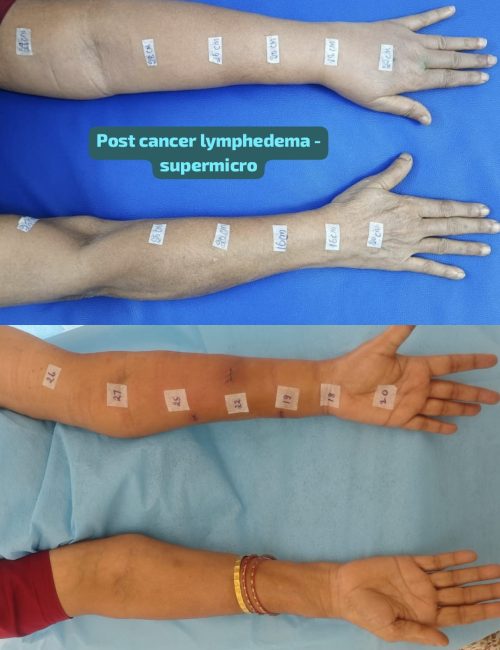
Lymphedema typically arises as a long-term consequence of cancer surgeries or radiation therapy, which can damage or obstruct lymph nodes. While it may begin as simple swelling, the condition can progress to cause redness, persistent pain, and fever. In severe cases, limbs can swell to extreme proportions, significantly restricting movement and leaving patients vulnerable to recurrent infections like cellulitis and sepsis.
The evolution of reconstructive plastic surgery is deeply tied to industrial history. For instance, Korea University Guro Hospital developed world-class microsurgical techniques specifically to address the complex fractures and limb injuries of workers from the nearby Guro Industrial Complex.
The Shift Toward Supermicrosurgery
For years, patients have relied on conservative management, such as compression stockings, manual lymphatic drainage, and complex physical therapy. While these methods are common, they are fundamentally maintenance strategies rather than cures. Treatment often requires a lifelong commitment to compression garments, which can be an unsustainable burden for elderly patients or those in physically demanding professions.

The emergence of supermicrosurgery is fundamentally changing this clinical trajectory. Unlike traditional microsurgery, which focuses on blood vessels around 1 millimeter in diameter, supermicrosurgery involves delicate procedures on vessels, lymphatics, and nerves as small as 0.8 millimeters. This precision allows surgeons to perform lymph-venous bypasses, effectively redirecting lymphatic fluid into the venous system to alleviate congestion.
The transition from “managing” a condition to “restoring” function represents a vital shift in oncological care. By moving beyond survival and focusing on the patient’s ability to return to a normal life, reconstructive surgery is redefining what it means to complete the cancer treatment journey.
Future Implications and Diagnostic Precision
The field is currently benefiting from advancements in imaging technology, such as fluorescence lymphography and ultra-high-resolution imaging. These tools allow surgeons to visualize lymphatic flow in real-time, identifying the difference between healthy linear structures and the “mist-like” patterns of reflux seen in advanced lymphedema. This diagnostic clarity is increasingly dictating surgical strategy.
Looking ahead, the role of supermicrosurgery may continue to expand. As researchers explore the connection between lymphatic flow and neurological health—specifically the potential link to neurodegenerative conditions like dementia—the techniques developed for limb reconstruction could find new applications. As international clinical evidence for these procedures grows, there is a possibility that healthcare systems may eventually adapt to better support these specialized interventions.
Frequently Asked Questions
What is the primary cause of lymphedema in cancer patients?
Lymphedema is primarily caused by the interruption or blockage of lymph nodes during cancer surgery or radiation therapy, which prevents the normal circulation of lymph fluid.
What is the difference between traditional microsurgery and supermicrosurgery?
Traditional microsurgery typically handles vessels around 1 millimeter in diameter, whereas supermicrosurgery involves operating on vessels, lymphatics, and nerves as small as 0.8 millimeters.
Is lymphedema the same as general swelling caused by kidney or metabolic issues?
No, lymphedema is distinct from general edema caused by metabolic or kidney problems and requires a different, specialized approach to diagnosis and treatment.
Have you or a loved one discussed the long-term restorative options available after cancer treatment with a specialist?