
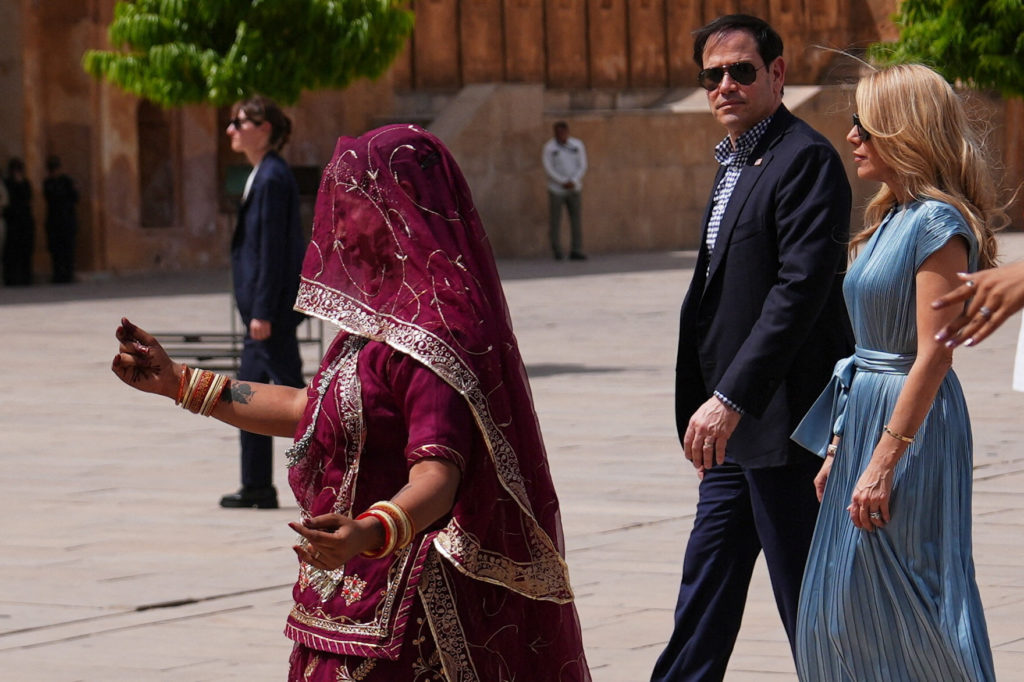
Marco Rubio Visits India to Strengthen U.S.-India Strategic and Trade Ties
U.S. Secretary of State Marco Rubio’s current four-day visit to India represents a concerted effort by Washington and New Delhi to recalibrate a relationship recently tested by trade disputes and shifting geopolitical priorities. During meetings on Sunday with Prime Minister Narendra Modi and Foreign Minister Subrahmanyam Jaishankar, the Secretary emphasized a shared commitment to defence, maritime security and energy cooperation.
The diplomatic mission comes as both nations navigate the complexities of a global energy market impacted by the war in Iran and lingering questions regarding India’s historical purchase of Russian crude oil. While an interim trade arrangement has already helped ease some tariff-related friction, the two sides remain in pursuit of a more comprehensive bilateral trade agreement.
Secretary Rubio’s visit included a cultural stop in Kolkata at the headquarters of the Missionaries of Charity, an organization founded by Mother Teresa, alongside formal diplomatic engagements in New Delhi.
Strategic Alignment and the Quad
A focal point of the visit is the role of the Quadrilateral Security Dialogue, or “the Quad,” which includes the United States, India, Australia, and Japan. As China continues to expand its influence in the Indo-Pacific, the alliance serves as a critical platform for regional security and supply chain coordination.

The Quad has faced scrutiny from Beijing, which accuses the grouping of attempting to contain its regional rise. Meanwhile, analysts suggest that the future effectiveness of this alliance remains closely tied to the broader U.S. Approach toward China, which directly influences India’s strategic value to Washington.
The current diplomatic push underscores a delicate balancing act for both nations. While India is viewed as a vital counterweight to Chinese influence in the Indo-Pacific, its economic reliance on diverse energy suppliers—including discounted Russian crude—creates ongoing friction with U.S. Expectations. The success of this visit may depend on whether both parties can reconcile these immediate economic necessities with their long-term strategic goals.
Looking Ahead
The trajectory of India-U.S. Relations could see significant developments in the coming months, particularly if a broader trade deal is finalized. President Donald Trump has already extended an invitation for Prime Minister Modi to visit Washington later this year, a move that would likely serve to solidify the progress made during these recent talks.
However, the stability of these ties may remain subject to external pressures, such as the volatility of global energy prices and the evolving security situation in the Strait of Hormuz. Observers will be watching to see if the ongoing dialogue can successfully bridge the gap between U.S. Energy export goals and India’s need for affordable, consistent fuel supplies.
Frequently Asked Questions
Why have India-U.S. Relations been strained recently?
Relations were impacted by the imposition of steep tariffs by the Trump administration on Indian exports, partly due to India’s ongoing purchases of Russian oil, which raised concerns in Washington regarding reliability.

What is the primary purpose of the Quad alliance?
The Quad serves as a platform for cooperation on maritime security, supply chains, and regional strategy, particularly as a response to China’s growing military and economic influence in the Indo-Pacific.
How does the war in Iran impact India’s economic strategy?
The conflict has created concerns regarding energy shipments through the Strait of Hormuz, a vital route for India’s crude imports. This has led India to focus on diversifying its energy suppliers to maintain market stability and affordable prices.
How do you believe the U.S. Can best balance its trade objectives with its strategic security partnerships in the Indo-Pacific region?