
Mass Shooting in Johannesburg Highlights South Africa’s Organized Crime Crisis
A recent mass shooting in a Johannesburg informal settlement, which left 12 people dead, highlights a trend of organized crime exploiting police failures in South Africa’s poorest areas. According to the Associated Press, criminal syndicates and illegal mining gangs, known as zama zamas, utilize these security gaps to execute hits and hide weapons.
Why are mass shootings increasing in South Africa’s poor neighborhoods?
Organized crime gangs target informal settlements because these areas often lack basic security, lighting, and rapid police response times. Jacob Mofokeng, a professor of criminology at the University of South Africa, told the Associated Press that syndicates explicitly use these conditions to hide weapons and “vanish into the shadows.”
While South Africa averages more than 60 homicides a day, the violence isn’t evenly spread. A stark contrast exists between wealthy neighborhoods and poor townships. The majority of killings occur in impoverished areas, reflecting a long history of deep systemic inequality.
Who are the “zama zamas” and how do they impact security?
Illegal mining gangs, referred to as zama zamas (Zulu for “hustlers” or “chance-takers”), operate extensively around Johannesburg’s gold reserves. These gangs establish bases in poorly policed areas, where they fight turf wars or use violence to maintain control.

Tracking these criminals is difficult because many are undocumented migrants from neighboring countries. Professor Mofokeng noted that because these suspects often lack legal identification, registered addresses, or DNA profiles on file, they are “effectively a ghost” to law enforcement.
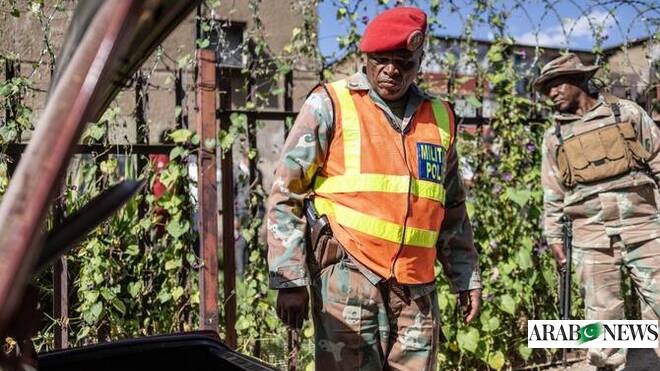
The threat from zama zamas was a primary driver for President Cyril Ramaphosa’s decision to authorize a yearlong deployment of army troops to specific hotspots to combat organized crime.
How does police corruption fuel organized crime?
Police failures aren’t just about a lack of resources; they’re about a lack of integrity. The South African police force has faced heavy allegations of collusion with criminal syndicates. This corruption has led to the arrest of more than a dozen senior officers and the suspension of top officials, including the national police commissioner and the police minister.
This internal collapse creates a vacuum of trust. Private investigator Mike Bolhuis told the AP that citizens are often hesitant to provide information to authorities. “The public doesn’t trust the police, they don’t trust the authorities, and they don’t trust each other,” Bolhuis said.
What is the role of illegal firearms in these attacks?
Despite strict legal ownership regulations, a massive volume of untracked weapons fuels the violence. Independent studies and civil society organizations estimate there are between 2 million and 3 million illegal guns circulating among a population of 62 million people.
Willem Els, an analyst at the Institute for Security Studies, stated that this flow of unregistered firearms, combined with police failures, creates an environment where syndicates operate with impunity. Firearms remain the primary cause of homicides in the country.
The scale of the problem is evident when comparing the legal framework to the reality on the ground: while the law is strict, the actual volume of illegal arms makes those laws nearly irrelevant in informal settlements.
Frequently Asked Questions
What are zama zamas?
Zama zamas are illegal mining gangs in South Africa, primarily operating around gold reserves in Johannesburg, who often use violence to control territory.
Why is the army deployed in South African cities?
President Cyril Ramaphosa deployed the army to combat organized crime in hotspots, a move critics view as an admission that the police have lost control in those areas.
How many illegal guns are in South Africa?
According to independent studies, there are approximately 2 to 3 million illegal firearms in circulation.
Want to stay informed on global security trends?
Join our newsletter for deep-dive reports on organized crime and systemic instability. Subscribe here or share your thoughts on the impact of police corruption in the comments below.