
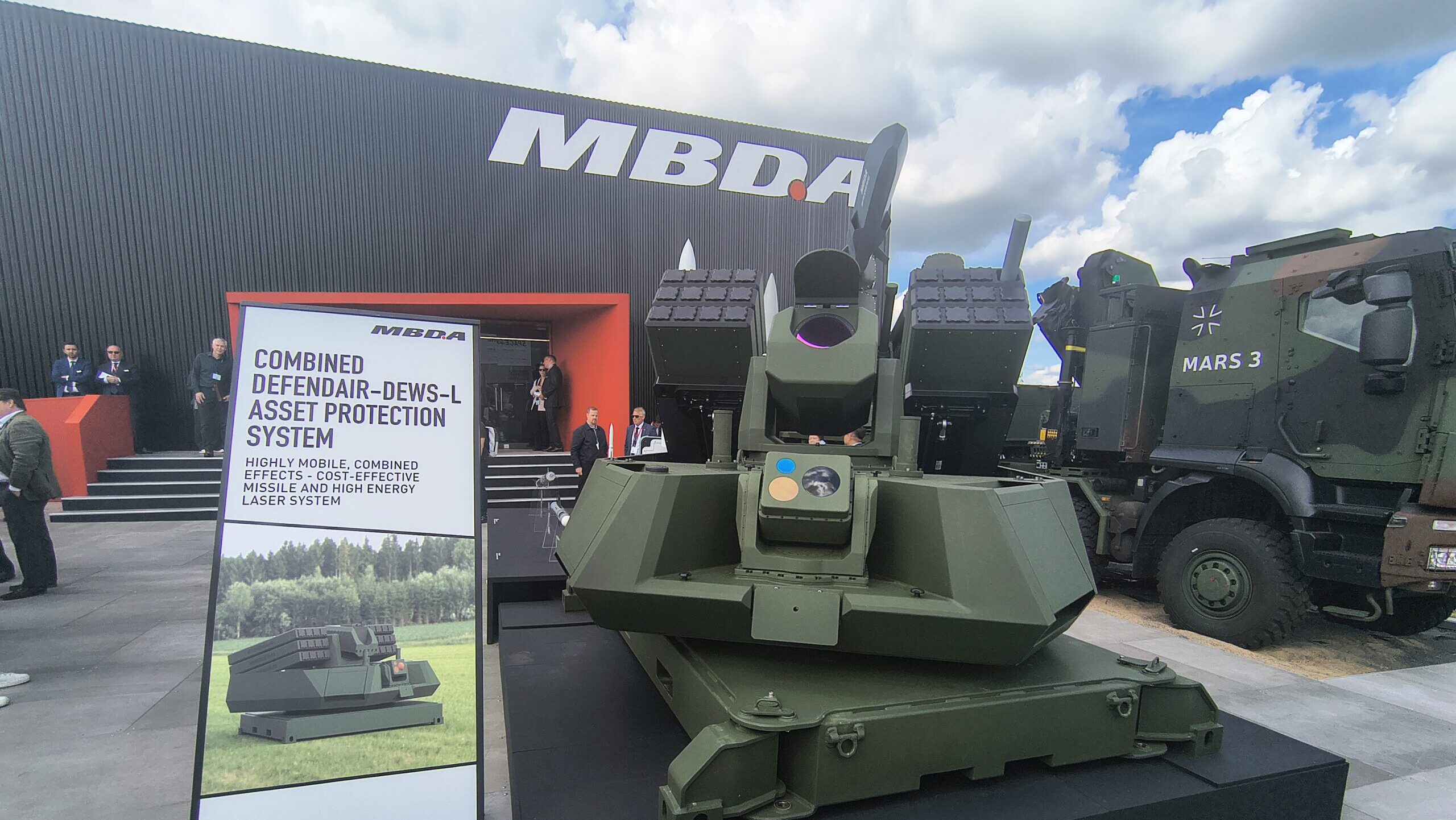
MBDA Unveils Hybrid Laser and Missile System to Counter Drone Threats
MBDA has unveiled a hybrid air defense system combining high-energy lasers with guided interceptors to counter the rising threat of drone swarms and uncrewed aerial vehicles. The platform, which integrates the DEWS-L laser and DEFENDAIR missile, aims to provide overlapping engagement envelopes for European militaries by the end of the decade, according to company officials at the Berlin Air Show.
How Hybrid Laser-Missile Systems Address Drone Swarms
The primary advantage of the new MBDA system lies in its dual-layered approach to target neutralization. According to company briefings, the DEWS-L laser is optimized for close-range, high-volume threats like drone swarms, while the DEFENDAIR guided missile handles targets at longer ranges or those requiring higher kinetic impact. This pairing allows militaries to reserve expensive interceptors for complex threats, using the lower-cost laser for mass-produced, inexpensive drones.
High-energy laser weapons can significantly reduce the cost-per-engagement. The UK’s DragonFire system, which MBDA helped develop, has demonstrated the ability to strike targets for less than £10 ($13) per shot.
Why Militaries Are Shifting Toward Precision Strike Capabilities
Defense priorities are shifting as current conflicts in Ukraine and the Middle East deplete traditional ammunition stockpiles. Thomas Gottschild, managing director at MBDA Germany, stated that while demand for conventional munitions has “exploded,” nations like Germany are increasingly prioritizing deep precision strike capabilities to modernize their inventories. This strategic pivot reflects an industry-wide effort to balance the immediate need for volume with the long-term requirement for advanced, high-tech defense assets.
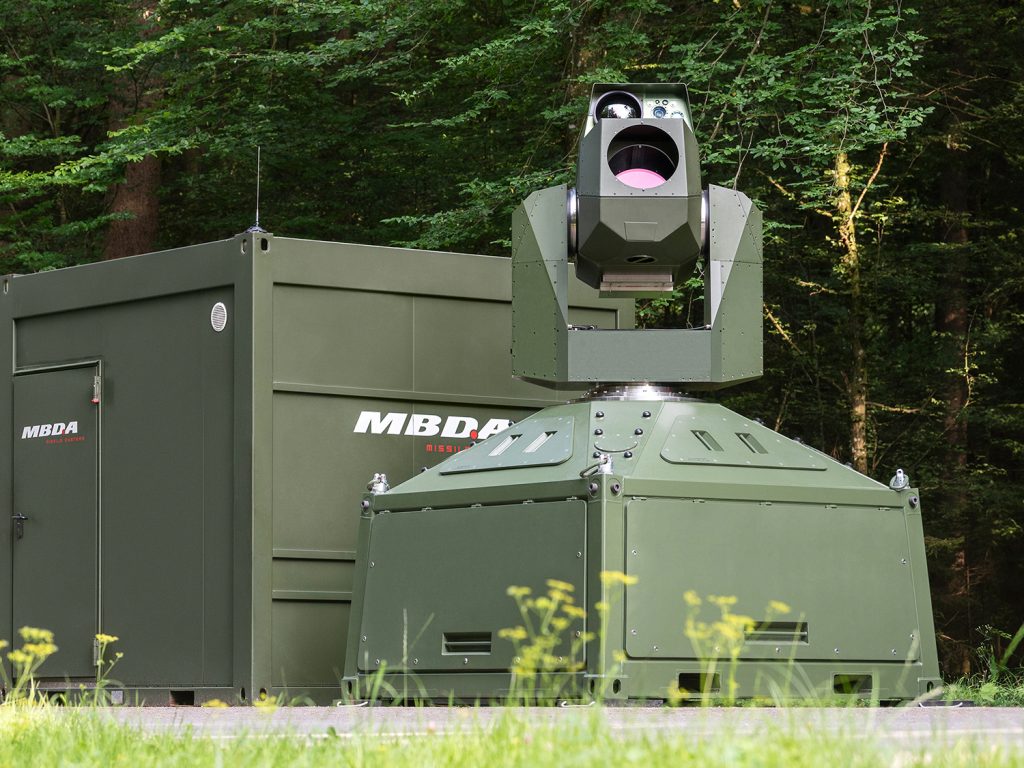
How This Technology Compares to Existing Air Defenses
The global race to neutralize low-cost drones has led to varied technological approaches. Israel has already moved toward operational deployment with its Iron Beam laser air defense system. While MBDA’s proposed hybrid system focuses on a modular “combo” approach, other nations are testing standalone laser assets. The critical difference remains the cost-to-effect ratio: a laser strike costs pennies compared to the thousands of dollars required for a traditional surface-to-air missile.
When evaluating military procurement trends, watch for the “cost-per-engagement” metric. As drone proliferation makes traditional air defense unsustainable, laser systems will likely become a standard component of integrated ground-based air defense (GBAD) architectures.
Frequently Asked Questions
What is the main benefit of a hybrid laser-missile system?
A hybrid system provides cost-effective defense against mass drone swarms using lasers, while retaining guided missiles for larger, more resilient, or long-range targets.
When will the MBDA hybrid system be available?
MBDA officials indicated the platform is designed to enter service with the German military before the end of the decade.
Why are lasers preferred over missiles for drone defense?
Lasers offer a near-zero cost per shot and a virtually unlimited magazine capacity as long as a power source is available, making them ideal for countering low-cost, expendable drone swarms.
Stay informed on the latest developments in defense technology and European security. Subscribe to our newsletter for weekly updates on industry trends and procurement analysis.