
Medicaid Spending on State-Directed Payments Faces $510 Billion Cut
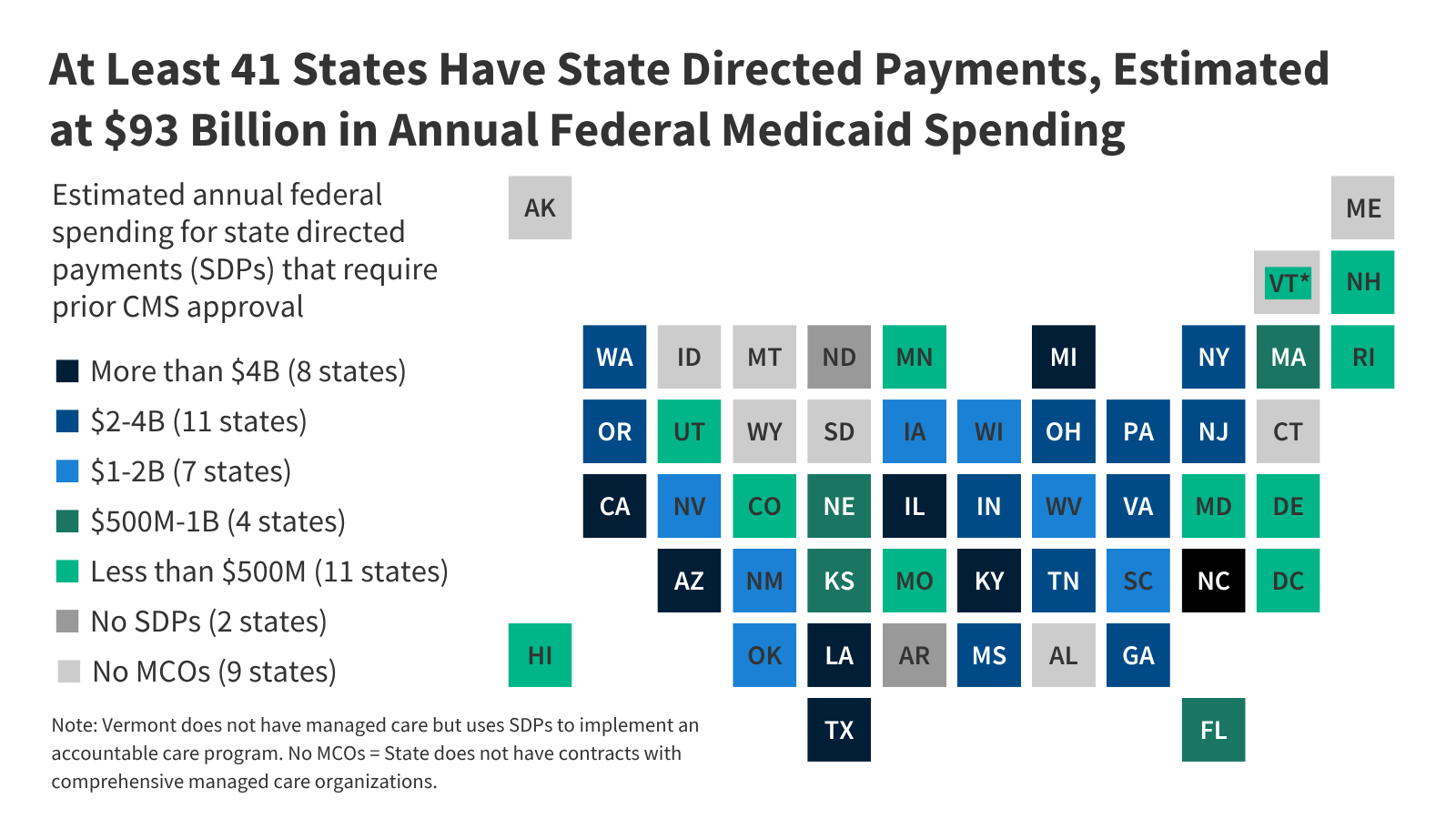
Forty states and the District of Columbia, which collectively receive $93 billion annually in federal Medicaid spending through state-directed payments (SDPs), could face financial pressure as new payment limits take effect, according to KFF estimates. These limits, set by the 2025 reconciliation law, cap SDP rates at or near Medicare levels instead of average commercial rates, potentially reducing federal Medicaid spending by $510 billion between 2026 and 2035, with impacts growing each year.
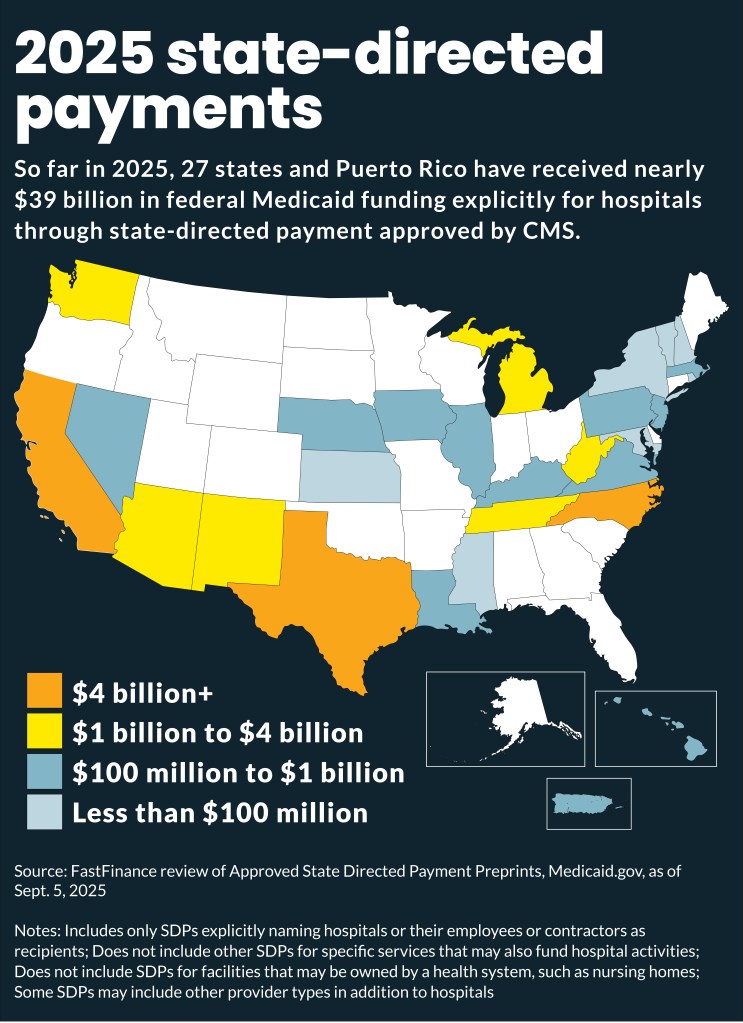
SDPs, established in 2016, allow states to dictate how managed care organizations reimburse services. Nearly 84% of SDP funds, amounting to $78 billion annually, go to hospital services, with professional services at academic medical centers and nursing facilities accounting for $3.2 billion and $2.1 billion respectively. Since 2018, CMS has approved SDPs tied to commercial rates, which are higher than Medicare rates, to expand provider networks.
Why the change matters
The shift to Medicare-level rates could strain hospitals, which make up the bulk of SDP spending. CMS’s proposed rule, issued in May, aims to expand these limits, potentially worsening financial challenges for safety-net providers that rely heavily on Medicaid patients. States face limited options to offset cuts due to restrictions on provider taxes from the reconciliation law.
What may happen next
States might explore alternative funding mechanisms, but the scope for action is constrained. Hospitals, particularly those already financially vulnerable, could face pressure to reduce services or close if uncompensated care rises due to Medicaid or ACA marketplace coverage losses. The long-term stability of provider networks remains uncertain as payment rates decline.
Frequently Asked Questions
What are state-directed payments (SDPs)? SDPs are federal Medicaid funds that allow states to set payment rates for managed care organizations, often benchmarked to commercial rates.
How much federal funding is at risk? The 2025 reconciliation law and proposed CMS rule could reduce federal Medicaid spending by $510 billion between 2026 and 2035.
Which services are most affected? Hospital services, which account for 84% of SDP spending, are expected to see the largest impacts from the payment rate reductions.
How might these changes affect rural healthcare providers specifically?