
Medical professionals say summer dust waves could cause problems for people with asthma, allergies
Sahara dust plumes moving across the Atlantic from late spring to early fall can exacerbate asthma and allergies in Mississippi, according to Dr. Mark Murray of the Mississippi Asthma and Allergy Clinic. These air masses introduce fine particles that increase respiratory inflammation, particularly affecting vulnerable groups such as children, the elderly, and those with pre-existing heart or lung conditions.
Why does Sahara dust affect respiratory health?
Fine dust particles in these waves act as extra irritants in the air. Dr. Mark Murray says this can exacerbate existing conditions like allergies and asthma.

Murray explains that allergens already cause inflammation in respiratory areas. Adding dust on top of that brings extra inflammation to the system.
Who is most at risk during dust events?
Children are particularly vulnerable, according to Oxford pediatrician Dr. Tanya Fitts. She advises parents to monitor children for shortness of breath, a running nose, or persistent coughing.

Fitts identifies other high-risk populations, including the elderly, pregnant women, and people with heart disease. Those with bronchitis, emphysema, or other respiratory conditions are also at increased risk.
Healthy adults who exercise or work outdoors may also be affected. This includes runners as well as construction and agricultural workers, according to Fitts.
How can residents identify and manage dust waves?
Michael Hill, a warning coordination meteorologist with the National Weather Service in Jackson, says a “dusty haze” is a primary sign. He compares the visual effect to the “polleny tint” seen in the air during springtime, though dust events typically occur in July and August.
To reduce exposure, Dr. Murray recommends monitoring air quality reports and limiting time outdoors on bad days. He suggests keeping windows shut in both houses and cars.
Dr. Fitts recommends checking air conditioner filters in homes and vehicles. For vulnerable groups, she suggests wearing an N95 respirator mask if needed.
Patients with underlying asthma or allergies should use their medications and treatments to keep symptoms down. Fitts emphasizes that children with asthma should maintain an up-to-date asthma action plan with their medical provider.
Which areas of Mississippi are most impacted?
The Mississippi coast typically sees the majority of the dust, according to Rodney Cuevas of the Mississippi Department of Environmental Quality.
Cuevas notes the coast is “first in line” geographically as the dust moves from the Gulf of Mexico into the state. The Jackson Metro area may also experience dust events, depending on the concentration of the dust and the strength of the southerly flow.
Weather factors like temperature and wind affect these waves. Cuevas states that higher humidity typically leads to higher PM2.5 (smaller dust particles) because water droplets in the atmosphere coalesce with the dust.
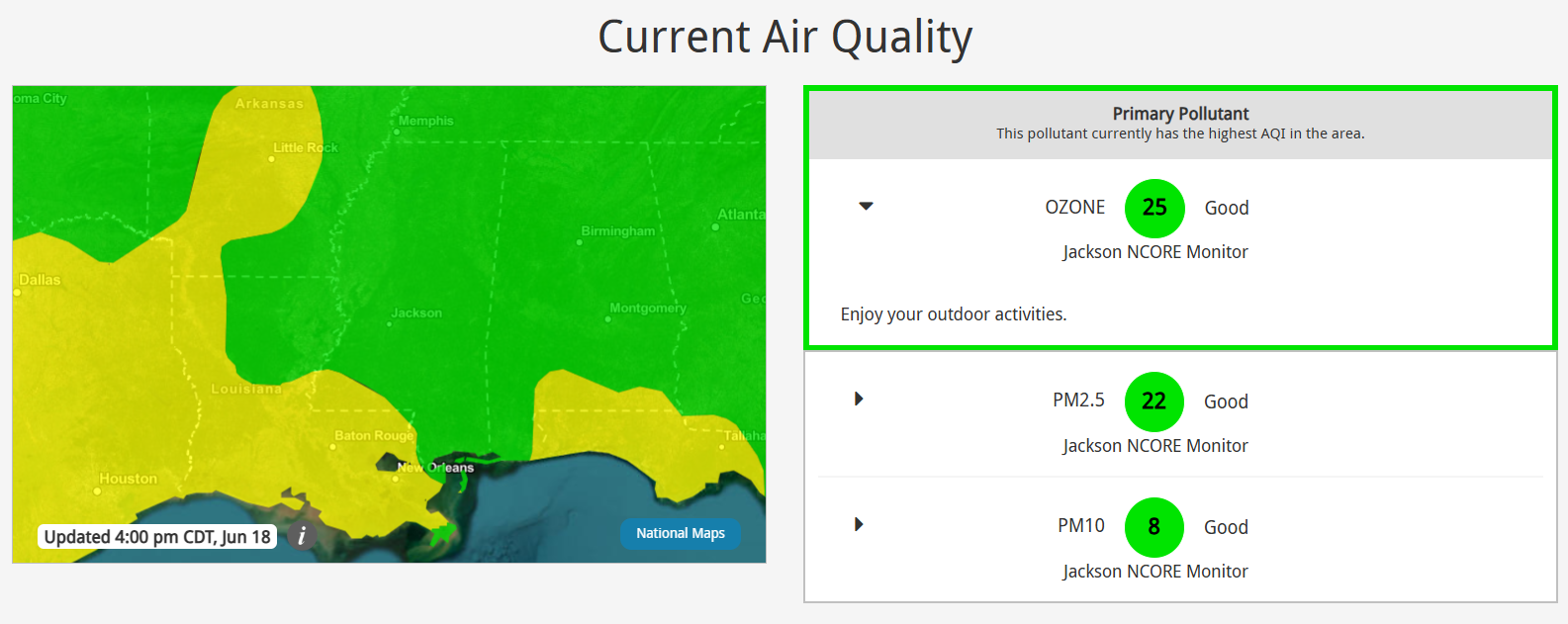
Cuevas recommends using airnow.gov to monitor local air quality.
Frequently Asked Questions
What should parents do if a child’s symptoms do not improve?
According to Dr. Tanya Fitts, parents should contact a healthcare provider if symptoms do not improve after a few days of using over-the-counter antihistamines or if an asthma inhaler is not providing relief.
Can Sahara dust affect the eyes?
Yes, Dr. Tanya Fitts states that eye symptoms can occur if the dust particles get into the eyes.
Why does humidity make dust waves worse?
Rodney Cuevas explains that water droplets in the atmosphere combine, or coalesce, with dust particles, which typically results in higher PM2.5 levels.
How do you typically adjust your outdoor activities when air quality reports decline?