
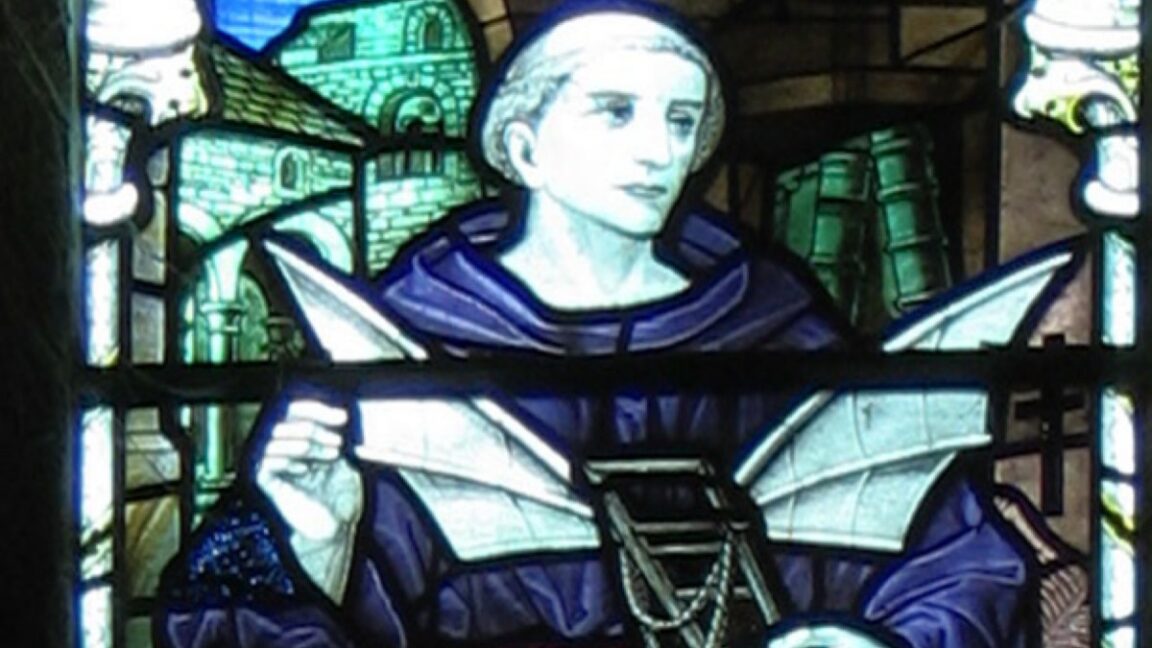
Medieval Monk Attempts to Defy Gravity with Crude Wings
What Happened in 1010? The Medieval Monk Who Tried to Fly
Early in the 11th century, a Benedictine monk named Eilmer of Malmesbury launched himself from a 150-foot tower, gliding 600 feet before crashing and breaking both legs. This early experiment in aviation is documented by 12th-century historian William of Malmesbury, who wrote that Eilmer “flew like a bird” despite the injury. The event, though brief, has sparked centuries of debate among historians about the accuracy of the account and the monk’s timeline.
Why the Date of Eilmer’s Flight Matters
William of Malmesbury’s account, written around 1125, does not specify the exact year of Eilmer’s flight. However, a later reference to the monk witnessing Halley’s Comet in 1066 has led to conflicting interpretations. Some historians argue Eilmer saw the comet in 989, placing his flight between 1000 and 1010. Others, like James Aitcheson of the University of Leicester, suggest Eilmer may have observed the comet of 1018 instead, pushing his flight to the 1020s or 1040s. This discrepancy highlights the challenges of reconstructing medieval history from fragmented sources.

How Medieval Aviation Fits Into Modern Trends
Eilmer’s story is more than a curiosity—it reflects a broader pattern of human innovation. From ancient Greek myths of Icarus to modern space exploration, the desire to conquer the skies has driven technological progress. Today, researchers studying historical aviation attempts often draw parallels to contemporary aerospace engineering, emphasizing the iterative nature of invention.
Did Eilmer Really See Halley’s Comet Twice?
The debate over Eilmer’s comet sighting hinges on a single phrase: “It is long since I saw you.” Historians have interpreted this as a reference to Halley’s Comet, but Aitcheson’s 2026 paper in *Notes and Queries* argues the monk may have seen a different comet in 1018. This theory challenges the assumption that medieval observers had a fixed understanding of celestial events, revealing how historical narratives can shift with new evidence.
What This Tells Us About Historical Research Today
Modern historians rely on cross-referencing texts, astronomical records, and archaeological findings to piece together events like Eilmer’s. For example, the 1018 comet’s trajectory aligns with known celestial patterns, offering a plausible alternative to the 989 theory. Such research underscores the importance of revisiting historical accounts with fresh methodologies, a trend seen in fields ranging from climate science to ancient technology studies.
Why This Story Still Resonates
Eilmer’s tale has inspired modern projects like the “Medieval Flight Project,” which recreates historical gliders to test their feasibility. These experiments, though rooted in the past, inform current aerospace design by highlighting the ingenuity of early engineers. The story also serves as a reminder that innovation often begins with bold, seemingly impossible ideas.
Did You Know?
The stained-glass window at Malmesbury Abbey depicting Eilmer is one of the few surviving visual records of his flight. It was added centuries after the event, reflecting the monk’s growing legend rather than contemporary documentation.

FAQ
When did Eilmer of Malmesbury attempt to fly?
Historians estimate his flight occurred between 1000 and 1040, though the exact year remains uncertain due to conflicting accounts of his comet sighting.
Why is the comet date controversial?
William of Malmesbury’s reference to Halley’s Comet in 1066 has led to debates about whether Eilmer saw the 989 or 1018 comet, affecting calculations of his age and flight timeline.
How does this relate to modern aviation?
Eilmer’s experiment is a precursor to human flight, illustrating the same spirit of innovation that drives today’s aerospace advancements, from drones to space travel.
Pro Tips for Exploring Medieval History
1. Consult primary sources like William of Malmesbury’s writings for direct insights.
2. Use astronomical databases to cross-check historical comet sightings.
3. Follow ongoing research from institutions like the University of Leicester for updated analyses.