
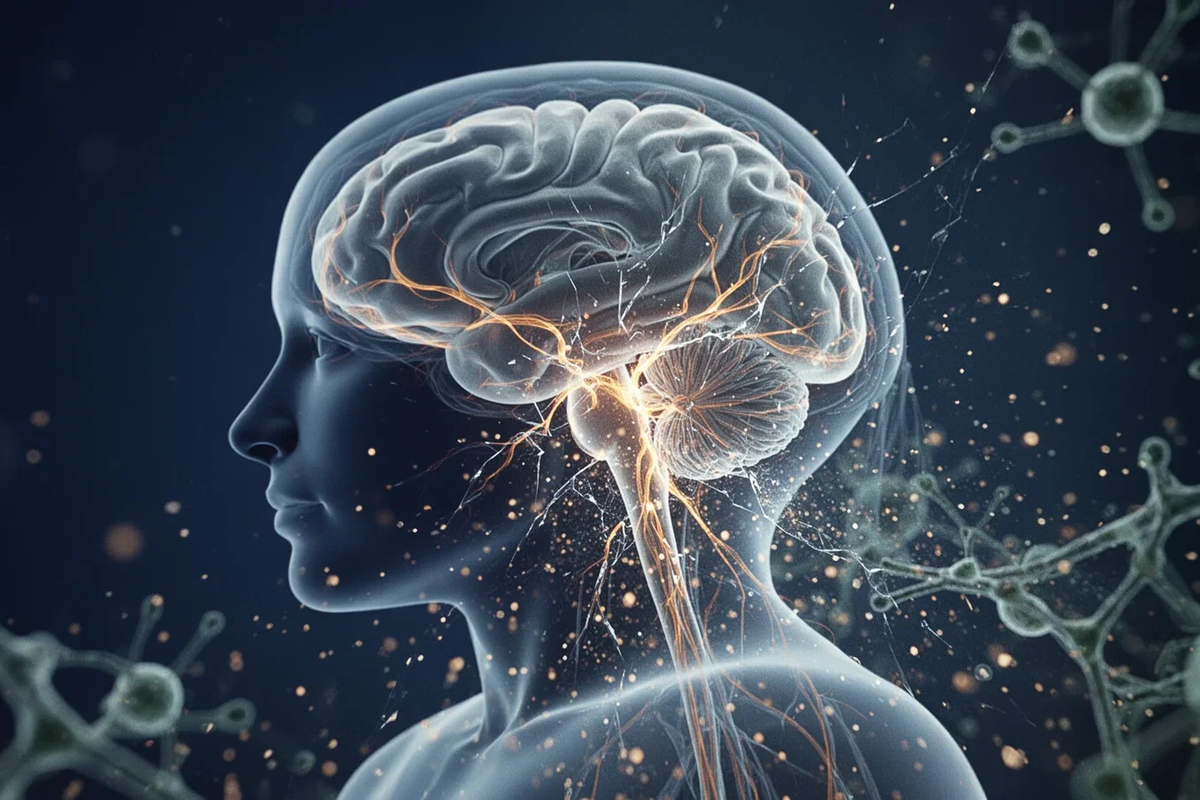
Menopause and Brain Health: How Estrogen Loss Affects Memory and Aging
Recent scientific advancements are shedding new light on the complex relationship between hormonal shifts, cellular aging, and cognitive health. New research highlights how the loss of estrogen and changes in lipid metabolism can fundamentally alter brain structure and energy production in the body.
The Impact of Estrogen Loss on Brain Structure
A study from Northwestern University, published May 26 in Aging Cell, provides a potential explanation for the higher rates of Alzheimer’s observed in women. The research indicates that the decline in estrogen production during menopause damages the extracellular matrix within the hippocampus.
In mouse trials, this degradation led to a weakened tissue structure, which subsequently resulted in cognitive deficits. Because of these findings, scientists suggest that this matrix could be used as a future target for therapeutic interventions.
Complementing this, a team from the Oregon Health & Science University and the University of Leipzig identified a new population of immune cells known as HPAM cells. Published in Nature Neuroscience in May, the study found these cells accumulate around Amyloid-beta plaques, offering new perspectives for potential Alzheimer’s therapies.
Did You Know? On May 12, the medical journal The Lancet reported that Polycystic Ovary Syndrome (PCOS) has been officially renamed to PMOS.
Cellular Energy and Mitochondrial Aging
Research from the Leibniz Institute for Aging Research in Jena suggests that mitochondria age more rapidly following menopause. The institute found that the production of phosphatidylcholine decreases with age, causing mitochondrial membranes to stiffen.
This stiffening may lead to an imbalance in how energy is distributed throughout the body. Data from the UK Biobank confirms that women after menopause and individuals with diabetes exhibit significantly lower levels of phosphatidylcholine.
While trials with roundworms showed that administering choline or phosphatidylcholine stabilized mitochondria, a direct anti-aging effect in humans has not yet been proven. This suggests that further human-centric research may be a necessary next step.
Advancements in Metabolic Medicine
Significant strides have been made in the treatment of metabolic disorders and obesity. The EMA has recommended the approval of Semaglutide in a 25 mg tablet form, which showed a weight loss of over 13 percent over 64 weeks in a Phase-III study.
Further results from the TRIUMPH-1 study regarding the drug Retatrutide, developed by Eli Lilly, showed weight reductions of up to 28.3 percent over 80 weeks. Bayer has received approval in China for Finerenone to treat heart failure.
Expert Insight: Samantha Carter notes that the shift toward bio-identical hormone preparations represents a critical evolution in women’s healthcare. By potentially lowering thrombosis risks and improving the outlook on breast cancer risk compared to older studies, these modern therapies allow for a more nuanced approach to managing menopause.
Managing Menopause and Chronic Conditions
Experts emphasize the need for a differentiated view of the menopause transition. Dr. Julia Bartley of the University Hospital Leipzig notes that approximately 80 percent of women experience symptoms, with 15 to 30 percent suffering from severe symptoms.
For those living with Multiple Sclerosis (MS), the German Multiple Sclerosis Society announced on May 27 that menopause does not fundamentally worsen the course of the disease. However, a meta-analysis of over 109,000 patients confirmed that smoking increases the risk of MS by nearly 50 percent.
The Role of Lifestyle Interventions
Strategic lifestyle changes are proving to be powerful tools in mitigating health risks. The 2025 ChronoFast study found that intermittent fasting with an early eating window between 8 a.m. And 4 p.m. Significantly reduced harmful lipid types in women.
Physical activity also plays a vital role in cardiovascular health. UK Biobank data indicates that 560 to 610 minutes of weekly training could reduce the risk of heart attack and stroke by more than 30 percent.
the Swedish Obese Subjects Study from the University of Gothenburg highlighted the long-term benefits of bariatric surgery. Findings showed that the general cancer risk for women dropped by 22 percent, while the risk for female-specific tumors decreased by 40 percent.
Frequently Asked Questions
How does the loss of estrogen affect memory and brain health?
According to Northwestern University research, the decline of estrogen during menopause damages the extracellular matrix in the hippocampus, which can lead to weaker tissue structure and cognitive deficits.
What is the relationship between phosphatidylcholine and aging?
The Leibniz Institute for Aging Research found that a decrease in phosphatidylcholine production leads to the stiffening of mitochondrial membranes, which may disrupt the body’s energy distribution.
Does menopause increase the severity of Multiple Sclerosis?
No. The German Multiple Sclerosis Society stated that menopause does not fundamentally worsen the progression of MS, though smoking remains a significant risk factor, increasing the risk by nearly 50 percent.
How do you balance medical guidance with lifestyle changes when managing your long-term health?