
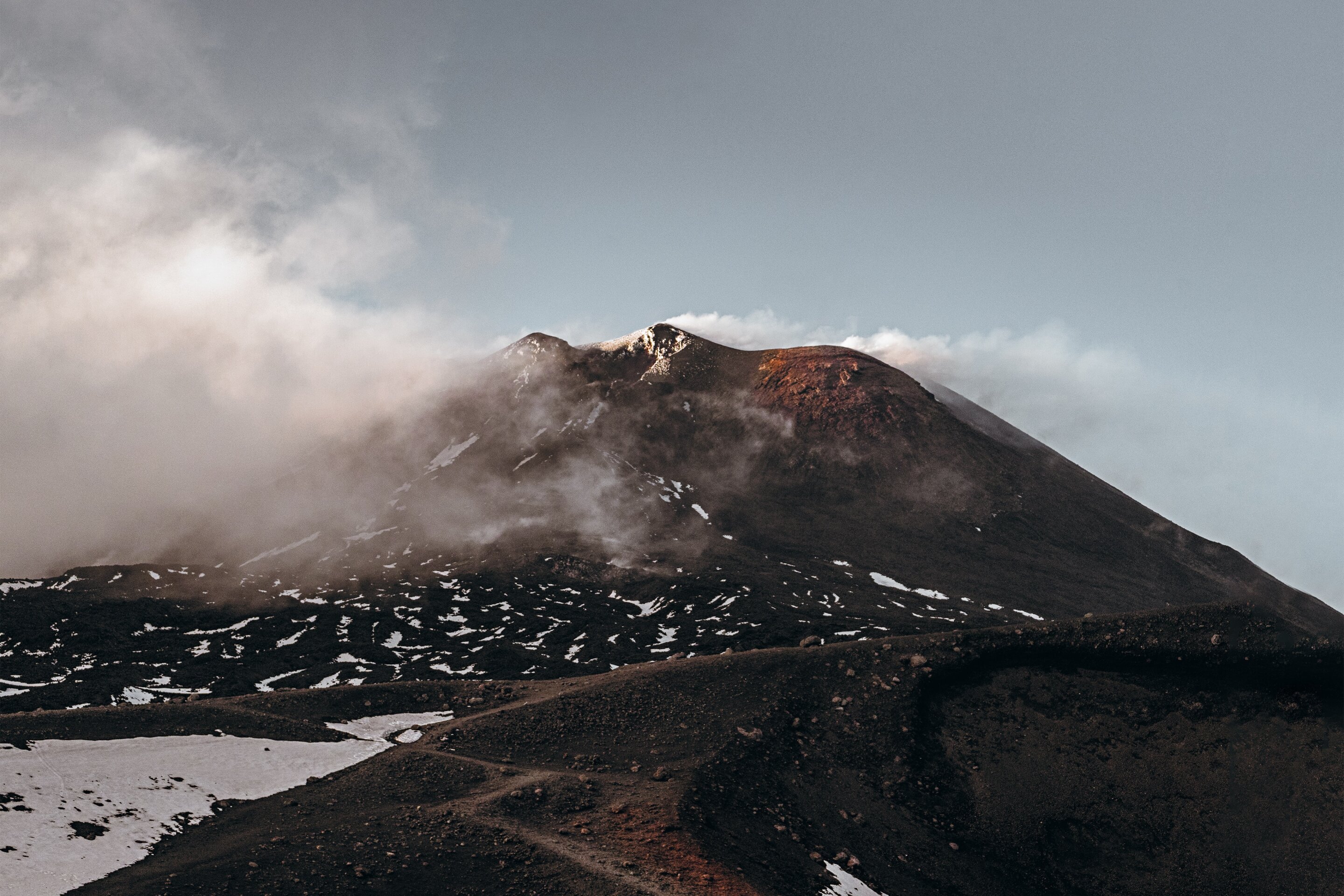
Mount Etna eruptions reveal carbon dioxide and water can trigger separate explosive paths
New research from Cornell University reveals that volcanic explosivity depends on whether carbon dioxide or water dominates the magma’s volatiles. By using Raman spectroscopy on Mount Etna, researchers found that CO₂ triggers rapid, deep-seated eruptions, while water-driven events often involve shallow pauses, fundamentally changing how geologists assess eruption risks globally.
How does CO₂ change the way a volcano erupts?
It comes down to the “plumbing.” According to Esteban Gazel, a professor at Cornell University, the type of gas trapped in magma determines if an eruption is a slow leak or a violent explosion. He compares it to a soda bottle: open it slowly, and it’s fine; shake it up, and the bubbles separate instantly, causing a blast.
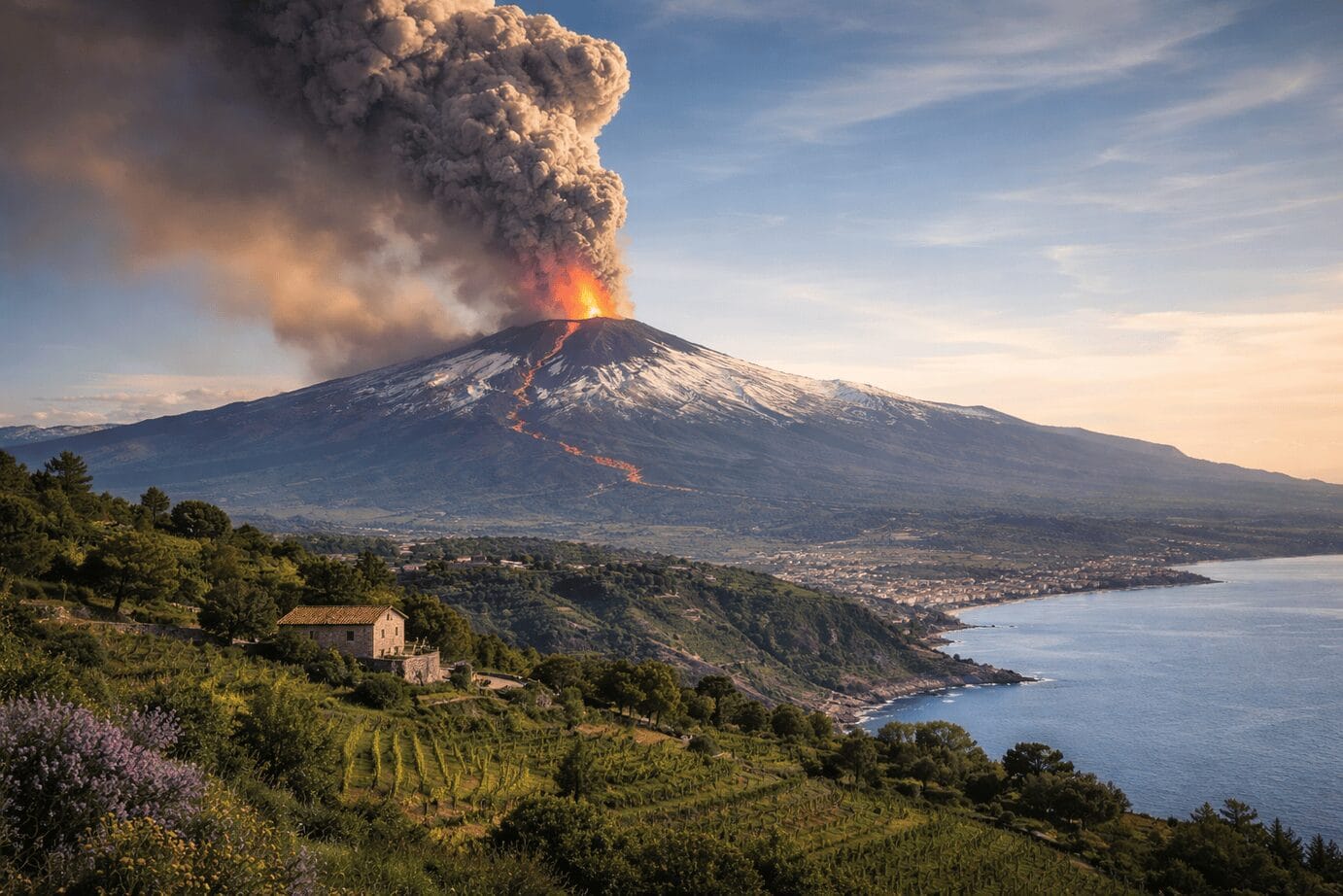
The Cornell-led study, published in Geochemistry, Geophysics, Geosystems, found that CO₂ acts as a high-energy trigger. In a “Fall Stratified” event from nearly 4,000 years ago, magma shot up from the mantle—roughly 24 to 30 km deep—and erupted in just a few hours. This rapid ascent was propelled by a high concentration of CO₂.
Contrast that with the eruption of 122 B.C. In that case, the magma rose from 22 km but hit a “speed bump,” pausing for weeks at a shallow depth of 2 to 5 km. This event was controlled more by water, allowing gases to release gradually before the final eruption. This proves that the same volcano can use entirely different mechanisms to blow its top.
Why is Raman spectroscopy a breakthrough for disaster prevention?
Until recently, geologists struggled to “see” the internal pressure of a volcano before it erupted. The team, including researcher Maxim Gavrilenko, pioneered a method using Raman spectroscopy to analyze crystals formed in magma. They looked at micron-sized bubbles—some only 1% the thickness of a human hair.
By measuring the density of CO₂ in these tiny bubbles, the team can calculate pressure and, subsequently, the exact depth the magma came from. This allows scientists to reconstruct the volcanic plumbing system with “unprecedented precision,” as Gavrilenko puts it.
This shift from surface observation to crystal-level analysis means risk assessments no longer rely on guesswork. We can now distinguish between a “shallow launch” and a “deep origin” eruption, which is critical for evacuation timelines.
What happens when we apply Etna’s lessons to other global hotspots?
The implications extend far beyond Italy. Gazel’s team is already applying these Raman spectroscopy techniques to volcanoes in Chile and Hawaii. The goal is to create a global physical model of eruptions.
Different regions have different “gas signatures.” Oceanic islands often see high CO₂ levels, while subduction zones—like the Ring of Fire—are typically water-driven. By identifying the dominant volatile in a specific volcano, authorities can predict whether an eruption will be a slow-moving lava flow or a Plinian event (the most explosive category, named after Pliny the Elder).
If every volcano on the planet is mapped this way, we can move toward a “predictive plumbing map.” This would allow geologists to say not just that a volcano will erupt, but how it will behave based on its specific chemical threshold.
Comparing Volcanic Trigger Mechanisms
| Driver | Ascent Speed | Typical Depth | Eruption Style |
|---|---|---|---|
| Carbon Dioxide (CO₂) | Rapid (Hours) | Deep (24-30 km) | Explosive/Fast |
| Water (H₂O) | Slow (Weeks) | Shallow (2-5 km) | Gradual/Staged |
Frequently Asked Questions
What is a Plinian eruption?
It’s the most explosive type of volcanic eruption, characterized by massive columns of gas and ash. They are named after Pliny the Elder, who documented the eruption of Mount Vesuvius in 79 A.D.
Can scientists predict eruptions with 100% accuracy?
Not yet. However, using Raman spectroscopy to analyze magma crystals allows scientists to build better physical models, which significantly improves the accuracy of risk assessments.
Why is Mount Etna used for this research?
Etna is a “gentle giant” that occasionally has violent outbursts. Because it features both water and CO₂ as drivers, it serves as a perfect comparison site for studying different eruptive mechanisms.
Want to stay updated on Earth’s most volatile secrets?
From deep-sea vents to supervolcanoes, we track the science that keeps us safe. Join our community for more insights into geoscience and disaster prevention.
Or tell us in the comments: Which natural phenomenon fascinates you the most?