
Multiple Microbes Shaped Eukaryotic Evolution
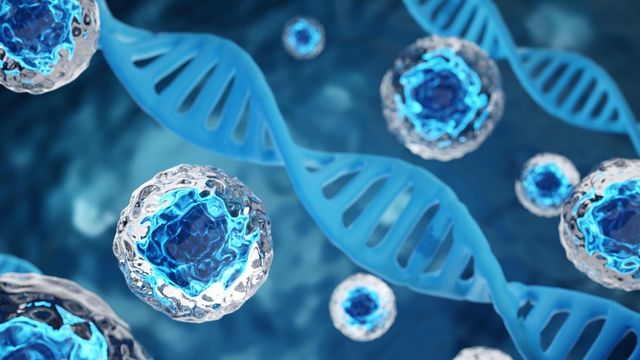
The Last Eukaryotic Common Ancestor (LECA) did not emerge from a single evolutionary event, but through a gradual, multi-million-year process of genetic exchange between diverse microorganisms. A study published in Nature by Dr. Toni Gabaldón and his team at the Barcelona Supercomputing Center (BSC-CNS) and IRB Barcelona challenges the long-held theory that cellular complexity began with a singular symbiotic encounter between an archaeon and a bacterium.
How did complex cells actually evolve?
For decades, biology textbooks identified the acquisition of the mitochondrion as the primary catalyst for eukaryotic life. This classic model suggests a single archaeon engulfed a bacterium, which then evolved into the mitochondrion, enabling cellular complexity. However, the new computational research indicates this narrative is incomplete. According to Dr. Gabaldón, the process involved multiple “actors on stage,” including various bacterial groups and giant viruses that facilitated gene transfer over vast timescales.
The researchers used the MareNostrum supercomputer to conduct “computational molecular archaeology,” comparing genomic data from thousands of organisms to identify evolutionary signals that occurred approximately 2 billion years ago.
Which microorganisms contributed to the first eukaryotes?
Beyond the ancestor of the mitochondrion, the study identifies two bacterial groups—Myxococcota and Planctomycetota—as vital contributors to the eukaryotic genome. Research authors Moisès Bernabeu, Saioa Manzano-Morales, and Marina Marcet-Houben note that these signals were detected using robust mathematical models. Planctomycetota appears to be an older signal, associated with structural complexity, while Myxococcota contributed to metabolic functions like lipid and membrane regulation.
What role did giant viruses play?
One of the most significant findings is the involvement of Nucleocytoviricota, or giant viruses. These viruses, which possess genomes significantly larger than standard viral counterparts, likely acted as vehicles for horizontal gene transfer. By infecting single-celled organisms in shared environments like microbial mats, these viruses facilitated the exchange of genetic material. This mechanism provided the ancient ancestors of modern plants, animals, and fungi with the biological tools needed to develop complex internal compartments.
How does this compare to previous theories?
This study builds upon a 2016 Nature paper by Dr. Gabaldón, which first proposed that the mitochondrion might have been acquired later in the evolutionary timeline than previously assumed. While the 2016 research focused on the timing of the mitochondrion, the current study expands the scope to include a broader cast of microbial contributors. By utilizing significantly larger datasets and advanced supercomputing power, the team has moved from a “two-protagonist” model to a “collaborative network” theory of eukaryogenesis.
| Theory Component | Traditional View | New Findings |
|---|---|---|
| Primary Driver | Single symbiosis | Gradual, multi-actor process |
| Key Actors | Archaeon + Mitochondrion | Archaeon, Bacteria, Giant Viruses |
Frequently Asked Questions
What is LECA?
LECA stands for the Last Eukaryotic Common Ancestor. It represents the hypothetical organism from which all modern eukaryotes—including animals, plants, and fungi—descend.
Why are giant viruses important to this study?
Researchers suggest giant viruses acted as genetic “taxis,” moving genes between different microorganisms in ancient ecosystems, which helped shape the complex genome of the first eukaryotic cells.
Can we prove this happened with fossils?
No. Because these events occurred 2 billion years ago in microscopic organisms, there are no direct fossil records. Scientists rely on genomic “footprints” preserved in the DNA of living organisms to reconstruct this history.
If you want to explore the data behind these findings, visit the Barcelona Supercomputing Center website to view their latest publications on computational genomics and evolutionary biology.
Have questions about the origins of life or how supercomputing is changing biology? Join the conversation in the comments section below or sign up for our weekly science newsletter for more updates on genomic breakthroughs.