
NASA Marches Toward Artemis III Mission in 2027, Names Crew Members
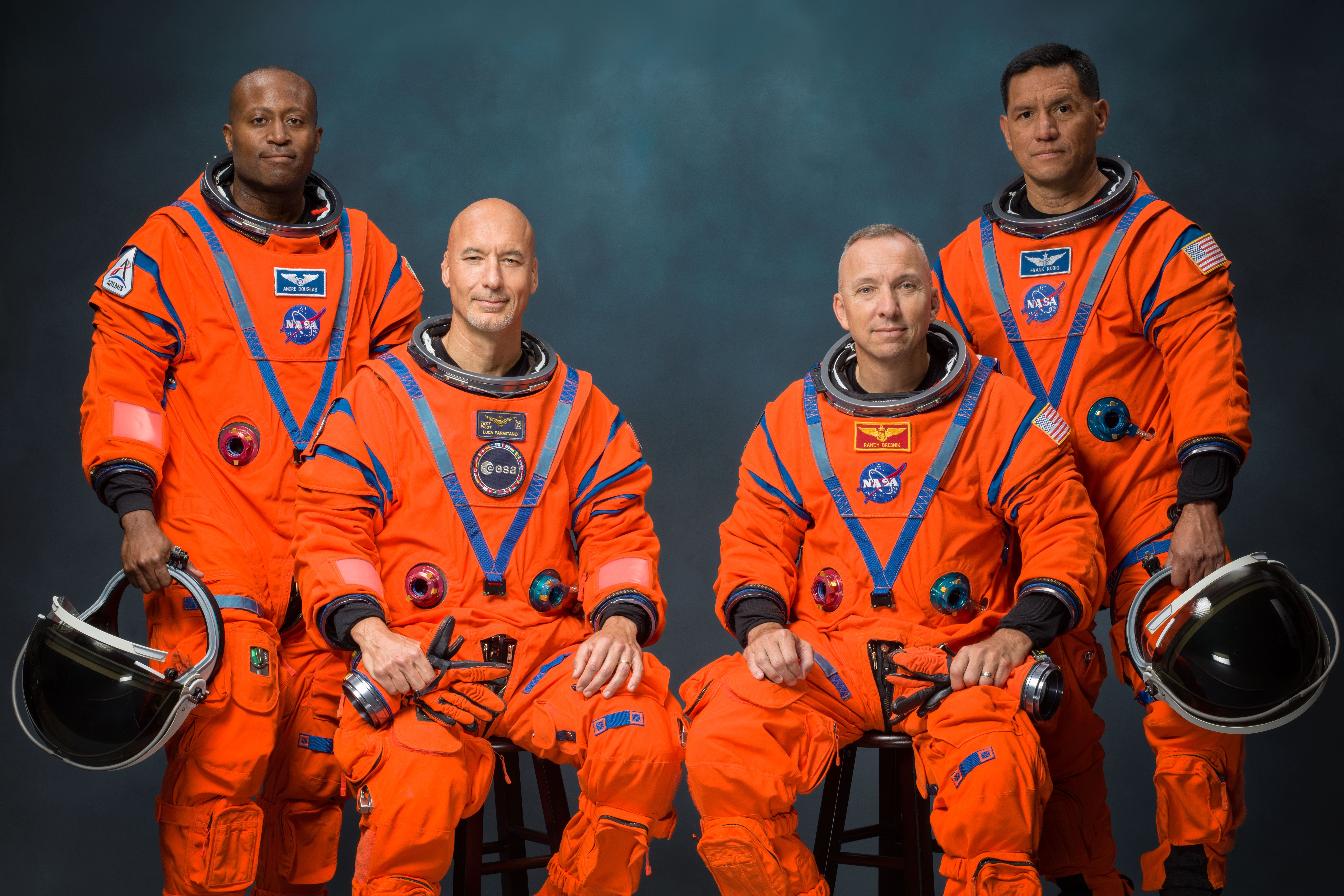
NASA has named the four primary crew members and one backup for the Artemis III mission, a 2027 test flight designed to prove rendezvous and docking capabilities between the Orion spacecraft and commercial landers from SpaceX and Blue Origin. This mission serves as a critical operational precursor to Artemis IV, the first planned crewed mission to the lunar South Pole in 2028.
Who is the Artemis III crew?
NASA assigned Randy Bresnik, Luca Parmitano, Frank Rubio, and Andre Douglas to the prime crew, with Bob Hines serving as the backup. This marks the first time an ESA astronaut has been assigned to an Artemis mission, according to NASA.
Randy Bresnik will serve as commander. A retired U.S. Marine colonel, Bresnik has flown on the space shuttle Atlantis and a Soyuz spacecraft. He has logged more than 7,000 flight hours in 95 different aircraft types.
Luca Parmitano is the mission pilot. As an ESA astronaut and former commander of Expedition 61, Parmitano brings European operational expertise to the cockpit. ESA Director General Josef Aschbacher stated that Parmitano’s assignment reflects the depth of European expertise in high-pressure spaceflight operations.
Frank Rubio holds the record for the longest single-duration spaceflight by an American astronaut, spending 371 days in orbit. He is a physician and a 28-year veteran of the U.S. Army.
Andre Douglas will make his first spaceflight on this mission. Douglas previously served as a backup for Artemis II and holds a doctorate in systems engineering from George Washington University.
How will the Artemis III test flight work?
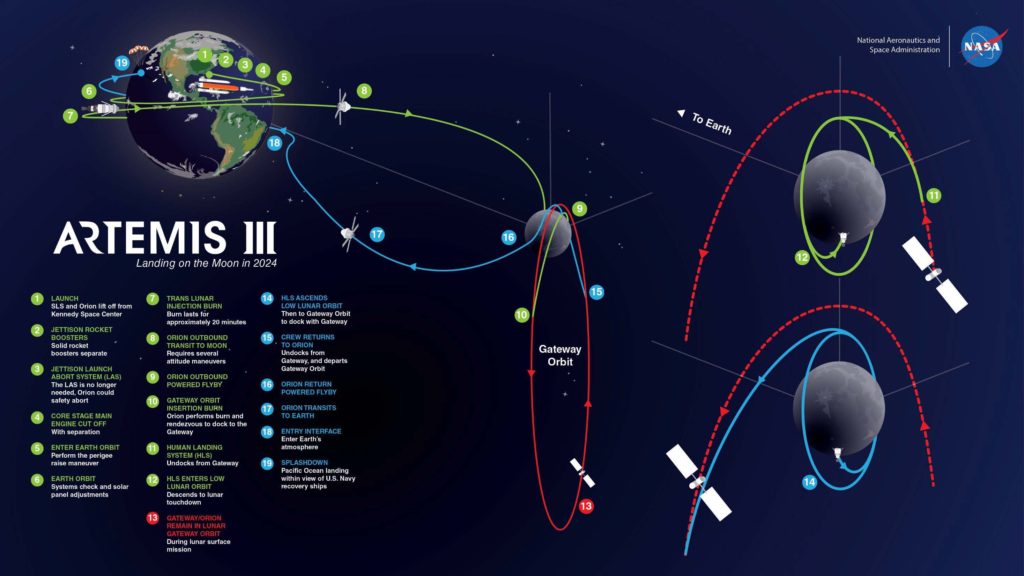
The mission involves a complex series of launches and docking maneuvers in low Earth orbit. According to NASA, the crew will spend approximately two weeks in space.
The sequence begins with the launch of Blue Origin’s lander pathfinder, which is designed to remain in orbit for several weeks. The crew will then launch from the Kennedy Space Center in Florida aboard the Orion spacecraft, powered by the Space Launch System (SLS) rocket.
Once in orbit, Orion will rendezvous and dock with the Blue Origin lander. The crew will spend about two days docked to test system interfaces, software, and propulsion. After undocking, Orion will wait for the SpaceX Starship pathfinder to launch. The crew will then dock with Starship for approximately one day of checkouts before returning to Earth and splashing down in the Pacific Ocean.
Comparison: Blue Origin vs. SpaceX Mission Roles
| Feature | Blue Origin Pathfinder | SpaceX Starship Pathfinder |
|---|---|---|
| Launch Sequence | Launches first | Launches second |
| Orbit Duration | Multiple weeks | Short-term rendezvous |
| Docking Window | ~2 days with Orion | ~1 day with Orion |
What is the current status of the hardware?
NASA and its partners are currently integrating hardware for the 2027 flight. Engineers plan to connect the Orion crew module and service module this summer, which will include the first flight of the spacecraft’s docking system.

The SLS rocket is also undergoing processing. NASA technicians are integrating the engine section to the core stage, with the installation of four RS-25 engines scheduled for this summer. Rocket stacking is also set to begin during the same window, as all solid rocket booster segments are now at the Kennedy Space Center.
NASA Administrator Jared Isaacman described the mission as a “bold step” that builds on the foundation of the Artemis II flight completed in April. He noted that the mission will require the most coordinated heavy-lift rocket launches in history.
Why does this mission matter for Mars?
While the immediate goal is the lunar South Pole in 2028, NASA views Artemis III as a stepping stone for deeper solar system exploration. By testing the “integrated hardware” between Orion and commercial landers, NASA is refining the logistics of crew transfers in deep space.
The ability to rendezvous and dock with multiple different spacecraft—as the crew will do with both Blue Origin and SpaceX vehicles—is a requirement for any future Mars architecture. According to NASA, these operations help ramp up production and improve supply chain efficiencies for the entire program.
Frequently Asked Questions
When will astronauts actually land on the Moon?
Artemis III is a test flight in Earth orbit scheduled for 2027. The first planned crewed mission to the lunar South Pole is Artemis IV, scheduled for 2028.
Who is providing the landers for Artemis?
NASA is partnering with two commercial providers: Blue Origin, which is developing the Blue Moon lander, and SpaceX, which is developing a lunar version of Starship.
What is the role of the ESA in this mission?
The European Space Agency (ESA) provides the European Service Module that powers the Orion spacecraft and has assigned its first astronaut, Luca Parmitano, to the Artemis III crew.
What do you think about the partnership between NASA and commercial companies like SpaceX and Blue Origin? Let us know in the comments below or subscribe to our newsletter for more space exploration updates.