
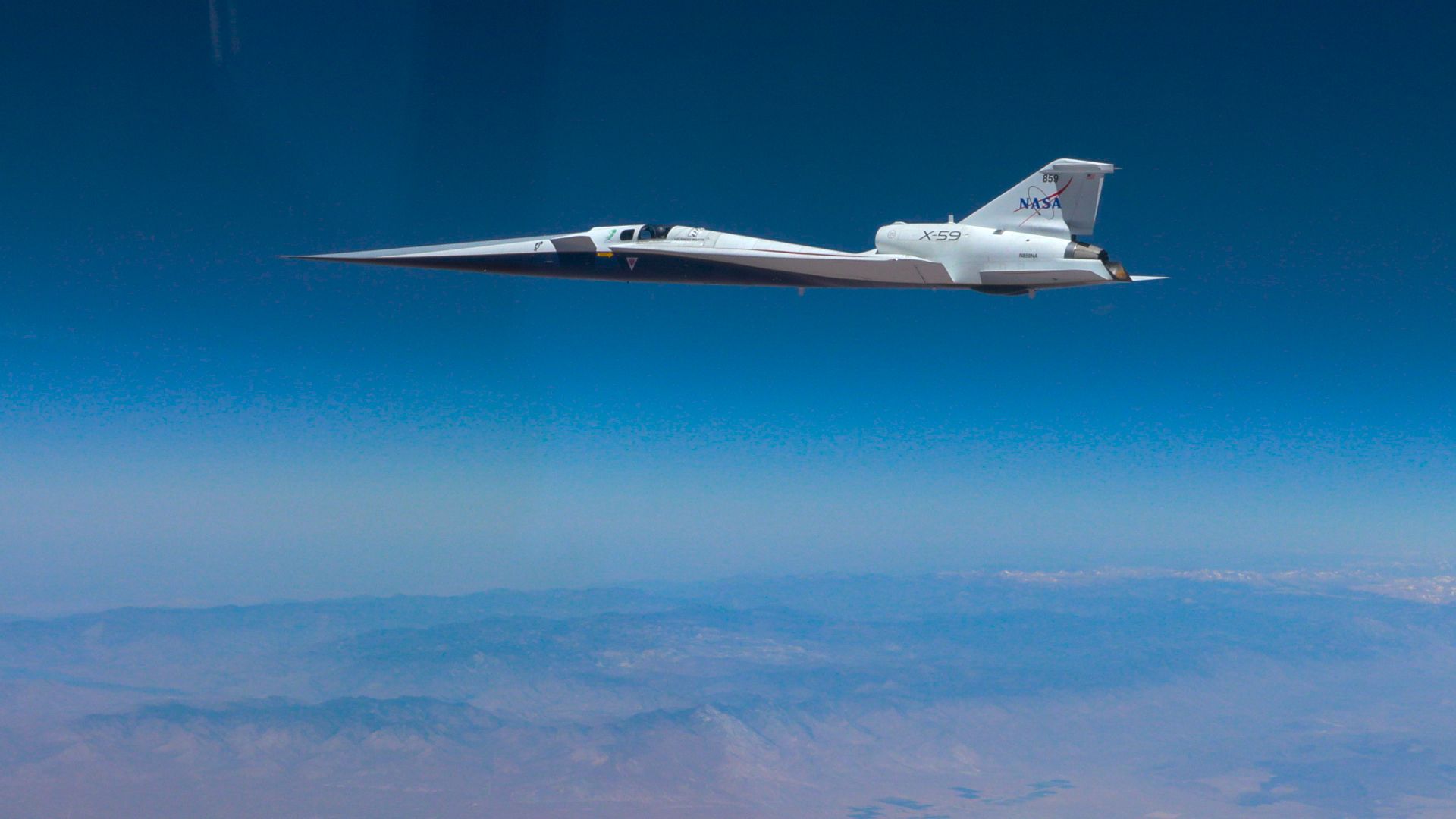
NASA’s experimental X-59 jet breaks sound barrier for 1st time in step toward ‘quiet supersonic’ technology
NASA’s experimental X-59 aircraft broke the sound barrier on June 5, reaching Mach 1.1 during a test flight from Edwards Air Force Base in California. According to NASA, the Lockheed Martin-partnered project aims to replace deafening sonic booms—which can exceed 110 decibels and cause ear pain—with a quieter “thump” to eventually enable domestic supersonic travel.
How does the X-59 impact auditory health?
Standard sonic booms can exceed 110 decibels, a level NASA compares to a fully operational steel mill. This volume is above the threshold where most people experience ear pain, according to the provided data.
The X-59 uses an ultra-long, skinny nose to minimize the shockwave created during flight. This design is intended to produce a sonic “thud” rather than a crash, which may reduce the physical impact on people on the ground.
Why is “quiet” supersonic flight significant?
Current regulations limit supersonic commercial flight to over the ocean. The Air France and British Airways Concorde operated between 1976 and 2003 but only flew supersonic over the Atlantic Ocean to avoid noise issues, according to NASA.
A quieter aircraft could allow for commercial domestic flights over land. For example, passengers could potentially travel from Los Angeles to New York City in under three hours, compared to the current five-to-six-hour duration.
What happens next for the X-59?
NASA plans to conduct a “mission conditions” test flight in the coming weeks. This upcoming test is expected to reach speeds of Mach 1.4 at an altitude of approximately 55,000 feet.

Further testing scheduled for later this year may better define the craft’s noise-reduction capabilities. During the June 5 flight, an F-15 fighter jet trailed the X-59, and its loud boom cloaked the noise produced by the experimental craft.
Frequently Asked Questions
What speed and altitude did the X-59 reach on June 5?
The aircraft reached Mach 1.1, or 713 mph, at an altitude of 43,400 feet.
What are the potential physical risks of a standard sonic boom?
Sonic booms can exceed 110 decibels, which is loud enough to cause ear pain and shatter property, including windows and fish tanks.
Who piloted the first X-59 supersonic test?
Test pilot Jim “Clue” Less flew the 81-minute round trip from Edwards Air Force Base.
Do you think the benefit of shorter travel times outweighs the potential for noise pollution in residential areas?