
NASA’s Lucy Probe Reveals Secrets of Asteroid Donaldjohanson
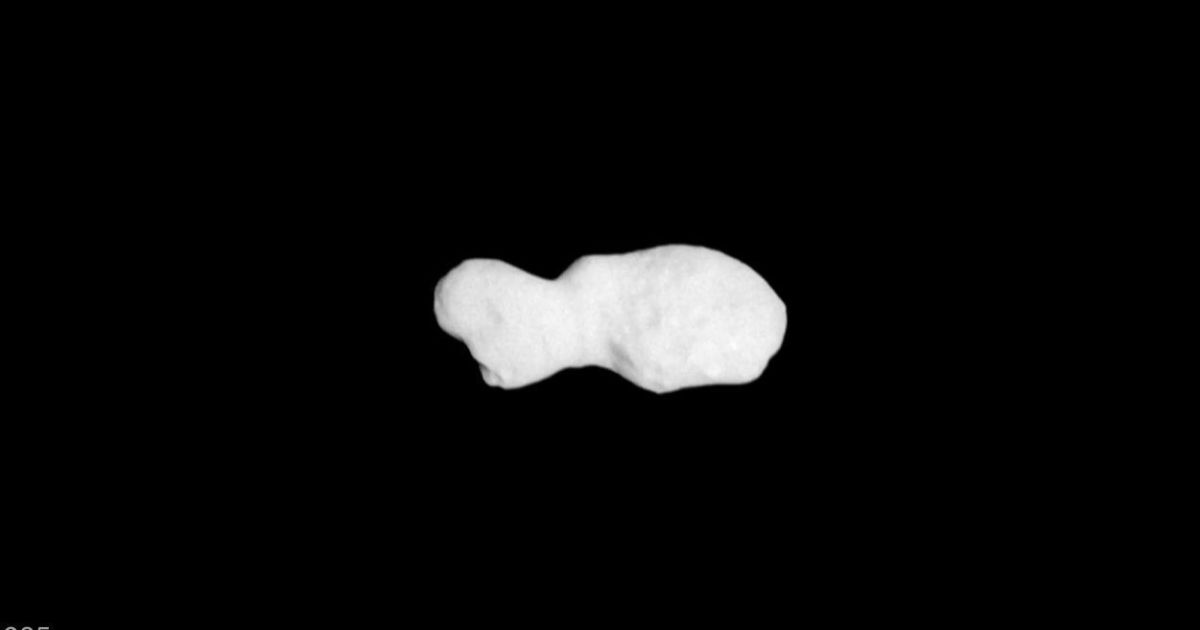
NASA’s Lucy probe discovered that asteroid Donaldjohanson is an unstable, peanut-shaped body formed 155 million years ago. According to mission data collected on April 20, 2025, the asteroid exhibits a complex two-axis rotation and contains iron-rich clays, indicating a brief period of liquid water in its remote past.
How does Donaldjohanson’s rotation differ from other asteroids?
Donaldjohanson doesn’t spin on a single axis like most planets or asteroids. Instead, it rotates like an unstable top. According to the Lucy mission team, the asteroid completes one rotation every 10.5 Earth days while simultaneously oscillating forward and backward on its longitudinal axis every 26.5 days.
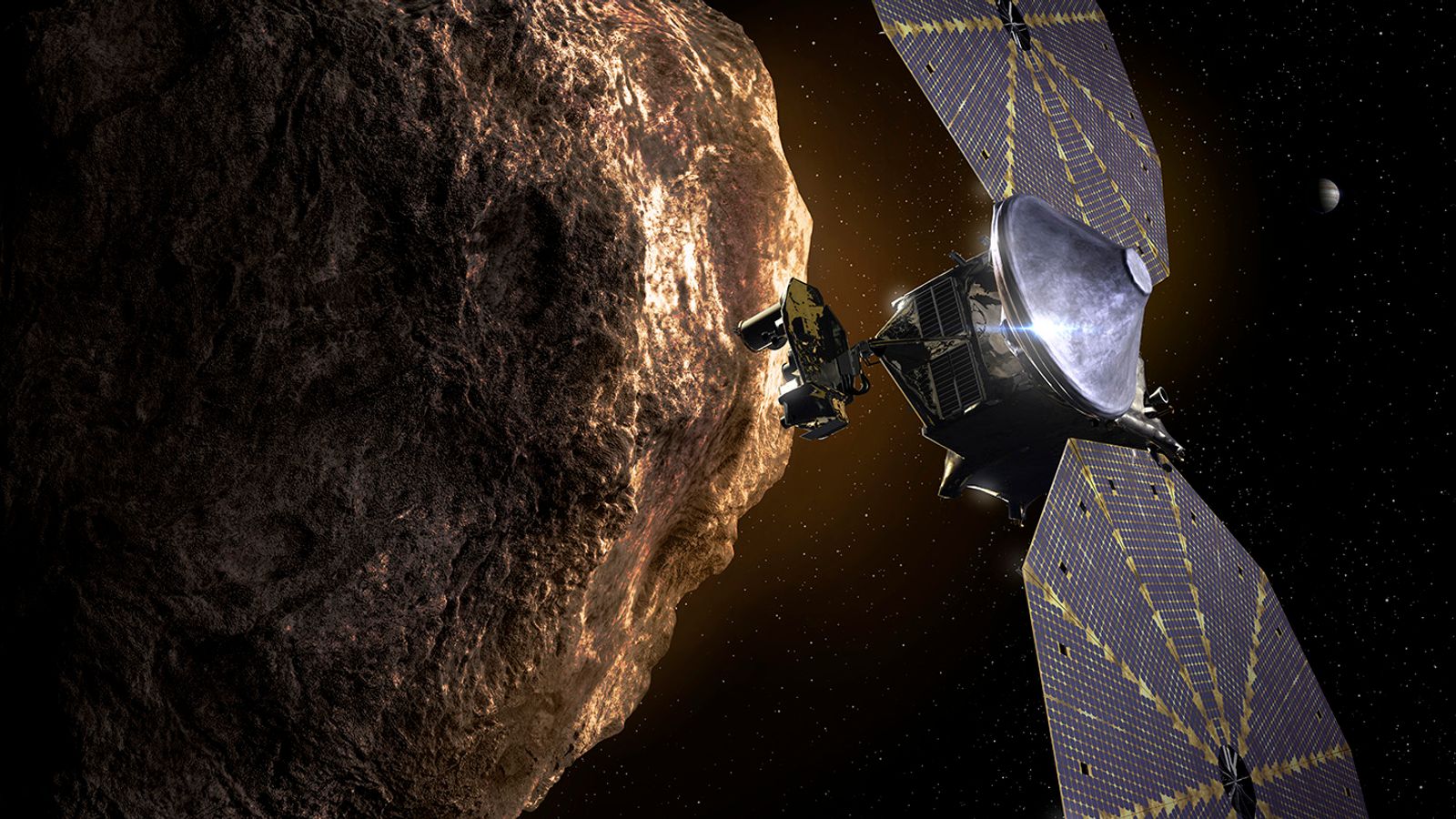
Ground-based telescopes previously detected light fluctuations suggesting an elongated object. However, Lucy’s close-up approach—passing within 1,046 kilometers—revealed this more complex, wobbling motion that isn’t visible from Earth.
Why is the “peanut” shape significant for asteroid evolution?
The asteroid’s “bilobed” structure—two lobes connected by a narrow neck—suggests it’s the result of a violent collision 155 million years ago. The Lucy team reports that the asteroid formed from fragments of a larger, carbon-rich parent body that broke apart and later drifted back together under their own mutual gravity.
This shape also reveals the asteroid’s history of slowing down. The mission team estimates Donaldjohanson rotated at least 10 times faster when it first formed. Over the last 20 to 60 million years, it slowed to its current rate, causing loose rocky material to slide down slopes and create the worn-down appearance of its surface craters.
What is the YORP effect and how did it change this asteroid?
The slowdown of Donaldjohanson’s rotation is attributed to the YORP effect. This occurs when solar radiation heats an asteroid’s surface, which then emits infrared light. Because the asteroid is asymmetrical, this radiation creates a tiny but constant torque, or twisting force.
According to NASA data, this effect can either speed up or slow down a body’s rotation. While it slowed Donaldjohanson, the YORP effect likely accelerated other asteroids. For example, Bennu now rotates once every four hours and Ryugu once every seven hours—both significantly faster than their estimated original speeds.
How does Donaldjohanson compare to Bennu and Ryugu?
The chemical composition of Donaldjohanson suggests a very different history than other well-studied asteroids. Lucy detected iron-rich clay minerals on its surface, which the mission team says indicates a brief encounter with liquid water.

This contrasts sharply with asteroids Bennu and Ryugu. Those bodies contain magnesium-rich clays, which scientists say only form after prolonged exposure to water lasting millions of years. This suggests that while all three may have formed from carbon-rich parent bodies, they originated in different regions or eras of the early solar system.
| Feature | Donaldjohanson | Bennu / Ryugu |
|---|---|---|
| Age | 155 Million Years | 1–2 Billion Years |
| Water Exposure | Brief (Iron-rich clays) | Prolonged (Magnesium-rich) |
| Location | Main Asteroid Belt | Earth-crossing orbits |
What happens next for the Lucy mission?
The encounter with Donaldjohanson served as a technical rehearsal. The spacecraft traveled at 48,000 km/h to test its imaging and data collection systems before reaching its primary targets.
The mission is now heading toward Jupiter’s Trojan asteroids—primitive rocks that have remained largely unchanged since the solar system’s birth. The next major milestone is the flyby of the Trojan asteroid Eurybates, scheduled for August 12, 2027.
Frequently Asked Questions
Why is Donaldjohanson shaped like a peanut?
It’s a “bilobed” object formed from two separate fragments of a larger asteroid that collided 155 million years ago and were later pulled together by gravity.
What does “iron-rich clay” tell scientists?
It indicates that liquid water was present on the asteroid, but only for a short time. If water had stayed longer, the iron would have been replaced by magnesium.
What is the YORP effect?
It’s a force caused by the uneven emission of heat (infrared light) from an asteroid’s surface, which can change how fast the asteroid spins.
Want to stay updated on the search for the solar system’s origins? Let us know in the comments which asteroid discovery surprises you most, or subscribe to our newsletter for the latest space exploration briefs.