
NASA’s TESS Mission Reveals the “Puffiest” Planets Ever Found
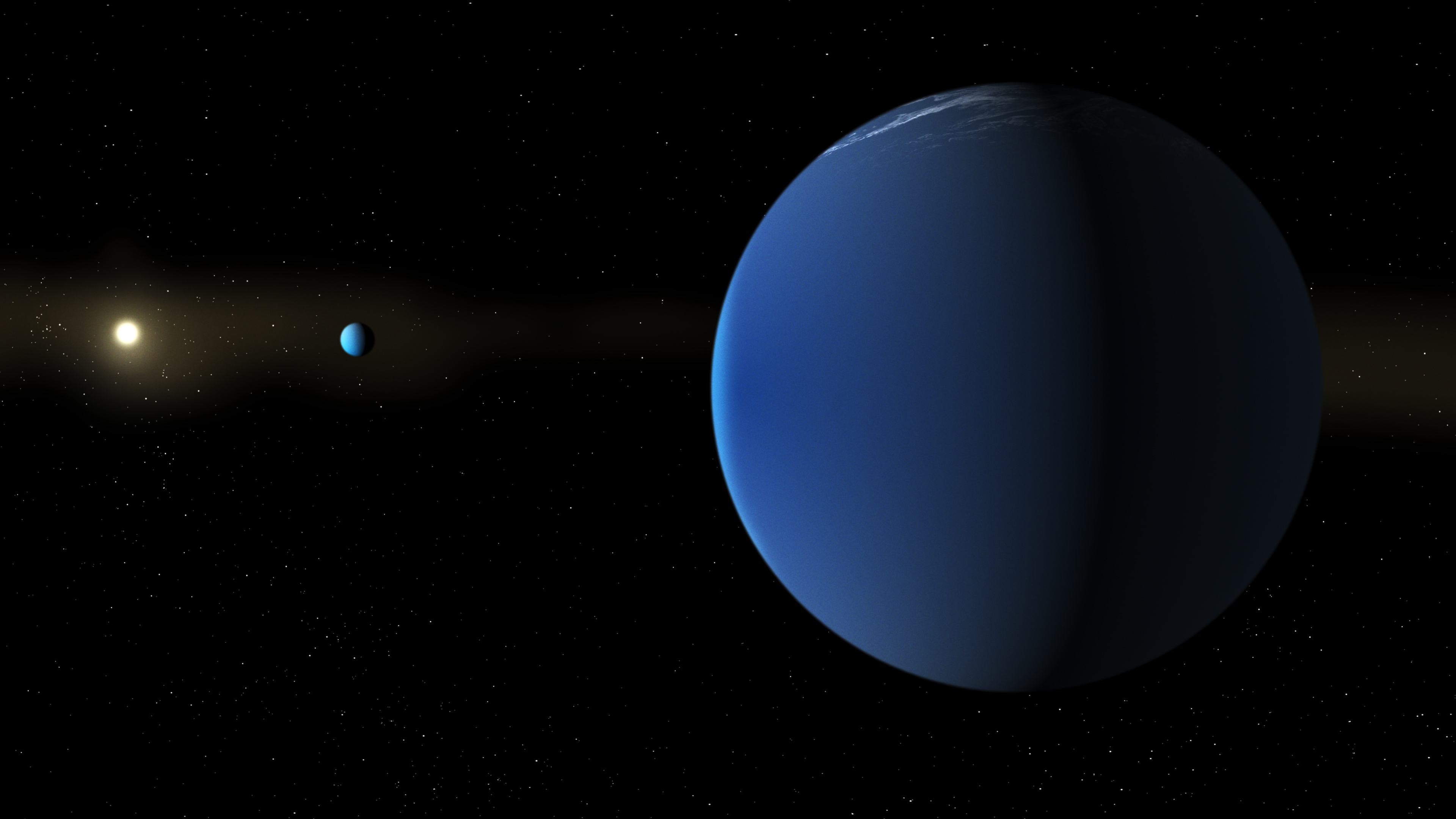
NASA’s TESS mission identified two “super-puff” planets, TOI-791 b and TOI-791 c, orbiting a Sun-like star 1,113 light-years from Earth. According to a study in the Monthly Notices of the Royal Astronomical Society, these Jupiter-sized worlds have extremely low densities, with TOI-791 b containing only 3% of Jupiter’s mass.
Why are TOI-791 b and c called “super-puffs”?
These planets earn the “super-puff” label because their density is comparable to cotton candy. While they occupy a similar volume to Jupiter, they lack the mass typically associated with gas giants of that size.
According to the research led by George Dansfield of Oxford University’s Department of Physics, TOI-791 b is nearly the same size as Jupiter but holds just 3.0% of its mass. TOI-791 c is even larger than Jupiter, yet it contains only 5.9% of Jupiter’s mass.
Dansfield noted that finding a single super-puffy planet is rare, but discovering two in one system is even more unusual. He described them as “fascinating targets” for researchers trying to understand how planetary systems evolve.
How did NASA find these low-density worlds?
The Transiting Exoplanet Survey Satellite (TESS) first spotted the planets by monitoring the star TOI-791 for “transits”—repeated dips in brightness that happen when a planet passes in front of its star.
Because these planets have unusually long orbits—139 days for TOI-791 b and 232 days for TOI-791 c—they required long-term observation. TESS gathered 1,122 days of data over seven years to confirm their attributes, according to the research team.
To determine the planets’ actual mass, scientists analyzed how the two worlds gravitationally tug on each other. Jon Jenkins, science lead for the Science Processing Operations Center at NASA’s Ames Research Center, explained that the research team used variations in orbital timing to calculate the masses, confirming their status as low-density super-puffs.
What does this discovery mean for planetary science?
The existence of TOI-791 b and c challenges current theories on how giant planets form. Jon Jenkins stated that these planets “represent a puzzle” because scientists didn’t expect to see worlds with these specific characteristics.
Steve Howell, a NASA Ames research scientist, noted that the formation of large planets is believed to drive the overall evolution of a planetary system. Studying these low-mass, large-volume planets provides high-value data on how systems develop over time.
Future research will likely focus on three primary areas:
- Atmospheric Composition: Determining the chemical makeup of the “puffy” envelopes.
- Orbital Migration: Investigating how the planets moved through the system during their development.
- Physical Dynamics: Analyzing how the planets’ spin affects their shape and how their orbits align with the host star’s tilt.
Comparison: TOI-791 b vs. TOI-791 c
| Feature | TOI-791 b | TOI-791 c |
|---|---|---|
| Size | Nearly Jupiter-sized | Larger than Jupiter |
| Mass (% of Jupiter) | 3.0% | 5.9% |
| Orbital Period | 139 days | 232 days |
Frequently Asked Questions
What is a super-puff planet?
A super-puff is an exoplanet with a large radius but a very low mass, resulting in an extremely low density, often compared to cotton candy.
How far away is the TOI-791 system?
The system is located approximately 1,113 light-years from Earth.
Why are these planets harder to find than others?
Their long orbital periods (139 and 232 days) mean telescopes must observe the star for years to capture enough transits to confirm the planets’ existence and characteristics.
What do you think about these “cotton candy” worlds? Could there be more systems like TOI-791 hidden in our galaxy? Let us know in the comments or subscribe to our newsletter for more space discoveries.