
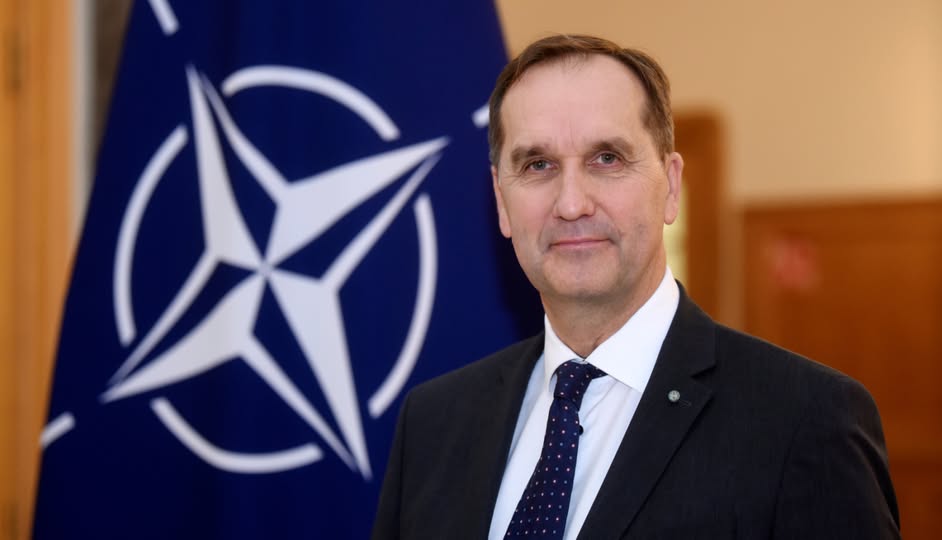
NATO and Latvia: Strengthening Eastern Flank Security and Defense Spending
NATO is pushing member states toward a historic defense spending target of 5% of GDP by 2035, according to Māris Riekstiņš, Latvia’s Ambassador to NATO. While Latvia, Poland, Estonia, and Lithuania have already reached this threshold, the upcoming summit in Ankara, Turkey, is expected to focus on tracking member progress and scaling the defense industry to meet long-term security threats.
Why is NATO shifting to a 5% GDP spending target?
During the Hague summit, alliance members agreed to increase defense investments to 5% of GDP by 2035. Ambassador Riekstiņš noted that this move follows a history of delayed implementation, citing the 2014 Wales summit where a 2% target was set for a ten-year period, yet some nations only acted shortly before 2024.
The Baltics have advocated for reaching this 5% mark much faster than 2035 due to the seriousness of threats from international terrorism and Russian aggression. According to Riekstiņš, achieving this level requires both political commitment and public understanding that these are essential security investments.
How is the defense industry adapting to new warfare?
Investment is shifting toward long-term production and innovation rather than short-term market demands. Riekstiņš emphasized that the industry needs clear political signals that these needs are permanent, as threats are long-term in nature.

The conflict in Ukraine has accelerated the adoption of drones and unmanned systems, challenging traditional reliance on artillery and mechanized units. Riekstiņš stated that Ukraine’s real-world combat experience is critical for NATO, as it allows the alliance to avoid mass-producing technology that may become obsolete within a few years.
What is the financial strategy for supporting Ukraine?
NATO Secretary General Mark Rutte has suggested that the financial burden of supporting Ukraine should be distributed more proportionally among members. Currently, approximately 11 NATO member states carry the majority of the financial weight.
Latvia, along with Norway, the Netherlands, Poland, Lithuania, and Estonia, has proposed a more concrete approach. This could involve agreeing on a specific spending threshold for Ukraine support, similar to the 5% GDP target for general defense spending.
How are U.S. and European roles evolving?
The U.S. continues to regularly evaluate force placement across global regions, a process Riekstiņš describes as a normal planning cycle. He noted that the current U.S. administration expects wealthy European nations to invest more in their own conventional defense.

This transition is already manifesting in practical hardware. Latvia and Estonia are currently receiving German-made air defense systems based on contracts signed three years ago. Furthermore, there are ongoing efforts to integrate air policing and air defense into a single, unified system to allow commanders to move assets more freely during crises.
What are the practical challenges for Baltic security?
A primary challenge is the cost of monitoring the 400-kilometer eastern border. Riekstiņš explained that maintaining permanent mobile units to counter sporadic drone incursions requires significant funding, which could potentially divert resources from other critical defense capabilities.
To address this, Latvia is deploying additional sensors, including acoustic sensors, to better identify flying objects. This is necessary because radar images alone can be misleading, sometimes identifying migrating birds as threats, thus requiring visual confirmation before a decision to shoot down an object is made.
Frequently Asked Questions
What is the new NATO defense spending goal?
Member states have committed to increasing defense investments to 5% of their GDP by the year 2035.
Which countries have already reached the 5% spending mark?
Latvia, Lithuania, Estonia, and Poland have already achieved the 5% GDP investment level.
Does a single drone incursion trigger NATO’s Article 5?
According to Ambassador Riekstiņš, a single drone entering airspace is unlikely to be interpreted as an act of aggression unless it causes significant economic damage or human casualties.
Do you believe European nations can realistically meet the 5% GDP spending target by 2035 without compromising other social priorities?