
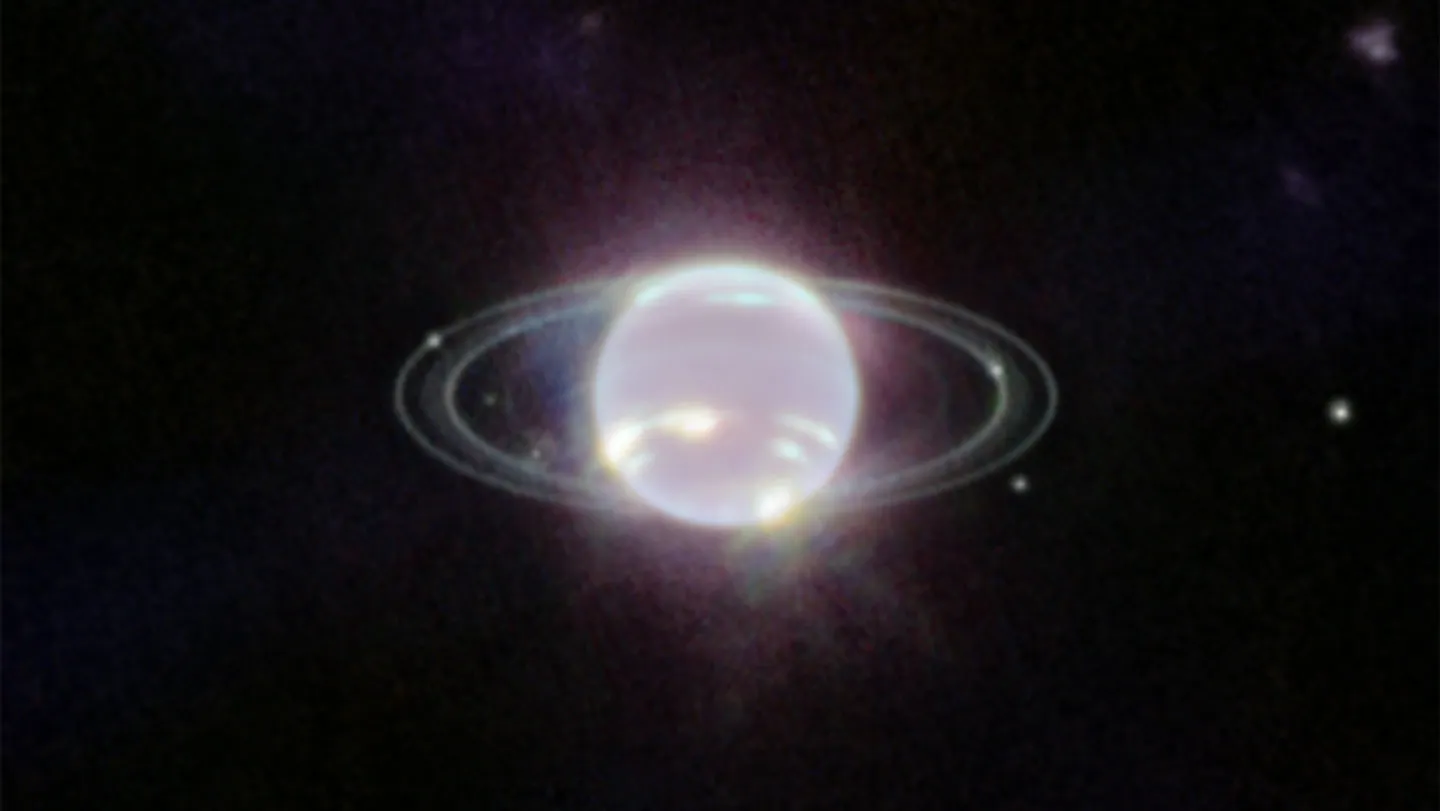
Neptune’s Moon Nereid May Be the Sole Survivor of an Ancient Moonpocalypse
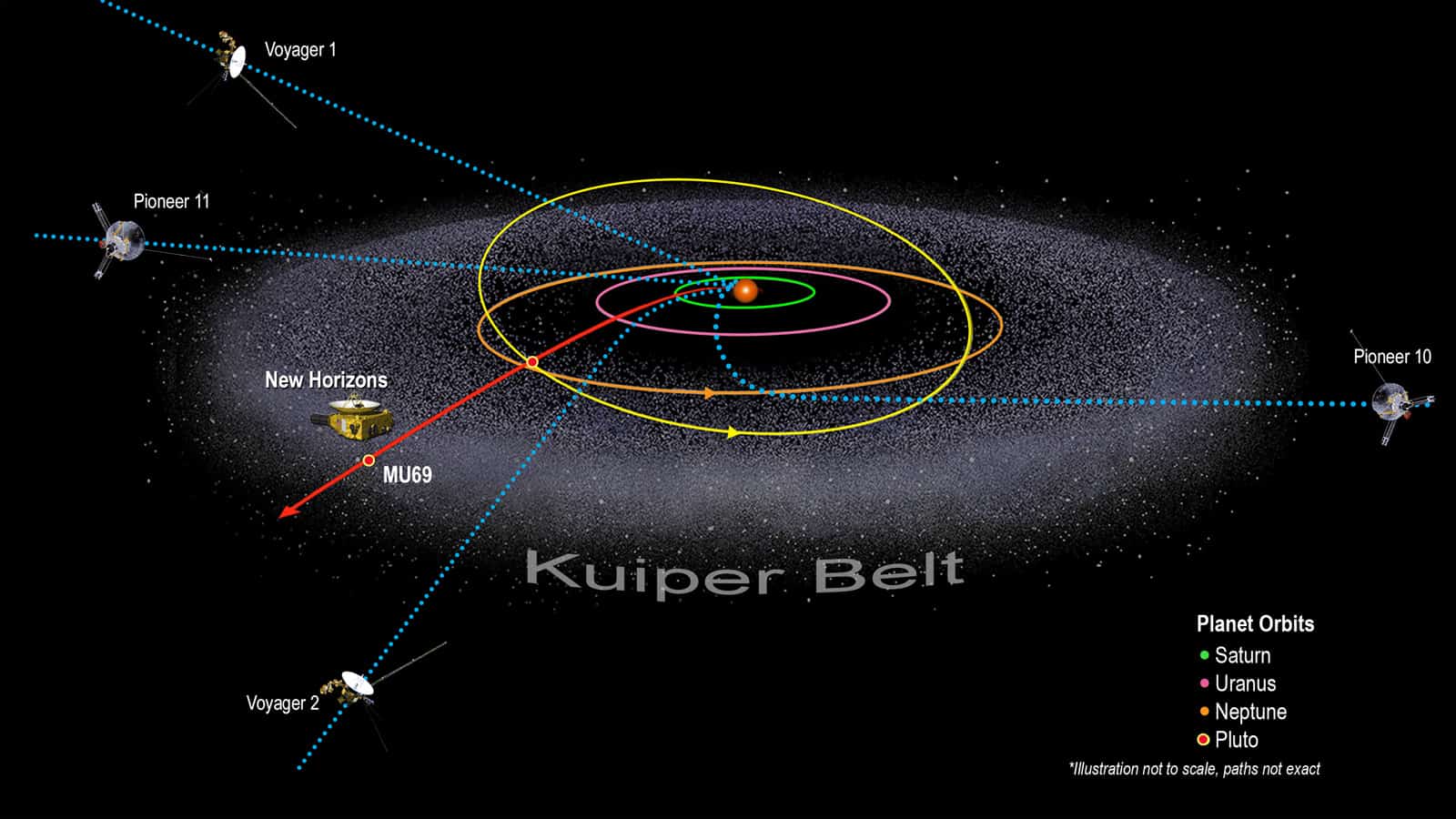
The history of our solar system is a record of violent transformation, and new research suggests that Neptune’s moon, Nereid, may be the sole survivor of a catastrophic “moonpocalypse.” A study published May 20 in Science Advances challenges the long-held belief that Nereid originated in the Kuiper Belt, suggesting instead that it was a local native forced into an elongated orbit by a chaotic celestial event.
The Case of the Celestial Survivor
Planetary scientists have long debated the origins of Neptune’s moons. The planet’s largest moon, Triton, orbits in a backward direction and accounts for more than 99 percent of the total mass of Neptune’s satellite system. It is widely believed that Triton was captured by Neptune billions of years ago, a process that likely destroyed or ejected the planet’s original, smaller, and rubbly moons.
New computer simulations led by Caltech planetary scientist Matthew Belyakov suggest that Nereid was part of this original system. Unlike other moons that were pulverized during Triton’s arrival, Nereid may have been perturbed outward, surviving the chaos that decimated its siblings.
Did You Know? The best image currently available of Nereid is a grainy photograph taken by the Voyager 2 mission in 1989, which captures the moon as an object only five pixels across.
Why Origins Matter
Understanding Nereid’s origin is vital for mapping the evolution of our solar system. By comparing observations from the James Webb Space Telescope with known Kuiper Belt objects, researchers found that Nereid does not share the same chemical makeup. This mismatch reinforces the theory that Nereid is a local outlier rather than an interloper from the cold reservoir of space rocks beyond Neptune.

The significance of this study lies in the survival of the moon itself. While simulations show that Triton’s arrival typically results in total system destruction, about 20 percent of these models produced a moon on a Nereid-like orbit. This provides a plausible narrative for how a single, original moon could persist in such an extreme environment.
Expert Insight: The study of Nereid highlights the fragile nature of satellite systems. By analysing the “outlier” status of this moon, researchers are gaining a clearer view of how planetary captures can reshape the architecture of entire systems, leaving behind only the most resilient remnants of their past.
The Next Frontier
While the current study provides a theoretical foundation for Nereid’s history, many questions remain regarding its physical composition and surface characteristics. A possible next step in this field of study is a dedicated spacecraft flyby to the ice giants.

Analysts expect that until a mission can travel to the outer solar system to observe Nereid up close, the moon will remain a subject of debate. Future exploration could finally provide the high-resolution data needed to confirm whether Nereid is indeed the last remaining signature of Neptune’s original satellite system.
Frequently Asked Questions
What is the new theory regarding Nereid’s origin?
The theory suggests Nereid was born in a steady, circular orbit around Neptune and was later pushed into an elongated orbit during the chaotic arrival of Triton, which likely destroyed or ejected Neptune’s other original moons.
Why is Nereid considered an outlier?
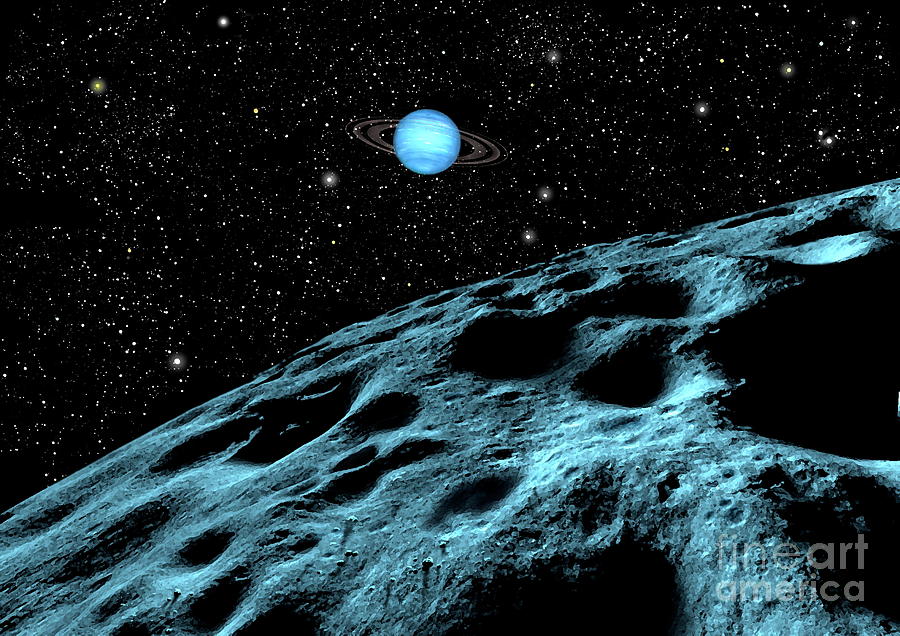
Nereid is brighter, larger, more eccentric, and closer to its host planet than other irregular satellites in the solar system, and it does not match the composition of Kuiper Belt objects.
What did the computer simulations reveal?
The simulations showed that while Triton’s arrival often destroys original moons, approximately 20 percent of the scenarios resulted in a moon surviving in a Nereid-like orbit without destroying Triton.
What other mysteries might be hidden within the orbits of the outer planets?