
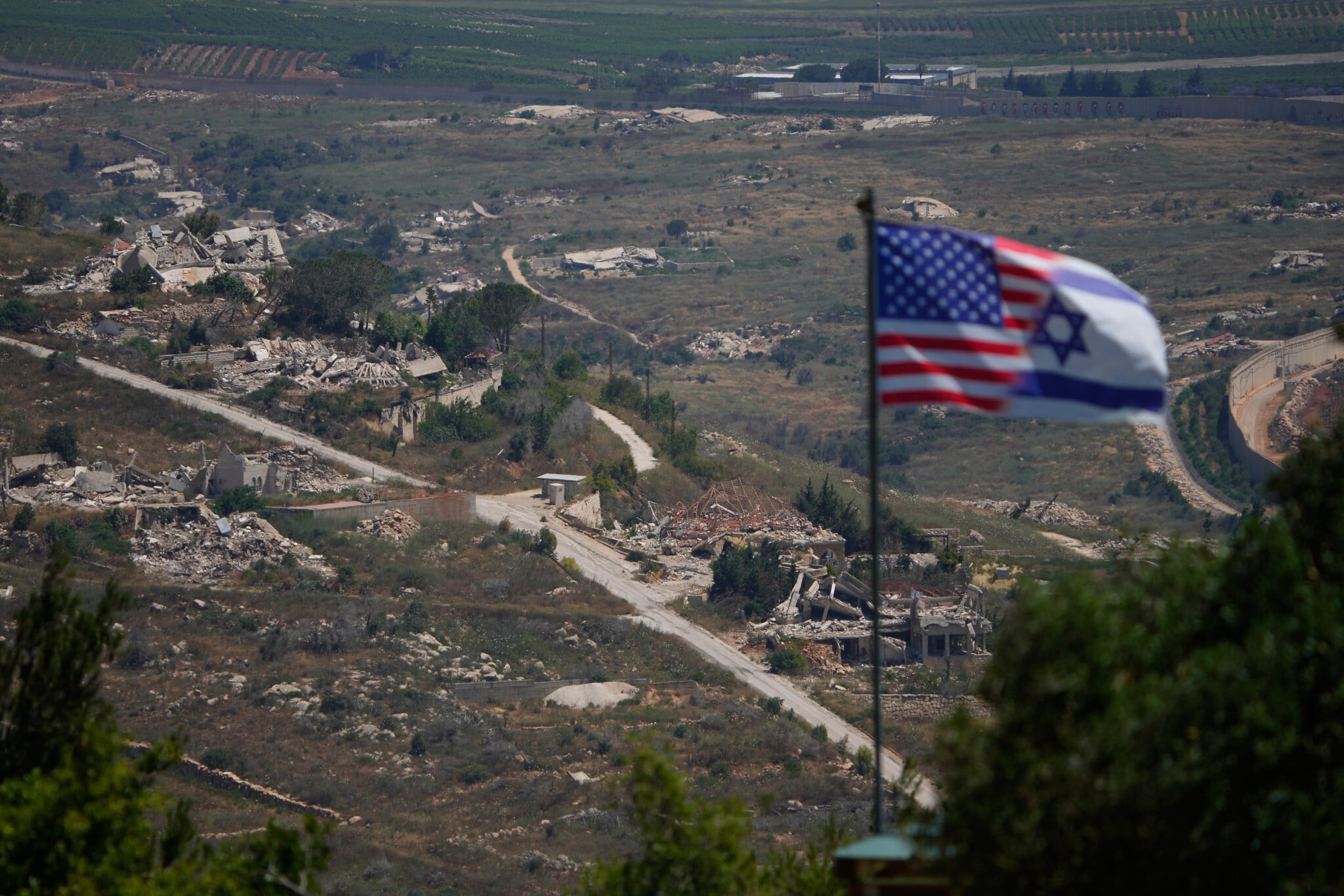
Netanyahu Vows to Maintain IDF Presence in South Lebanon Amid US-Iran Talks
Prime Minister Benjamin Netanyahu vowed Sunday to maintain Israeli troops in the south Lebanon security zone indefinitely to protect northern Israel from Hezbollah. This stance comes as US-Iran negotiations begin in Switzerland and a fragile ceasefire holds, according to official statements and reports from The Times of Israel.
Why is Israel refusing to leave the south Lebanon security zone?
Israel maintains that a military presence in southern Lebanon is the only way to prevent Hezbollah attacks on northern Israeli communities. Prime Minister Benjamin Netanyahu stated in a Hebrew-language statement Sunday that Israel will remain in the zone “for as long as necessary.”

Netanyahu argued that any country would take similar steps to protect its citizens. He specifically asked rhetorically what the United States would do in a similar situation, suggesting America would “cross the border, create a security zone, kill the terrorists, and protect its people.”
IDF Chief of Staff Lt. Gen. Eyal Zamir echoed this position during a visit to southern Lebanon on June 21, 2026. Zamir stated the military’s objective remains “clear and unchanged,” focusing specifically on activity in the Ali Taher and Beaufort areas to defend Israeli citizens.
How do US-Iran talks impact the conflict in Lebanon?
The conflict in Lebanon has become a primary sticking point in diplomatic efforts between Washington and Tehran. Iran’s semi-official news agency, Tasnim, reported Sunday that Tehran may suspend all negotiations with the US if Israel does not withdraw from south Lebanon.
According to Tasnim, Iran insists on the implementation of “Article 1” of a temporary deal, which requires ending the war on all fronts and ensuring Lebanon’s territorial integrity. Without this withdrawal, the agency claimed negotiations are “fundamentally meaningless.”
This diplomatic pressure has already influenced military movements. Reports indicate that Israel’s political leadership instructed the IDF to “hold its fire” on Saturday under heavy pressure from the US, which feared a total collapse of the Swiss talks.
What is the IDF’s internal strategy regarding withdrawals?
While the Prime Minister maintains a hard line publicly, internal discussions suggest a more nuanced approach. Channel 12 reported Sunday evening that Israeli officials are considering “small withdrawals” from certain areas, including the Beaufort ridge captured last month.
However, a senior official told Channel 12 that a full pullout is off the table, stating “the yellow line is a red line” regarding IDF deployment boundaries.
The IDF is reportedly urging the Israeli government to accelerate direct negotiations with the Lebanese government in Washington. Military leaders fear that if the US and Iran reach a comprehensive agreement first, Israel’s ability to act against Hezbollah will be severely hampered. By negotiating directly with Beirut, the IDF hopes to isolate Hezbollah and secure terms on its own.
How has Hezbollah responded to the security zone?
Hezbollah chief Naim Qassem rejected the concept of an Israeli security zone during a televised address Sunday. Qassem stated that Israeli troops remaining on Lebanese land is “impossible.”
Qassem argued that Lebanon possesses a “national army” responsible for sovereignty and that Israel, as an “aggressor,” must leave the territory immediately. Despite these statements, the IDF Home Front Command announced it would lift restrictions on gatherings in northern border communities starting Monday at 6 a.m., noting that Hezbollah has not attacked Israeli territory since last Sunday.
Comparison of Strategic Positions
| Entity | Position on Security Zone | Primary Goal |
|---|---|---|
| Israel (Govt) | Permanent until threat is gone | Protect northern residents |
| Hezbollah | Totally unacceptable/Impossible | Restore full sovereignty |
| Iran | Precondition for US talks | End all regional hostilities |
Frequently Asked Questions
What is the “security zone” in south Lebanon?
It is a buffer area where the IDF maintains a military presence to intercept Hezbollah attacks before they reach northern Israeli towns.
Why are US-Iran talks linked to the Lebanon border?
Iran views the Israeli military operation in Lebanon as part of a broader regional conflict and has made an Israeli withdrawal a requirement for continuing diplomatic talks with Washington.
Will Israel fully withdraw from Lebanon?
According to Defense Minister Israel Katz and Prime Minister Netanyahu, the IDF will not withdraw from the security zone. However, Channel 12 reports that “small withdrawals” from specific ridges are being discussed.
What do you think about the trade-off between regional diplomacy and border security? Share your thoughts in the comments below or subscribe to our newsletter for real-time updates on Middle East security.