
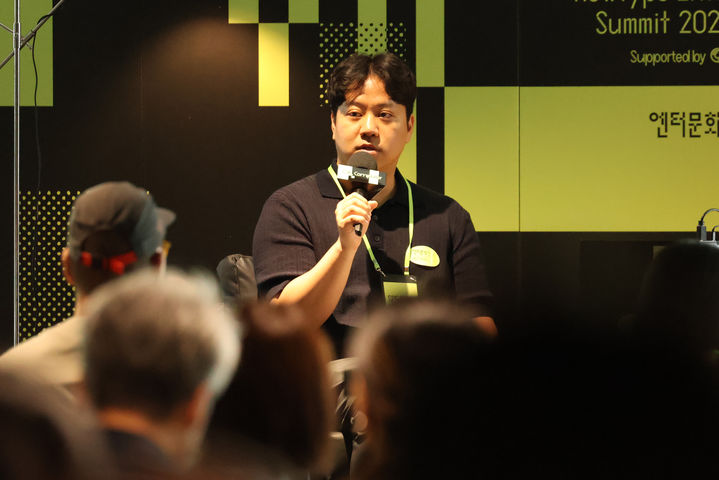
Neutune CEO Lee Jong-pil: Music as Data Ingredients Drives AI Era Revenue
The global music industry is undergoing a structural shift as generative artificial intelligence fragments traditional song formats into distinct data components, according to Neutune CEO Lee Jong-pil. Speaking at the ‘Newtype Enter Summit 2026’ in Seoul on May 12, industry leaders addressed the “attribution crisis” facing creators, as the International Confederation of Societies of Authors and Composers (CISAC) projects cumulative copyright losses of approximately 18 trillion won by 2028.
The summit, hosted by the Entertainment Culture Research Institute and sponsored by the AI music startup Neutune, focused on developing ethical frameworks to protect intellectual property in an era where melodies, rhythms, and vocals are increasingly treated as modular data.
Did You Know?
Neutune is the first South Korean company to join the Digital Data Exchange (DDEX), an international organization that standardizes and automates metadata specifications used by global platforms like Spotify and YouTube.
Addressing the Attribution Crisis in AI Music
The current music ecosystem faces significant challenges as AI platforms utilize “fair use” arguments to ingest creator data, often obscuring the origins of the resulting output. To combat this, Neutune is pushing for a new industry standard known as the ‘Music Unit Identification Structure’ (ISBC). According to CEO Lee, this system aims to bridge the gap between necessary AI fragmentation and the need for copyright-protected, identifiable units of music.
The company has introduced technologies such as ‘MixAudio’ and ‘Music DNA,’ which function as advanced AI content ID systems. These tools track the copyright proportions of original works used in AI-generated content, allowing for automated royalty distribution and the detection of unauthorized use across platforms. Neutune maintains a strict policy of using only catalogs where 100% of rights clearance has been completed for its AI training and services.
Expert Insight:
The emergence of ‘AI-native artists’ suggests a fundamental change in the definition of popular music. As music is increasingly consumed as a modular ‘material’ within platforms, the industry may shift toward a model where creators supply specific elements—or building blocks—that are optimized for selection by AI, potentially creating new revenue streams for those who adapt to this remix-centric environment.
The Future of Global Music Standardization
South Korea’s infrastructure for managing K-pop audio data over the past decade serves as a foundation for these new technical standards, according to Lee. Neutune is currently working with international bodies, including the World Intellectual Property Organization (WIPO) and the European Commission, to help shape regulations on AI crawling and C2PA (content provenance tracking) standards.
While some creators express concern that strict detection technologies like Music DNA could stifle artistic expression, industry experts suggest a balanced approach. The goal is to provide transparency in attribution without creating overly rigid protections that might inhibit creative output. Future developments in this sector are expected to focus on B2B collaborations between AI startups, major distribution companies, and copyright organizations to build a legally compliant data ecosystem.
Frequently Asked Questions
What is the primary cause of the current ‘attribution crisis’ in music?
According to the source, the crisis is driven by global generative AI platforms using “fair use” as a justification to ingest creator data without authorization, leading to a loss of ownership and revenue for original artists.

How does Neutune intend to ensure fair compensation for creators?
The company uses tracking technologies to identify the contribution of original works in AI-generated content. By maintaining a 100% rights-cleared catalog and utilizing metadata standards like ISBC, they aim to facilitate accurate royalty distribution.
What role does South Korea play in global AI music regulation?
South Korea is leveraging its decade of experience in managing K-pop audio data to influence global standards. Neutune is currently the only AI company participating in the DDEX working groups to define AI-specific usage regulations.
How do you believe the role of a human songwriter will evolve as music becomes increasingly fragmented into AI-ready data components?