
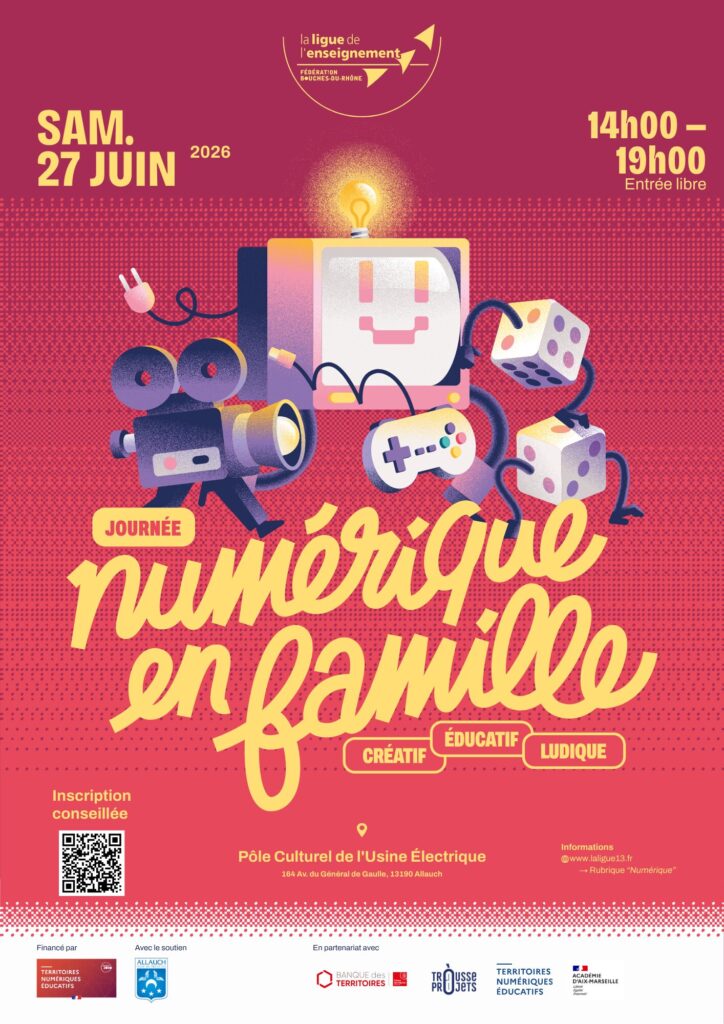
New Fab Lab Inauguration and Family Digital Day in Allauch
Fab Labs are evolving from simple tool-sharing spaces into integrated community innovation hubs. By combining 3D printing, robotics, and AI education—as seen in Allauch’s Pôle Culturel de l’Usine Électrique—these centers democratize high-tech manufacturing and digital literacy for all ages, shifting the focus from consumption to creation.
Why are Fab Labs moving beyond 3D printing?
Modern fabrication labs now integrate a broader spectrum of digital arts and robotics to create “multimodal” learning environments. The City of Allauch’s new facility reflects this shift by offering a “Pôle créativité & imagination” that blends traditional 3D printing with audiovisual creation and robotics.
This expansion matters because it moves the Fab Lab from a niche engineering workshop to a cultural center. According to the program hosted by the Ville d’Allauch and La Ligue de l’Enseignement, activities now include “Cyber artiste” and “Pixel paste cinema,” showing a trend toward “phygital” art—where physical materials and digital code merge.
How is AI changing the way we create physical objects?
Artificial Intelligence is shifting from a screen-based tool to a design partner. The inclusion of “Education à l’IA” and “Découverte de l’IA” exhibitions at the Pôle Culturel indicates a growing need for public literacy in generative design.
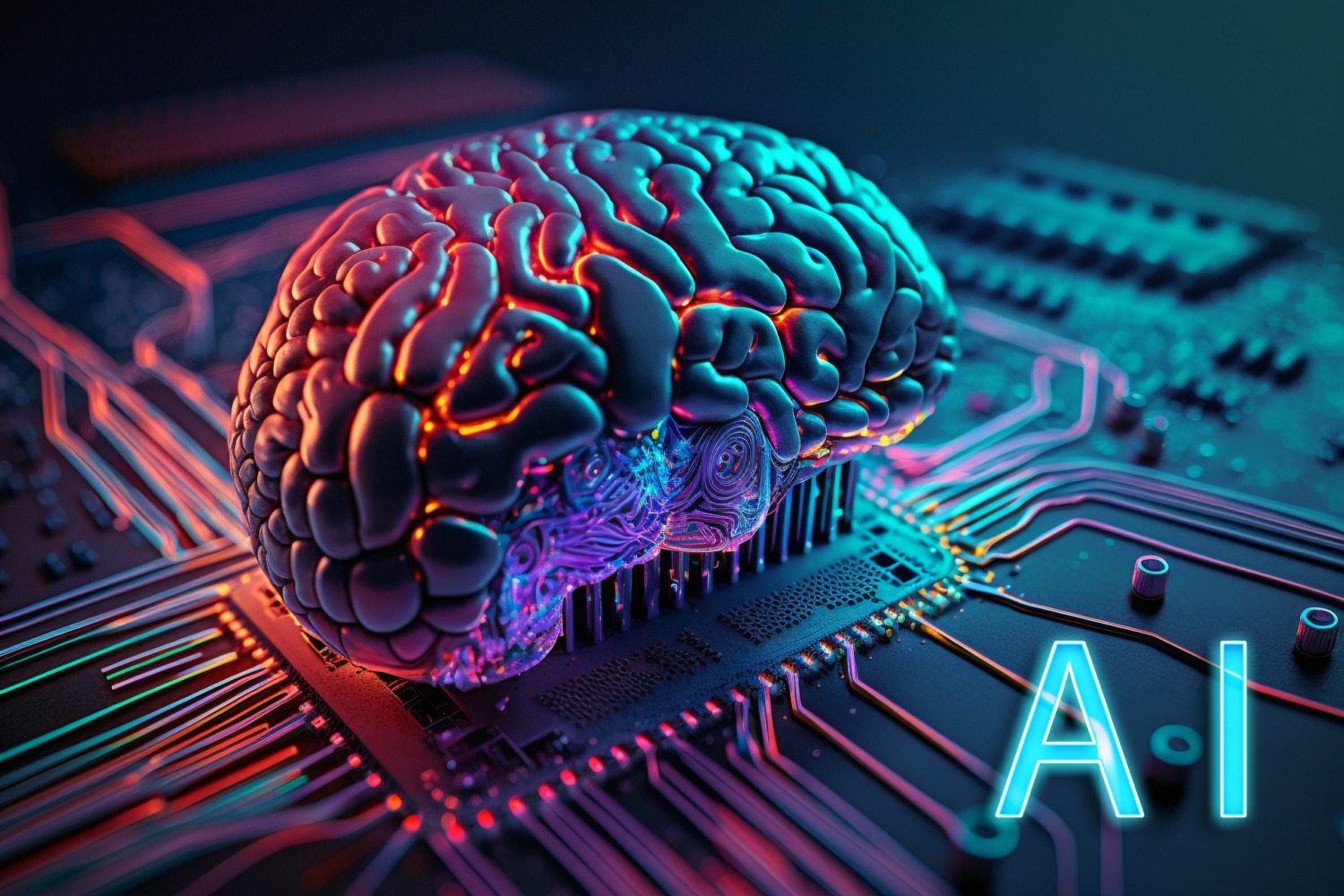
Generative AI allows users to input specific constraints—such as weight or strength—and lets the software “grow” an optimized shape that a human wouldn’t naturally conceive. This process, often called topology optimization, reduces material waste. This aligns with the global move toward sustainable manufacturing, where AI helps create the strongest possible part using the least amount of plastic or metal.
What happens when VR enters the family learning space?
Virtual Reality (VR) is transitioning from gaming to a primary tool for spatial education. The “Destination VR” activity at Allauch’s event highlights a trend where families engage with complex concepts—like architecture or planetary science—through immersive experiences rather than textbooks.
Industry data suggests that immersive learning increases retention rates compared to passive reading. By allowing a 13-year-old to “walk through” a digital model of a city or a biological cell, VR bridges the gap between abstract theory and concrete understanding. This creates a pipeline for students to move from VR exploration to actual fabrication in the Fab Lab.
Can digital fabrication solve the waste crisis?
The “personalization of objects” mentioned in the Allauch program points toward a “Right to Repair” economy. Instead of discarding a broken appliance because a single plastic gear snapped, users can now model a replacement part and print it on-site.
This represents a fundamental contrast to the traditional industrial model. While traditional manufacturing relies on centralized factories and global shipping, the Fab Lab model promotes “distributed manufacturing.” According to sustainability frameworks, this reduces the carbon footprint by eliminating long-distance logistics and promoting the longevity of existing products.
Comparison: Traditional Learning vs. Fab Lab Learning
| Feature | Traditional Classroom | Fab Lab Approach |
|---|---|---|
| Method | Theoretical/Passive | Experimental/Active |
| Outcome | Standardized Test | Physical Prototype |
| Tooling | Books/Software | 3D Printers/Robotics/VR |
Frequently Asked Questions
What is a Fab Lab?
A Fabrication Laboratory (Fab Lab) is a community workshop containing a variety of computer-controlled tools that allow people to make almost anything, from jewelry to robotics.
Is 3D printing only for experts?
No. Modern software and community-driven hubs, like the one in Allauch, provide guided workshops that make the technology accessible to children as young as six.
How does AI relate to physical making?
AI is used in generative design to create efficient shapes and in robotics to automate the assembly or movement of physical objects.
Do you think digital fabrication will replace traditional manufacturing?
Share your thoughts in the comments below or subscribe to our newsletter for more insights into the future of technology and creativity.