
New Nature-Inspired POMbranes for High-Precision Industrial Filtration and Water Reuse
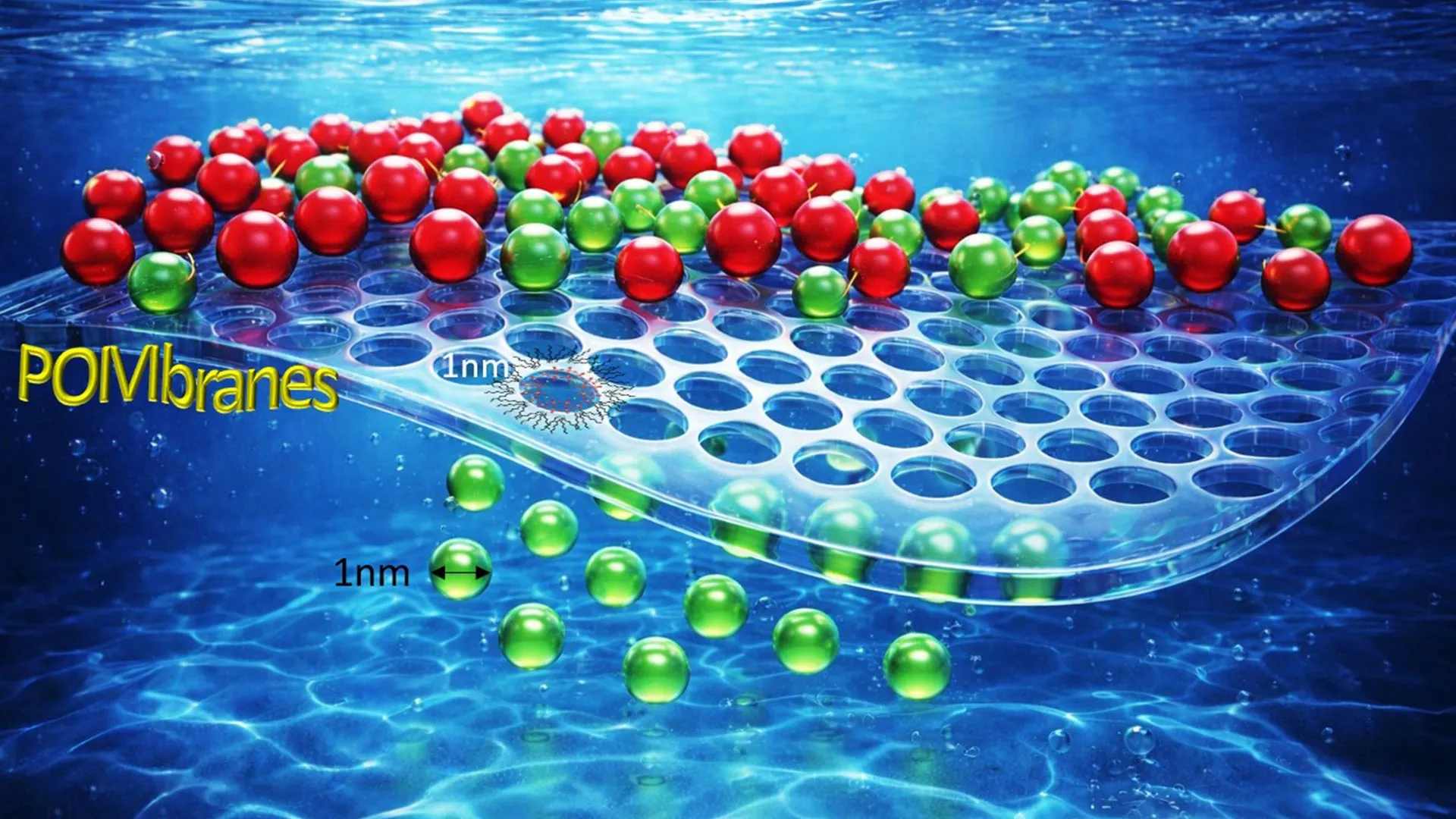
Researchers from the CSIR-Central Salt and Marine Chemicals Research Institute (CSMCRI), the Indian Institute of Technology Gandhinagar (IITGN), Nanyang Technological University in Singapore, and the S N Bose National Centre for Basic Sciences have developed “POMbranes,” highly precise filtration membranes with one-nanometer pores. The study, published in the Journal of the American Chemical Society, indicates this technology could dramatically increase water reuse and lower energy use in industrial separation processes.
Why is industrial separation so energy-intensive?
Separation processes used in food production, textile dye treatment, and drug purification account for roughly 40% to 50% of global industrial energy consumption. According to the research team, most facilities currently rely on evaporation and distillation.

While effective, these traditional methods require large amounts of energy and contribute to carbon emissions. Conventional polymer membranes offer a cleaner alternative, but they often suffer from uneven pore sizes that degrade or change shape over time.
How do POMbranes function?
Dr. Shilpi Kushwaha, a Senior Scientist at CSMCRI, stated that these ultra-selective crystalline membranes are inspired by aquaporins, which are biological systems that regulate molecule movement through precisely sized channels.

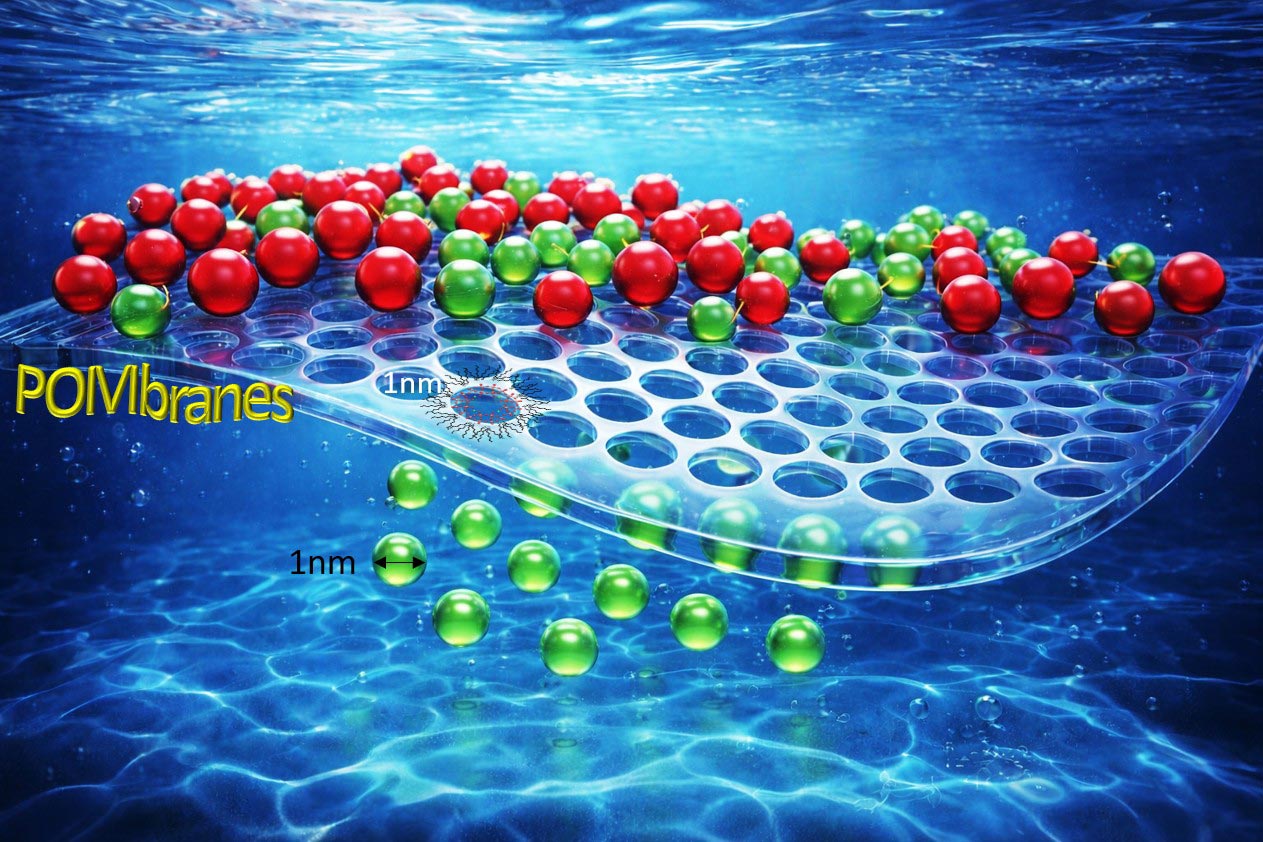
The membranes utilize polyoxometalate (POM) clusters. Priyanka Dobariya, a CSMCRI research scholar, described these as crown-shaped metal clusters with a permanent, perfect hole in the center that does not lose its shape.
To create a practical layer, researchers attached flexible chemical chains to the clusters. When placed on water, these clusters organize into an ultrathin film, which Dr. Raghavan Ranganathan of IITGN says allows the membrane to act like a high-tech sieve.
What are the performance advantages of this technology?
Testing revealed that POMbranes can distinguish between molecules that differ by only 100-200 Daltons. Dr. Ketan Patel, Principal Scientist at CSMCRI, stated that these membranes show almost ten times better separation performance than existing technologies.
Dr. Patel added that the membranes are scalable, flexible, and remain stable across different acidity levels (pH ranges). This stability is essential for wide-scale industrial adoption.
How could this impact the textile and pharmaceutical industries?
The technology may be particularly useful for India’s textile sector, which contributes more than 2.3% of the GDP and is valued between $160-225 billion. The membranes could selectively remove dye molecules from wastewater, reducing chemical waste and freshwater demand.
In pharmaceutical manufacturing, highly accurate separations are required for product quality. Vinay Thakur, a PhD scholar at IITGN, noted that these membranes could lower energy use during solvent recovery and drug purification while maintaining strict production standards.
What happens next for sustainable manufacturing?
Researchers describe POMbranes as a versatile platform technology. Because the structure is adjustable and can withstand harsh chemical environments, it may be applied to a wide range of industrial tasks.
As industries seek more durable and efficient systems, these molecularly engineered membranes could become a standard part of next-generation manufacturing. The researchers have demonstrated that nature-inspired design may help solve major industrial energy and waste challenges.
Frequently Asked Questions
What are POMbranes?
They are ultra-selective, crystalline filtration membranes featuring pores one nanometer wide, constructed using polyoxometalate (POM) clusters.
How do they differ from traditional polymer membranes?
Unlike traditional plastic filters with uneven pores that degrade over time, POMbranes have permanent, stable holes that do not change shape and offer nearly ten times better separation performance.
Which industrial sectors could benefit most from this technology?
The pharmaceutical industry could use them for drug purification and solvent recovery, while the textile industry could use them for dye removal and water recycling.
How could the adoption of molecularly engineered membranes change the environmental footprint of pharmaceutical manufacturing?