

New shark species which walks on its fins discovered in the Pacific
Researchers in Papua New Guinea have confirmed the discovery of a new shark species, Hemiscyllium dudgeonae, which uses its fins to walk across the seafloor. Identified by a team from the University of the Sunshine Coast, the shark is distinguished by unique white dashes and brown speckles. This discovery brings the total number of known walking shark species to ten, all of which are endemic to the shallow waters of Northern Australia and New Guinea.
How do walking sharks navigate the reef?
Walking sharks, including the newly identified H. dudgeonae, utilize their pectoral and pelvic fins to propel themselves along the sandy bottom of the ocean. According to Dr. Christine Dudgeon, a senior research fellow at the University of the Sunshine Coast, this adaptation allows the sharks to survive in shallow tidal pools where they are less susceptible to avian predators. By moving between pools at low tide, these sharks can access food sources like snails, crabs, and worms that remain hidden in the sand. Unlike typical sharks, these creatures can withstand low-oxygen environments for several hours, a trait previously documented in related species found on the Great Barrier Reef.
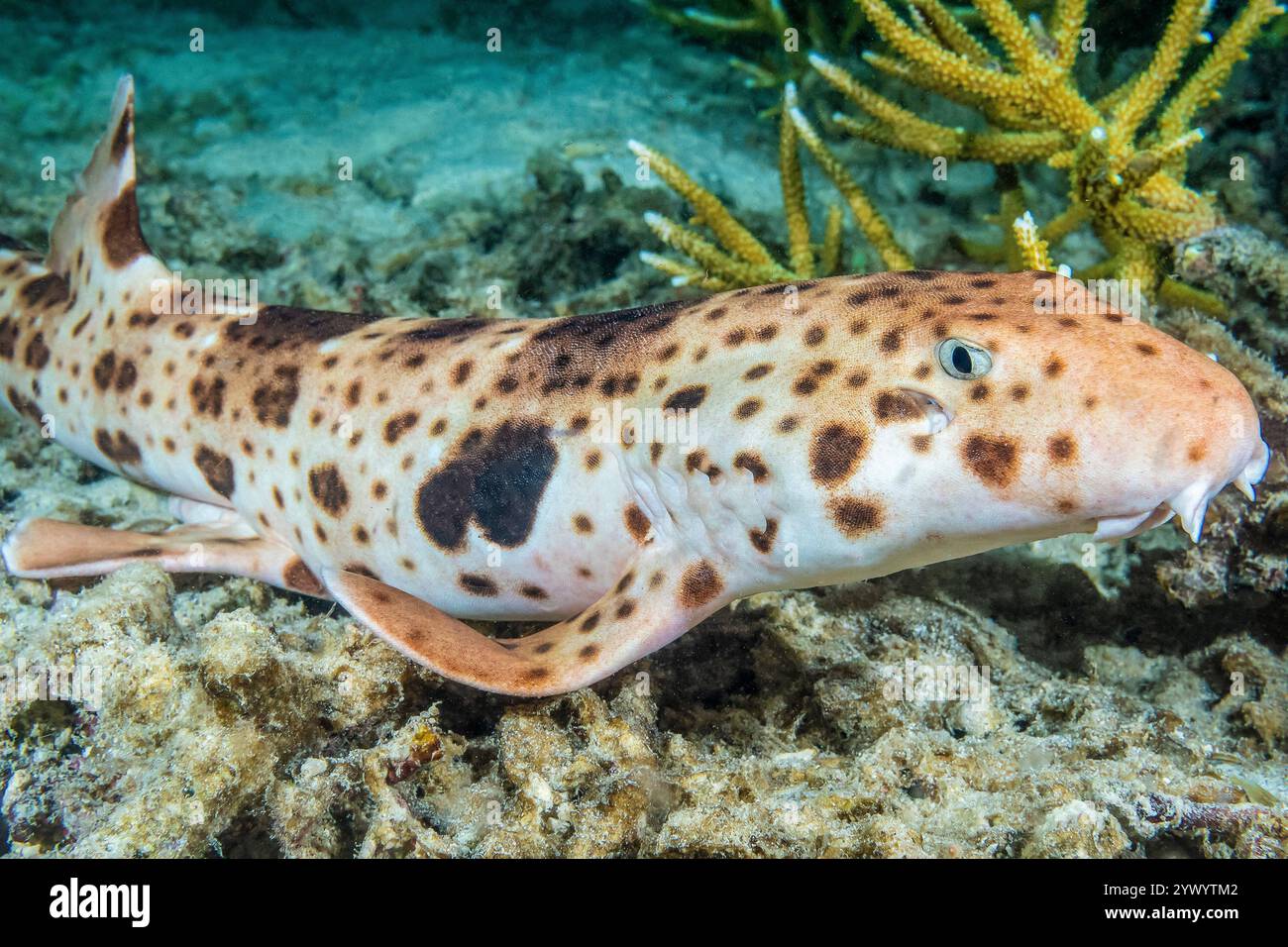
Walking sharks don’t actually walk on land. They stay in the water but are capable of “hopping” between isolated tidal pools by using their fins as makeshift feet, a behavior that keeps them safe from predators during the night.
What makes Hemiscyllium dudgeonae unique?
The primary identifier for the new species is its distinct physical appearance compared to other walking sharks. While the Milne Bay or “Michael’s walking shark” features a bold leopard-print pattern, H. dudgeonae displays a pattern of small white dashes and brown speckles. Dr. Dudgeon’s team initially identified the specimen during a night dive in Milne Bay, off the south-eastern tip of New Guinea Island. After capturing the shark by hand, the researchers conducted genetic analysis, which confirmed that the specimen was indeed a distinct species within the Hemiscyllium genus rather than a variation of a previously known type.
Why is the conservation of this species critical?
The conservation status of H. dudgeonae remains officially unknown, yet experts warn that its limited habitat makes it particularly vulnerable. According to Dr. Dudgeon, the species is restricted to a small geographic range and faces mounting pressure from local fishing activities and the destruction of coral reefs. Because these sharks lay eggs on the seafloor and remain in the same area throughout their lives, they do not migrate to new territories. This lack of dispersal means that if a local habitat is damaged, the local population has little capacity to recover or relocate.
| Species Feature | Walking Shark (General) | H. dudgeonae (New Species) |
|---|---|---|
| Primary Habitat | Australia & New Guinea | Milne Bay, Papua New Guinea |
| Markings | Varies (Leopard print common) | White dashes and brown speckles |
| Behavior | Uses fins to navigate tide pools | Sedentary, stays near birth site |
How are local communities involved in protection?
Local communities in Papua New Guinea have begun taking an active role in protecting the “dog shark,” known locally as Kadedekedewa. Dr. Dudgeon reports that residents in the Milne Bay area have expressed pride in the species, viewing it as a valuable asset rather than just a food source. With the assistance of a local fisheries officer, there is an ongoing push to establish marine-protected areas. These zones are intended to safeguard the specific reef habitats where the sharks lay their eggs and spend their entire lifecycles.
Frequently Asked Questions
Are walking sharks dangerous to humans?
No. While they have strong jaws used to extract prey from the sand, they are harmless to humans and are often described as having a “puppy-dog” personality.
Do walking sharks live in the deep ocean?
No, they are strictly shallow-water dwellers. They are endemic to the coastal waters of Northern Australia, New Guinea, and parts of Indonesia.
How many walking shark species are there?
With the discovery of H. dudgeonae, there are now ten recognized species within the Hemiscyllium genus.
If you are interested in marine conservation, follow the work of the University of the Sunshine Coast researchers or local PNG fisheries departments to see how marine-protected areas are evolving to save endemic species.
Have you ever encountered a unique marine species while diving? Share your experiences in the comments below or subscribe to our newsletter for more updates on rare biodiversity discoveries.