

New Study Warns Arctic Permafrost Could Become a Major Carbon Source Earlier Than Expected
Arctic permafrost may transition from a carbon sink to a net carbon source decades earlier than previously projected, according to a study published in Science Advances. By incorporating deeper, overlooked carbon reservoirs into climate simulations, researchers found that thawing soil could release greenhouse gases at an accelerated rate, potentially complicating international efforts to meet global temperature targets.
Why are current climate models underestimating Arctic emissions?
Most traditional climate models rely heavily on data from shallow soil layers, often ignoring the vast, ancient carbon stores buried deeper in the ground. According to the research published in Science Advances, these deeper reservoirs contain organic matter that has remained frozen for thousands of years. When this ground thaws, microbes decompose the material, releasing carbon dioxide and methane into the atmosphere. Because these deeper layers were not fully accounted for in earlier simulations, many models failed to capture the true scale of the potential “feedback loop”—where warming leads to thawing, which in turn releases more gases and drives further warming.
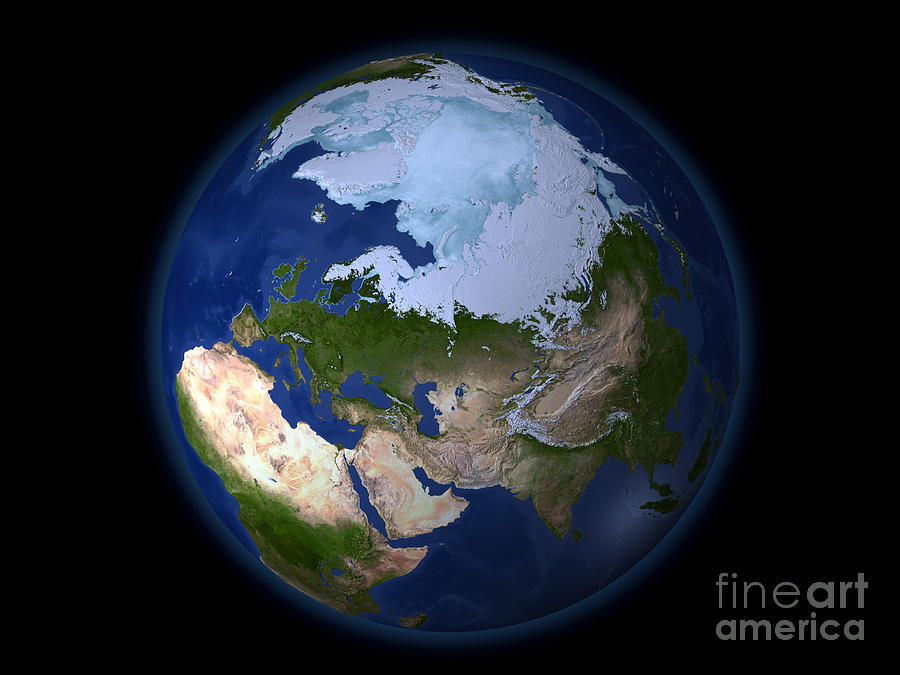
Arctic permafrost holds approximately twice as much carbon as is currently present in the Earth’s atmosphere. As long as the ground remains frozen, this carbon stays sequestered, but the warming climate is rapidly changing this balance.
How fast is the Arctic warming compared to the rest of the world?
The Arctic is warming at a rate significantly higher than the global average, a phenomenon known as “Arctic amplification.” While early research suggested the region warmed at twice the global rate, more recent studies, including data from the early 2020s, indicate the region is warming nearly four times faster than the planet as a whole. This rapid shift is causing widespread environmental changes, such as the accelerated retreat of sea ice, the loss of mass in the Greenland Ice Sheet, and increased coastal erosion, as observed at sites like Teshekpuk Lake in Alaska.
What is the difference between sea ice loss and permafrost thaw?
While both are symptoms of a warming climate, they impact the planet in fundamentally different ways. According to climate scientists, sea ice loss primarily affects the Earth’s albedo—the ability of the surface to reflect sunlight back into space. In contrast, permafrost thaw acts as a direct contributor to greenhouse gas concentrations. Once carbon is released from thawing soil, it is nearly impossible to recapture on a human timescale. This makes permafrost degradation a potent, long-term driver of global temperature increases rather than just a passive indicator of climate change.
Comparison of Climate Drivers
| Factor | Primary Mechanism |
|---|---|
| Sea Ice Loss | Decreased reflection of solar radiation (Albedo effect). |
| Permafrost Thaw | Release of sequestered CO₂ and methane into the atmosphere. |
Frequently Asked Questions
Is a sudden Arctic “carbon bomb” expected?
No. Researchers emphasize that the process is gradual rather than an immediate explosion of emissions. However, the cumulative effect of this steady release could make it harder to reach international climate goals.

What is the main takeaway for global climate policy?
The findings suggest that the Arctic is not just a victim of climate change, but an active participant that can amplify it. Policymakers may need to account for these earlier-than-expected emissions when setting future carbon budgets.
How do microbes contribute to this process?
When soil temperatures rise above freezing, microbes “wake up” and begin breaking down dead plant and biological matter that has been frozen for millennia, turning it into greenhouse gases.
Are you concerned about how Arctic changes might impact your region? Share your thoughts in the comments below or subscribe to our newsletter for the latest updates on climate science research.