
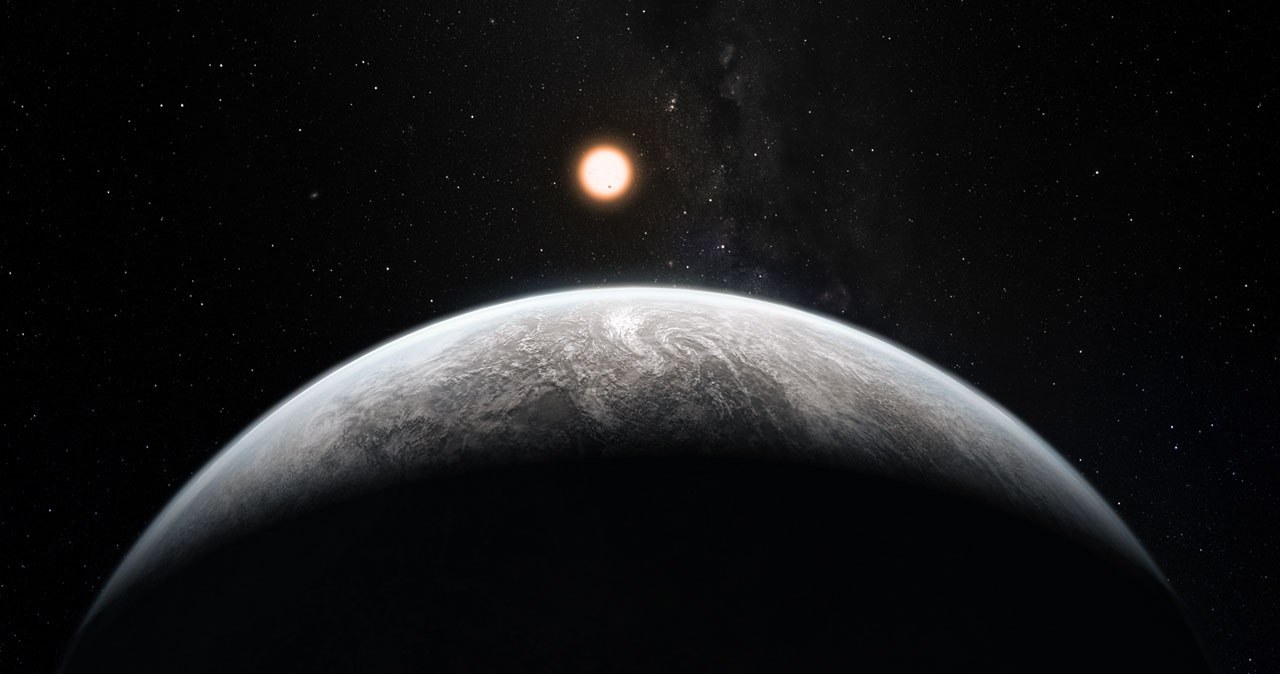
New Super-Earth Ross 318 b Discovered 28 Light-Years from Earth
Beyond the Discovery: What Ross 318 b Tells Us About the Future of Exoplanet Hunting
The confirmation of Ross 318 b, a temperate super-Earth orbiting a red dwarf just 28 light-years away, marks more than just another addition to the catalog of 6,200+ exoplanets. It signals a pivotal shift in astronomy: we are moving from the era of “discovery” to the era of “characterization.”
For decades, the goal was simply to find planets. Now, the focus has shifted toward understanding what these worlds are actually like. With a minimum mass about six times that of Earth and a position within its star’s conservative habitable zone, Ross 318 b is a prime laboratory for the next generation of cosmic exploration.
The JWST Era: Sniffing Out Alien Atmospheres
The most exciting prospect regarding Ross 318 b is its potential for transmission spectroscopy. While the TESS satellite did not detect visible transits, the planet’s proximity and mass make it a leading candidate for the James Webb Space Telescope (JWST) to analyse.
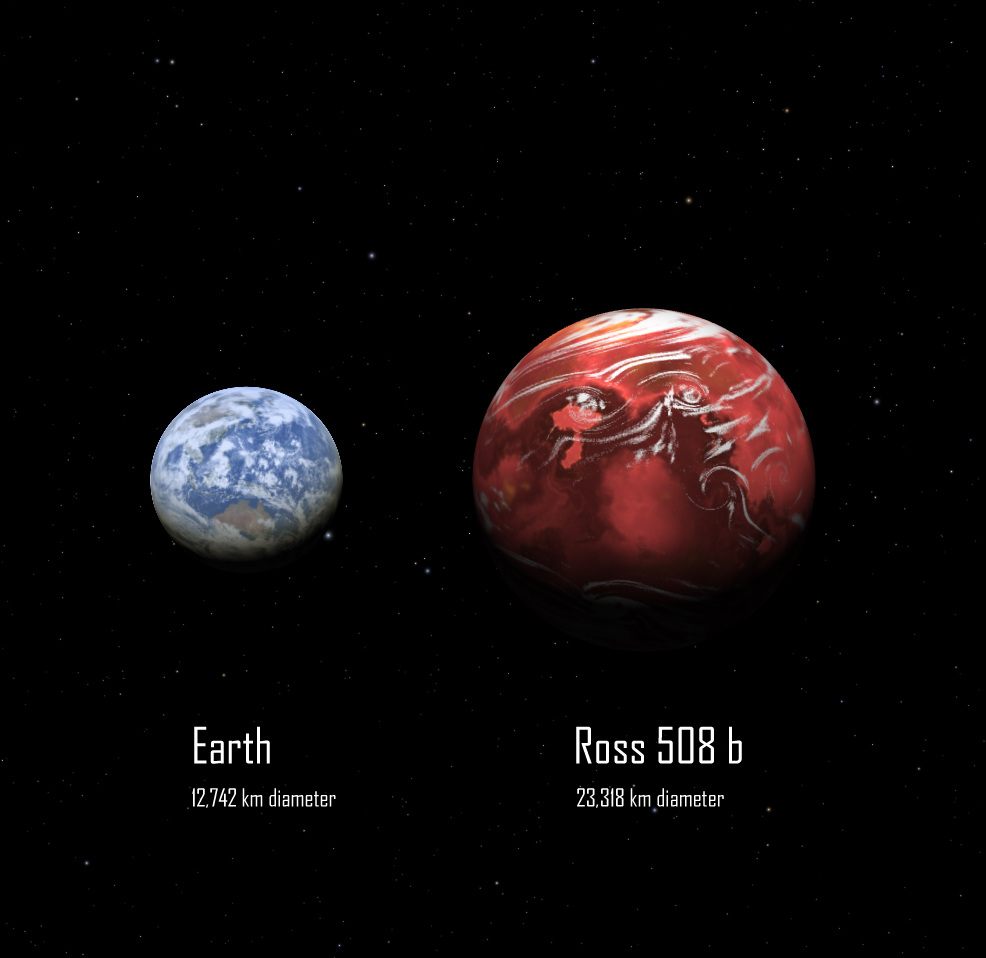
Transmission spectroscopy works by analysing the starlight that filters through a planet’s atmosphere as it passes in front of its star. By looking for specific “dips” in the light spectrum, astronomers can identify the chemical fingerprints of water vapor, methane, carbon dioxide, and even potential biosignatures.
The Red Dwarf Paradox: Stability vs. Sterilization
Ross 318 is an M3.5V red dwarf. These stars are the most common in our galaxy, meaning the majority of habitable zone planets likely orbit stars like this. However, red dwarfs are notorious for their strong magnetic activity and violent stellar flares.
The future of astrobiology depends on solving this paradox: Can a planet maintain an atmosphere if its parent star is constantly blasting it with X-ray and UV radiation? Because Ross 318 b is “temperate,” it provides a critical data point in determining whether red dwarf systems can actually support life, or if they are merely “temperate deserts.”
The “Eyeball Earth” Phenomenon
One of the most fascinating trends in exoplanet modelling is the study of tidal locking. Ross 318 b likely has one side permanently facing its star and the other in eternal darkness.

Researchers believe this creates an “Eyeball Earth” scenario, where a circular patch of liquid water exists on the day-side, surrounded by a frozen wasteland. Future climate models will likely focus on how heat is redistributed from the day-side to the night-side via atmospheric circulation.
From Radial Velocity to Direct Imaging
The discovery of Ross 318 b relied on 15 years of radial velocity data from the CARMENES and HIRES spectrographs. This “wobble method” is incredibly precise but indirect. The next frontier is direct imaging.
As we develop larger telescopes and better coronagraphs (which block the blinding light of the star), we will stop inferring the existence of planets and start seeing them as actual dots of light. Given that Ross 318 b is only 28 light-years away, it is a high-priority target for future missions aiming to photograph a world outside our solar system.
Key Metrics of Ross 318 b at a Glance
| Feature | Detail |
|---|---|
| Minimum Mass | ~6.2 Earth Masses |
| Orbital Period | ~39.63 Days |
| Distance from Star | 0.16 AU |
| Distance from Earth | 28 Light-Years |
Frequently Asked Questions
Could humans ever visit Ross 318 b?
With current chemical rocket technology, no. It would take millions of years. However, it is a primary target for theoretical interstellar probes, such as those proposed by the Breakthrough Starshot initiative.

What makes a planet a “Super-Earth”?
A super-Earth is a planet with a mass higher than Earth’s but substantially lower than those of ice giants like Neptune or Uranus. They are often rocky, but some may be “water worlds.”
Why is the “habitable zone” important?
The habitable zone (or Goldilocks zone) is the region around a star where temperatures are just right for liquid water to exist on a planet’s surface—a key ingredient for life as we know it.
Join the Conversation
Do you think we will find definitive proof of life on a super-Earth within our lifetime? Or are red dwarf systems too volatile to support biology? Let us know your thoughts in the comments below or subscribe to our newsletter for more deep dives into the cosmos!