
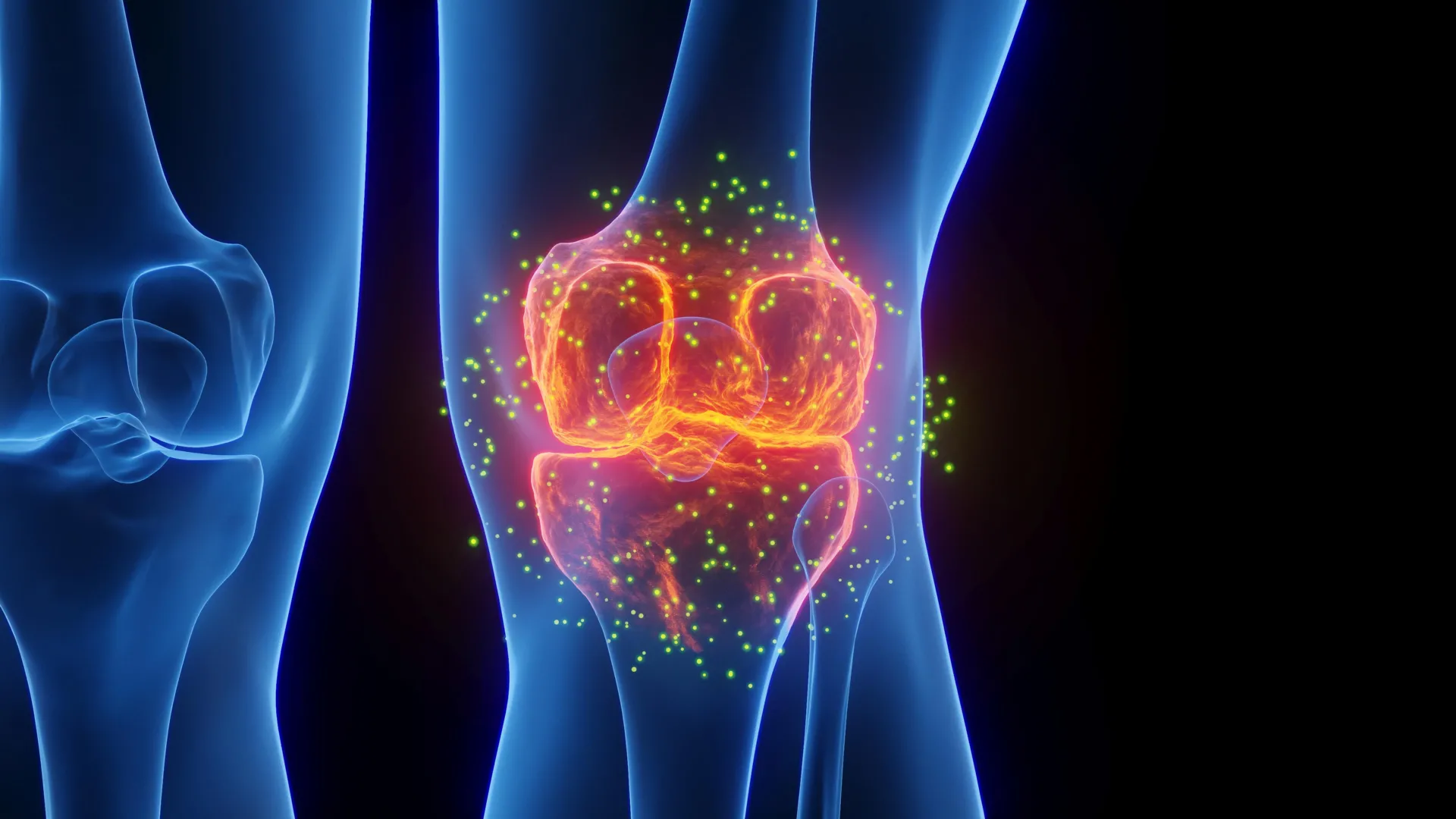
New Treatment Regrows Knee Cartilage and Prevents Osteoarthritis
A Stanford Medicine-led study has found that blocking a protein called 15-PGDH can restore lost knee cartilage in older mice and prevent osteoarthritis after joint injuries. According to the researchers, the treatment also triggered new cartilage growth in human tissue samples, potentially offering a future alternative to joint replacement surgeries.
How does the 15-PGDH protein affect joint health?
Researchers describe 15-PGDH as a “gerozyme,” a type of protein that becomes more abundant as the body ages. According to the study published in Science, this protein contributes to declining tissue function throughout the body.

In joints, osteoarthritis damages hyaline cartilage, which allows knees, hips, and ankles to move freely. As joints age or face stress from obesity, cells called chondrocytes produce inflammatory molecules and break down collagen, causing the cartilage to thin and soften.
The research team found that 15-PGDH levels approximately doubled in the cartilage of older mice compared to young mice. By blocking this protein, the researchers were able to increase levels of prostaglandin E2, which promotes tissue regeneration.
Why is this method of cartilage regeneration different?
Most tissue regeneration relies on stem cells multiplying into new specialized cells. However, Helen Blau, PhD, a professor of microbiology and immunology at Stanford, stated that stem cells are not involved in this cartilage recovery process.
Instead, the treatment causes existing chondrocytes to shift their gene activity and return to a more youthful state. This “reprogramming” reduces the number of cells linked to cartilage breakdown and increases the population of cells that build hyaline cartilage.
Nidhi Bhutani, PhD, an associate professor of orthopedic surgery, noted that this gerozyme inhibitor causes a “dramatic regeneration of cartilage” beyond what has been reported with other interventions.
What were the results in mice and human tissue?
Older mice received the 15-PGDH inhibitor via either abdominal injections or direct injections into the knee joint. Both methods resulted in cartilage that grew thicker across the joint surface, specifically forming functional hyaline cartilage rather than less effective fibrocartilage.
The team also tested the treatment on mice with ACL-type injuries. Those receiving the inhibitor twice weekly for four weeks were far less likely to develop osteoarthritis and showed more normal walking patterns than untreated mice.
The researchers then applied the treatment to human cartilage samples collected during total knee replacement surgeries. After one week, the tissue showed lower activity of genes linked to cartilage breakdown and began generating new articular cartilage.
What may happen next for this treatment?
The findings suggest that damaged cartilage caused by aging or osteoarthritis could one day be repaired through oral medications or local injections. Such an approach may reduce the future necessity for hip and knee replacement surgeries.
An oral version of the 15-PGDH inhibitor is already undergoing clinical trials for age-related muscle weakness. According to Helen Blau, PhD, these Phase 1 trials have shown the drug is safe and active in healthy volunteers.
The research team hopes a similar trial could be launched soon to specifically test the treatment’s effect on cartilage regeneration in humans.
Frequently Asked Questions
What is a gerozyme?
A gerozyme is a class of proteins, such as 15-PGDH, that increase in abundance with age and contribute to the decline of tissue function in the body.
Does this treatment use stem cells to regrow cartilage?
No. According to the study, the treatment works by shifting the gene activity of existing cartilage-producing cells, called chondrocytes, to a more youthful state.
Can this treatment prevent arthritis after a sports injury?
In mouse models mimicking ACL tears, those treated with the 15-PGDH inhibitor were far less likely to develop osteoarthritis compared to untreated animals.
Do you think regenerative medicine will eventually replace joint replacement surgeries?